

Dubai has long fascinated the world. In the space of a single generation, what was once little more than a modest Gulf trading settlement transformed itself into a metropolis of glass towers, artificial islands, luxury retail palaces and one of the world’s busiest aviation hubs. It was not merely growth — it was acceleration. Dubai seemed to appear almost overnight.
Yet behind the spectacle lay something far more deliberate: speed.
Dubai moved quickly where others hesitated. Decisions were taken with clarity. Infrastructure was built rapidly. Ports expanded, airlines multiplied, financial centres were created, and regulations were designed to attract global capital rather than repel it. Investors understood the message immediately: if you came to Dubai, things happened.
Capital, by its nature, follows certainty and momentum. Dubai offered both.
But geography has always been the quiet counterweight to that extraordinary success.
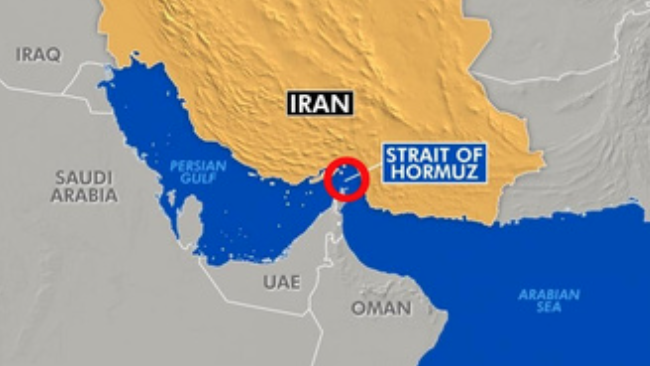
The Gulf region lies within one of the world’s most historically turbulent neighbourhoods. The Iran–Iraq war of the 1980s, the Gulf wars of the 1990s and 2000s, periodic tensions around the Strait of Hormuz, and the ever-present shadow of regional rivalries have ensured that stability in the Gulf has never been entirely guaranteed. Even today, a single missile exchange or naval confrontation can send oil markets into convulsions and shipping insurers scrambling to reassess risk.
Dubai built prosperity in spite of that environment — and perhaps partly because it moved faster than the uncertainties around it.
The city’s leadership understood that if economic opportunity appeared quickly enough, investors might overlook the geopolitical shadows.
Sri Lanka, by contrast, presents almost the opposite picture.
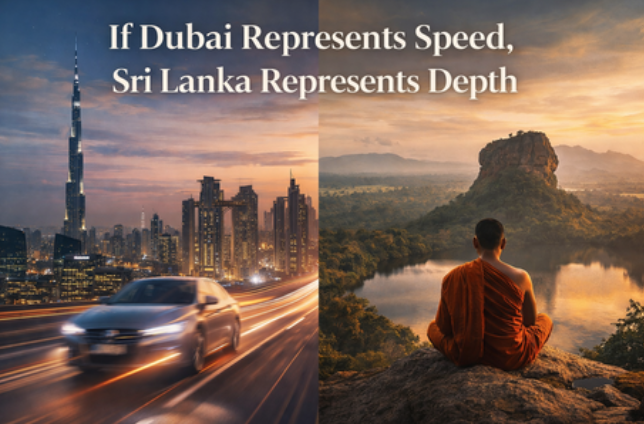
If Dubai represents speed, Sri Lanka represents depth.
This island carries a documented history of more than 2,500 years of organised civilization. Its ancient kingdoms were sophisticated trading societies long before the modern nation-state emerged. Greek, Roman, Arab and Chinese traders all knew the island well. The ports of Sri Lanka were familiar to the great maritime routes that connected East and West centuries before container terminals and global supply chains.
In short, Sri Lanka’s relationship with international commerce is not a recent invention — it is an ancient tradition.
Yet the modern economic story of Sri Lanka has often struggled to reflect that inheritance.
Where Dubai built momentum, Sri Lanka frequently built delay. Where Dubai simplified regulation, Sri Lanka layered bureaucracy. Where Dubai projected a consistent message to global investors — that it was open, efficient and predictable — Sri Lanka has too often appeared uncertain, entangled in political shifts and administrative hesitation.
Potential remained abundant, but execution faltered.
And yet, in one critical respect, Sri Lanka possesses an advantage that Dubai has never fully enjoyed.
The island sits in a remarkably stable strategic environment. It faces no hostile neighbours threatening its sovereignty. There are no rival powers contesting its borders, no missile exchanges across narrow waterways, no regional wars capable of instantly closing its maritime routes. Its location in the Indian Ocean places it along one of the busiest shipping corridors on the planet — but without the immediate geopolitical flashpoints that define parts of the Gulf.
In an era increasingly shaped by geopolitical tension, that quiet stability may become more valuable than it has ever been before.
Global investors today do not assess opportunity alone. They assess risk — political, military and logistical. Supply chains disrupted by conflict, shipping routes threatened by war, and energy markets shaken by regional confrontations have reminded the world that geography still shapes economics.
Sri Lanka sits directly astride the great east–west shipping lane connecting Asia with the Middle East and Europe. Colombo already handles significant volumes of transshipment cargo. With modern logistics infrastructure, regulatory efficiency and long-term policy consistency, the island could evolve into one of the Indian Ocean’s most important commercial platforms.
But geography alone does not produce prosperity.
Dubai’s greatest lesson was not its skyline. It was its clarity.
The emirate created a system where investors knew the rules, projects moved forward quickly, and economic ambition was matched by administrative capability. The desert city did not wait for opportunity to arrive — it built the conditions that attracted it.
Sri Lanka’s challenge is therefore not the absence of potential. It is the absence of sustained execution.
The island possesses the elements many nations spend decades trying to create: strategic location, educated human capital, cultural depth, natural beauty and centuries of maritime heritage. What has been missing is the disciplined focus required to translate those advantages into functioning economic engines.
The comparison with Dubai therefore tells a deeper story.
Dubai demonstrated how speed and decisiveness can transform a modest trading port into a global hub within a few decades. Sri Lanka reminds us that history, geography and potential alone cannot guarantee prosperity unless they are matched by leadership, consistency and administrative courage.
Yet the future is not closed.
If the twentieth century belonged to those who moved fastest, the twenty-first may increasingly belong to those who offer stability in an uncertain world.
In that landscape Sri Lanka’s sleeping potential may yet awaken.
An island with two and a half millennia of history, positioned at the crossroads of the Indian Ocean and enjoying the rare luxury of strategic calm, should not be a peripheral economy. It should be a hub of trade, logistics and investment.
Whether it becomes one will depend on whether Sri Lanka can rediscover a lesson Dubai understood from the beginning:
Prosperity does not wait forever. It rewards those who recognise their moment — and move with purpose when it arrives.