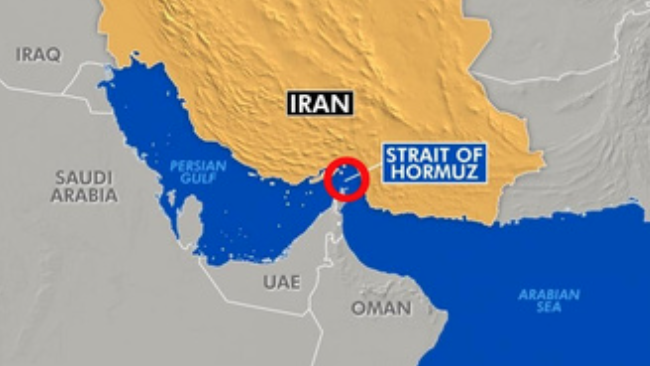

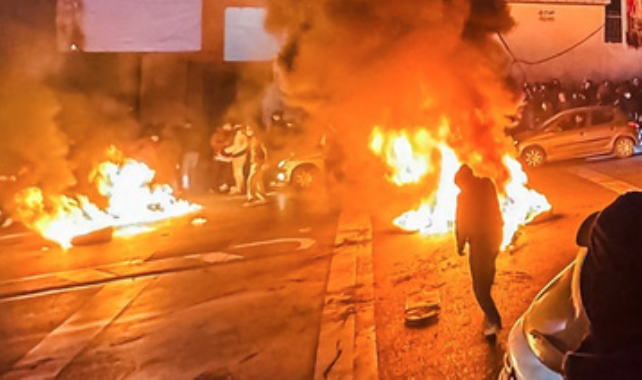
he story most Sri Lankans are following first is the one that now defines the war: Iran itself is taking the heaviest punishment, especially in and around Tehran.
Reuters has reported scenes of fear, checkpoints and repeated explosions in the capital, while images distributed through Reuters picture services show fuel-tank fires, damaged vehicles and smoke hanging over Tehran as the war enters its second week.
ran’s own U.N. ambassador said 1,332 Iranian civilians have been killed and thousands more wounded; the WHO, speaking earlier in the week, cited more than 925 deaths and more than 6,100 injuries reported by Iranian authorities, which gives you a sense of how fast the figures are moving.
The medical picture is deteriorating, though not yet collapsed. The WHO has verified 13 attacks on health facilities in Iran, said a Tehran hospital had to be evacuated after nearby blasts, and reported ambulances hit and health workers killed or injured. WHO and Reuters also say roughly 100,000 people have been displaced in Iran in the early phase of the war.
UAE — THE SAFE HAVEN IS STILL STANDING, BUT IT IS NO LONGER UNTROUBLED
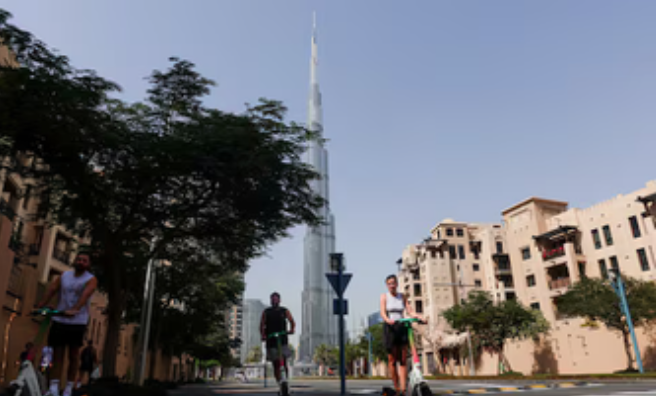
If you want the emotional centre of the Gulf reaction, it is still the UAE, especially Dubaiand Abu Dhabi. The images and reporting that travelled fastest across social media were not of total devastation, but of something arguably more unsettling for a city that has built its brand on certainty:
missile debris, warning alerts, panic buying, airport disruption, and a shaken aura of invulnerability.
Reuters described residents in Dubai running for cover or freezing at their windows as drones and missiles were launched across Gulf skies, while the UAE later reopened its exchanges and flights only gradually after the initial shock.
The UAE leadership is trying to project calm and strength. President Mohammed bin Zayedsaid the country is “well” and “no easy prey,” and officials have spoken of full readiness and defensive posture. Yet markets and property do not run on official language alone.
Reuters has also reported that Dubai’s safe-haven image is under test and that the property sector now faces a reckoning, not because the skyline has fallen, but because confidence has been punctured. In a city built as much on perception as on steel and concrete, that matters.
Ground reality in the UAE is therefore mixed. Life continues in many districts. Shops open. Roads move. But the old assumption that Dubai exists somehow above Middle Eastern risk has been damaged.
Be that as it may, this is not collapse. It is something subtler and, for investors, perhaps more dangerous: the beginning of doubt. One can rebuild a terminal. One can repair a facade. But once people begin asking whether the haven is still a haven, the economics become more complicated than a balance sheet.
BAHRAIN — FROM OIL TO WATER, THE WAR IS NOW TARGETING CIVILIAN NERVES
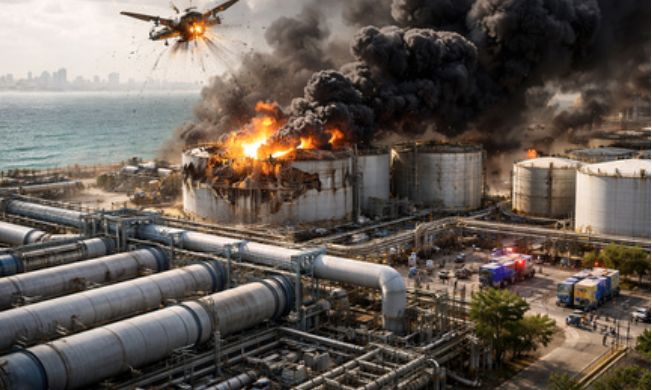
Bahrain’s story is becoming one of the most serious in the Gulf because the attacks now seem to be moving from symbolism toward critical civilian infrastructure.
Reuters reports that Bapco, Bahrain’s state oil company, has declared force majeure after an attack on its refinery complex, a signal that operations have been disrupted seriously enough to affect contractual obligations.
Reuters images also showed the aftermath of strikes in Manama, while reporting elsewhere this week described damage to data and cloud facilities in Bahrain as well.
More worrying still is the turn toward water infrastructure. Reporting carried by Al Jazeera and based in part on Reuters material says a desalination plant in Bahrain was damaged in a drone strike, with injuries reported. In the Gulf, this is not a side story.
It is existential. These states can absorb financial hits, market losses, and even transport disruption for a period. Water is different. The moment desalination enters the target set, the war ceases to be about strategic pressure alone and begins to brush ordinary civilian survival.
Be that as it may, Bahrain is also strategically exposed because of its hosting of U.S. military infrastructure and its small geographic footprint. It does not have the physical depth of Saudi Arabia or the economic redundancy of the UAE.
When people in Sri Lanka ask whether the war is widening, Bahrain offers one of the clearest answers: yes, and in ways that can no longer be described as merely theatrical. When refineries burn and desalination plants are damaged, the battlefield is no longer distant from the kitchen tap.
KUWAIT — A FRONT-LINE STATE THAT DID NOT ASK TO BE ONE
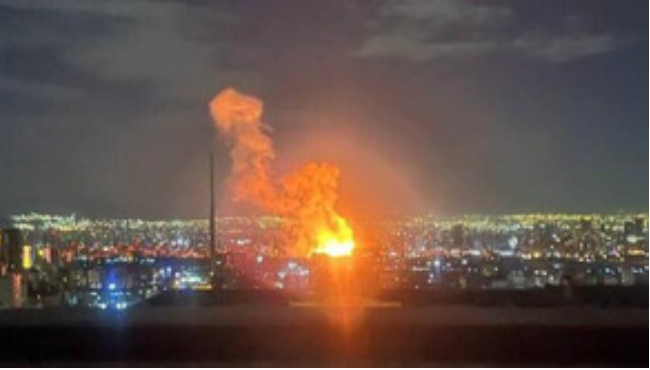
Kuwait is another Gulf state that suddenly finds itself absorbing the consequences of a war it did not start but can no longer avoid. Reuters reports that two Kuwaiti Interior Ministry officials were killed, while the wider toll in Kuwait since the crisis began has included five fatalities, among them four military personnel and a child, with dozens injured.
Reuters also reported missile and drone strikes near Kuwait International Airport, which tells you just how close the threat has come to daily civilian life.
There was also a remarkable and dangerous episode earlier in the week when Reuters reported a friendly-fire incident in which Kuwaiti air defenses, operating under intense pressure, mistakenly shot down three U.S. F-15 fighter jets.
That is not just a dramatic operational error. It is a reminder of what happens when skies become crowded, warning times shorten, and alliances are tested in real time under stress. Kuwait has long existed as a carefully managed security state under the U.S. umbrella. This war is exposing the costs and contradictions of that arrangement.
Be that as it may, the broader Kuwaiti picture is not one of panic so much as compressed anxiety. The state remains intact. Institutions are functioning. But the war has moved the country from a support zone to a near- frontline environment. When airport zones, military installations and ministry personnel all begin appearing in the same casualty narrative, it becomes impossible to pretend that this is merely somebody else’s war. Kuwait may not be leading the headlines every hour. It should be. It is one of the clearest examples of how quickly geography can overrule intention.
LEBANON — BEIRUT’S RUBBLE, A SIX- FIGURE SHELTER CRISIS, AND A BLEEDING HEALTH SYSTEM
If Iran is the biggest story in scale, Lebanon may be the clearest humanitarian catastrophe. Reuters says Israel’s operations in Lebanon have now killed nearly 300 people as of one report and later at least 394, while the U.N. says 100,000 people are now in collective shelters, with many more staying elsewhere outside the formal shelter system. Reuters footage from Beirut’s southern suburbs shows mounds of smoking rubble, shattered streets and apartment blocks reduced to twisted concrete and dust.
The medical picture is alarming. The WHO says violence and evacuation orders have forced the closure of 43 primary health care centres and two hospitals in Lebanon, and it has verified attacks on health care there as well.
A Reuters report also described how refugees and migrants in Beirut sought sanctuary in a church as strikes intensified, a small but telling sign that parts of the city are improvising civilian protection because formal systems are stretched or absent.
Be that as it may, the truly dangerous thing about Lebanon is not just the current casualty number. It is the country’s pre-existing fragility.
Lebanon entered this escalation already financially broken, politically fractured and socially exhausted. A country that was never really repaired is now being asked to absorb another war.
The result is predictable: displacement, trauma, overburdened hospitals, and a capital that once sold itself on cosmopolitan resilience now measuring survival in shelter beds and functioning clinics.
In Sri Lanka, people are watching the images from Beirut because they recognize something familiar in them. Not the cause. The pattern. When states weaken for too long, shocks become disasters much faster.
IRAQ — THE EMBASSY ROCKETS, THE MILITIAS, AND A WAR TEHRAN CAN NO LONGER PERFECTLY DIRECT
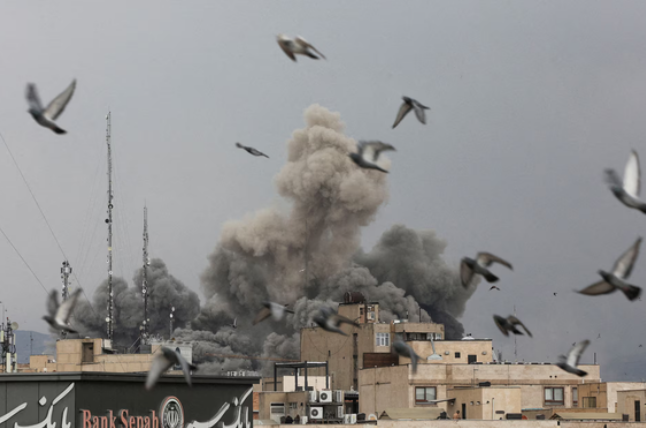
In Iraq, the headline story is no longer simply whether Tehran’s allied militias exist. Of course they do. The more interesting question is whether they are fully willing, or fully able, to fight the war Iran may want.
Reuters reported that Katyusha rockets targeted the U.S. Embassy in Baghdad, though there were no American casualties, and also reported an airstrike that killed a commander from the Islamic Resistance in Iraq, an umbrella label used by Iran-backed armed factions.
But Reuters has also reported something more strategically revealing: despite more than two dozen claimed attacks in the name of the Islamic Resistance in Iraq, many have caused no significant damage and in some cases there is no evidence the claimed attacks happened at all.
That suggests a gap between propaganda and operational appetite.
Tehran spent years building influence through Iraqi proxies. Yet now, at the moment of greatest need, those networks appear more hesitant, fragmented, or constrained than the mythology around them suggested.
Be that as it may, Iraq remains dangerous precisely because it is ambiguous. States are easier to read than militias.
Baghdad today sits inside a messy triangle of official institutions, armed factions, U.S. military presence and public exhaustion.
The embassy rockets matter less for their immediate physical effect than for what they signal: Iraq remains the easiest place for escalation to become deniable.
A missile there can be both significant and strategically convenient because everyone can claim just enough uncertainty.
For viewers in Sri Lanka trying to understand this war, Iraq is where the clean lines disappear. This is not just battlefield logic. It is network warfare.
SYRIA — THE QUIET CORRIDOR OF THE WAR, WITH RETURNS, BORDER MOVES, AND A WARNING FROM THE KURDS
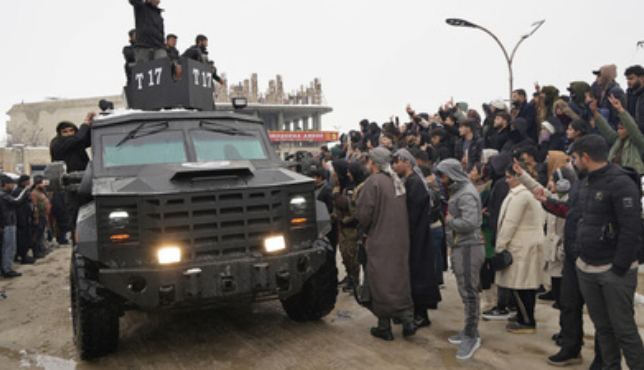
Syria is not generating the loudest headlines this week, but that does not mean it is peripheral. In wars like this, Syria often functions as a corridor, a pressure valve, and a warning system. Reuters reported that Syrian Kurdish leaders cautioned Iranian Kurds against aligning with Washington, saying from bitter experience that the United States may encourage local partners and then leave them exposed when strategic priorities change. That is a political story on its face, but in reality it is a battlefield lesson dressed as advice.
At the same time, the humanitarian data show Syria already absorbing spillover. UNHCR says cross-border movements from Lebanon into Syria have increased, and OCHA’s reporting from Syria’s own northeast and Aleppo areas shows the country was already carrying large numbers of internally displaced people before this latest regional escalation. In other words, Syria is not a fresh emergency waiting to happen.
It is an old emergency now being asked to absorb a new one.
Be that as it may, Syria’s real significance in this war may lie in what it reveals about American power and regional memory. The Syrian Kurds are effectively telling Iranian Kurds and others this: do not confuse tactical cooperation with strategic loyalty. That warning cuts deeper than one day’s fighting. It speaks to the wider rearrangement of alliances across the region. In a war where every capital is asking who truly stands where, Syria offers an answer no one likes but many understand. On this map, abandonment has a history.
THE PRESS, THE UN, AND THE HUMANITARIAN TRUTH — THIS IS A TERRIBLE THEATRE FOR JOURNALISTS
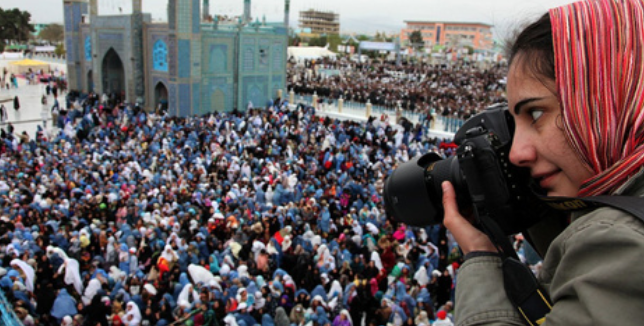
The last story is also one of the most important, because without it the rest of this war becomes rumour, propaganda, and state narrative. It is the story of journalists and humanitarian access.
The Committee to Protect Journalists says 129 journalists and media workers were killed in 2025, a record number, with Israel responsible for two-thirds of those deaths. Reuters’ own reporting on CPJ’s findings says at least 47 killings were considered intentional by the watchdog.
That is the background against which reporters are now trying to work in Iran, Lebanon, Gaza, Israel and across the Gulf.
The humanitarian agencies are sounding equally grave alarms. UNHCR says the Middle East situation is now a major humanitarian emergency, with more than 330,000 people displaced across the region and beyond, mostly within their own countries.
OCHA says homes, hospitals and schools are being hit, while WHO says health systems are under acute strain in both Iran and Lebanon.
This is what the ground reality looks like when the rhetoric is stripped away. Not just explosions. Interrupted insulin. Closed clinics. Overfull shelters. Ambulances hit.
Be that as it may, the question hanging over all of this is institutional. What exactly is the United Nations doing, beyond counting, briefing and pleading? That sounds harsh. It is also the question many civilians are asking. The old postwar promise was that the UN would not merely witness catastrophe but help contain it. In this war, as in too many others, it increasingly looks like a recorder of damage rather than a stopper of it. And perhaps that is the sharpest NewsLine conclusion of all. When journalists become more vulnerable, and the UN more procedural, wars become easier to wage and harder to understand.
Trump says Iran war will end ‘very soon,’ predicts lower oil prices
President Donald Trump on Monday said that the war against Iran will end “very soon,” and also said that oil prices will drop.
Trump’s prediction came at a press conference at his golf club near Miami.
“We’re achieving major strides toward completing our military objective,” Trump told reporters.
“And some people could say they’re pretty well complete. We’ve wiped every single force in Iran out, very completely,” the president said. “Most of Iran’s naval power has been sunk. It’s on the bottom of the sea. It’s almost 50 ships. I was just notified of 51 ships.”
“They have no Navy, they have no Air Force, they have no anti-aircraft equipment,” he said.
“They have no leadership. It’s all been blown up.”
“This is a military success the likes of which have never been seen,” Trump said.