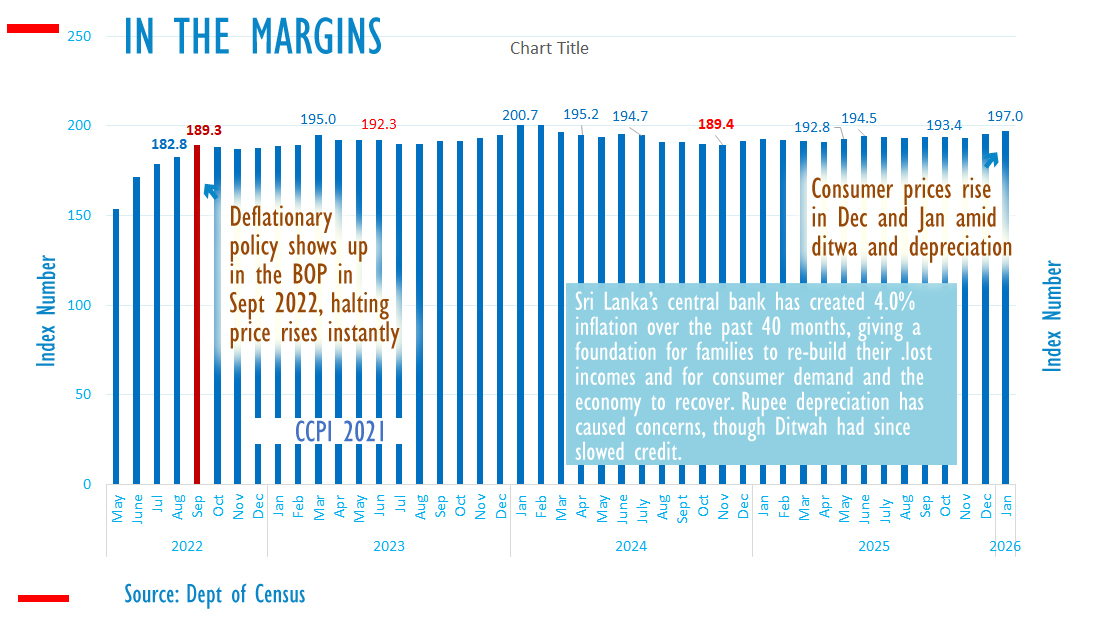
Sri Lanka’s headline inflation, as measured by the Colombo Consumer Price Index (CCPI, 2021=100), remained unchanged at 2.1% year-on-year in November 2025, maintaining the same level recorded in October 2025, according to data released by the Department of Census and Statistics.
The stabilization comes despite varied dynamics across food and non-food categories. Food inflation decelerated to 3.0%, down from 3.5% in October, reflecting easing price pressures in essential items. In contrast, non-food inflation edged higher to 1.7%, compared with 1.4% in the previous month, driven mainly by price adjustments in key service-related subcategories.
On a month-on-month basis, the CCPI recorded a decline of 0.23%, reversing the marginal 0.1% increase seen in October. The fall was largely attributed to the food sector’s contribution of -0.18 percentage points, while the non-food sector accounted for -0.05 percentage points, indicating broad-based easing across consumer expenditure groups.
Core inflation—which excludes volatile food, energy, and transport components—accelerated to 2.4% in November, up from 2.2% in October, signaling firming underlying demand conditions within the economy.
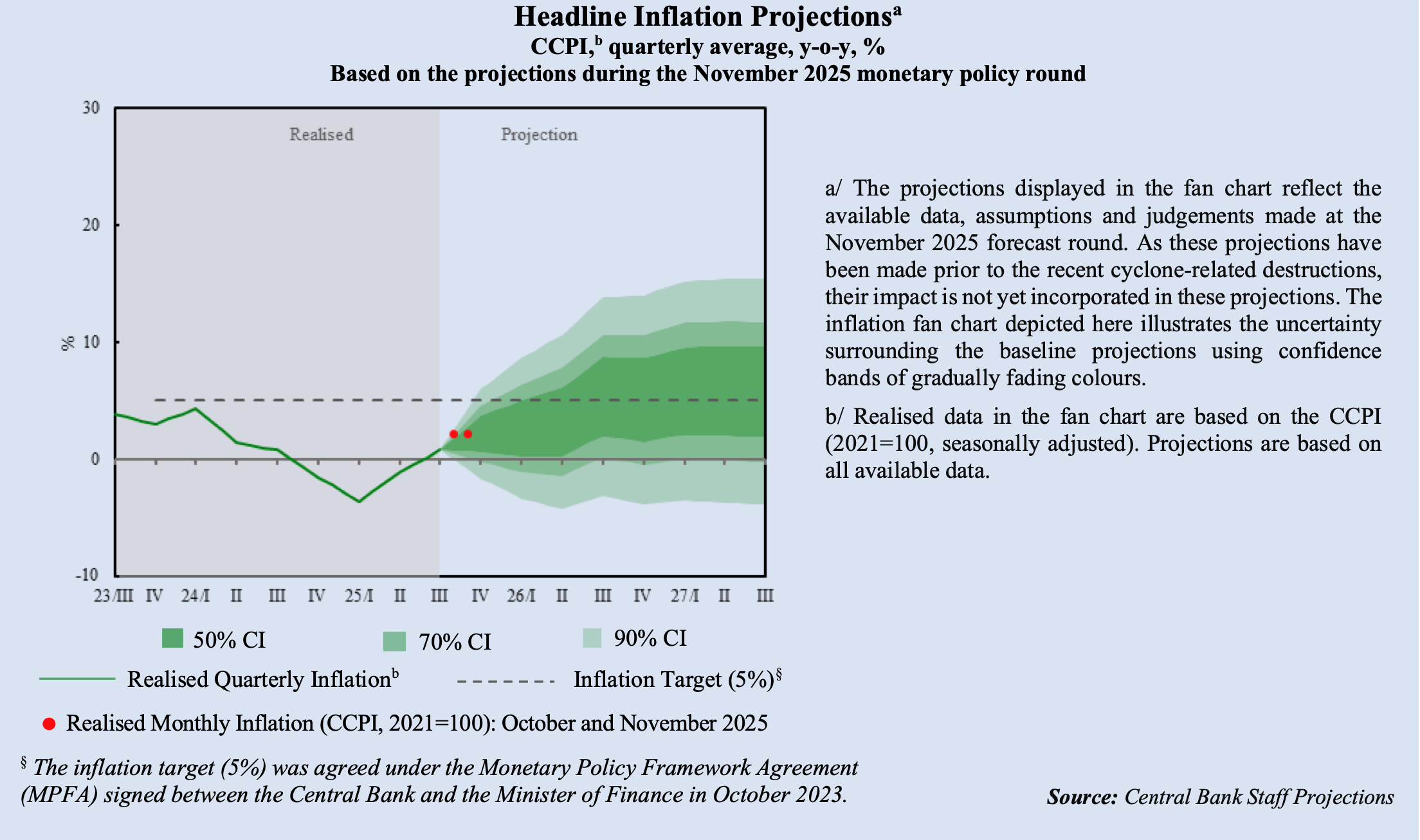
The Central Bank’s latest inflation projections, prepared during the November 2025 monetary policy round, point to a gradual rise in inflation toward the 5% target established under the Monetary Policy Framework Agreement. However, officials caution that the trajectory may shift depending on the extent of price pressures arising from recent cyclone-related disruptions, the full impact of which is still under assessment and not yet factored into current forecasts.
Despite the temporary monthly dip in the index—down to 193.4 in November from 193.8 in October—annual average inflation trends continue to reflect subdued but stabilizing consumer price movements. Authorities remain optimistic that appropriate policy measures will support inflation returning to and sustaining around the desired target range in the coming months.