
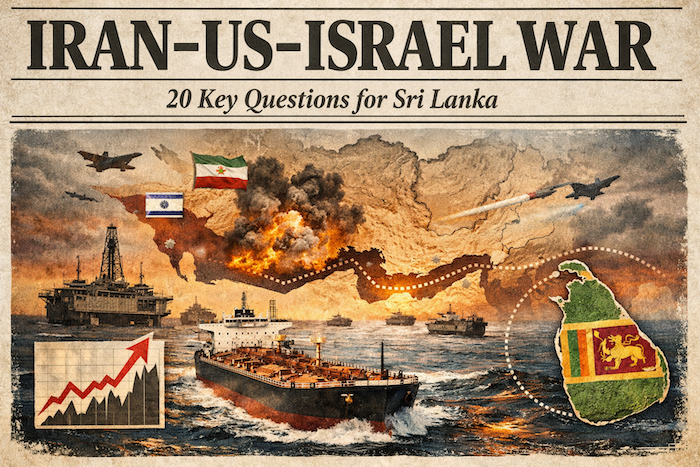
As conflict between the United States, Israel and Iran intensifies, global energy markets and shipping routes are under strain. The Strait of Hormuz through which about one-fifth of global oil supplies pass has become a focal point of geopolitical risk.
For Sri Lanka, the Middle East is not only a distant geopolitical theatre but a central pillar of its economy. The region supplies much of the country’s energy, employs hundreds of thousands of Sri Lankan workers, and serves as a major export market.
Below are the most important questions and answers about how the conflict could affect Sri Lanka.
1. How could the war affect Sri Lanka’s fuel imports?
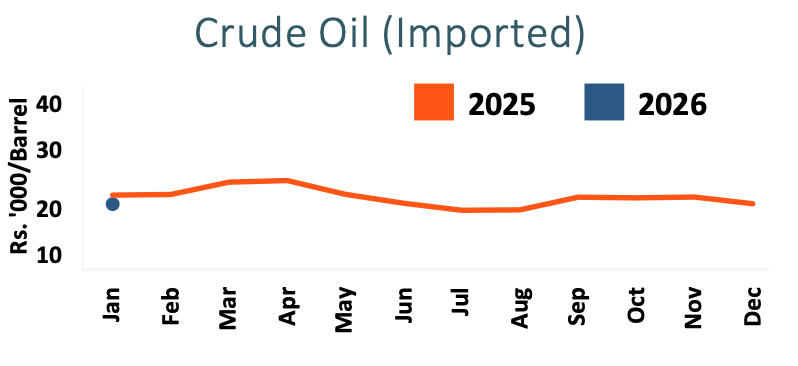
Sri Lanka is almost entirely dependent on imported petroleum, making the country highly vulnerable to global oil market disruptions. The majority of Sri Lanka’s crude oil and refined fuel imports originate from Middle Eastern suppliers such as Iraq, Saudi Arabia, and the UAE. Much of this energy supply passes through the strategically critical Strait of Hormuz, a narrow maritime corridor through which roughly 20% of global oil trade flows. If the conflict involving the United States, Israel, and Iran disrupts tanker traffic or damages Gulf energy infrastructure, global crude prices could rise sharply. For Sri Lanka, which spends around $4–5 billion annually on fuel imports, even a moderate increase in oil prices could significantly inflate the country’s import bill.
Higher global oil prices would also increase costs for the Ceylon Petroleum Corporation and the Lanka IOC, the two main fuel suppliers in Sri Lanka. Since fuel is a key input for electricity generation, transportation, and industry, rising import costs could quickly feed into higher domestic fuel prices and increased electricity tariffs. This would not only widen Sri Lanka’s trade deficit but also place additional pressure on the country’s foreign currency reserves, which are still recovering after the Sri Lankan economic crisis (2022). In short, a prolonged Middle East conflict could significantly raise Sri Lanka’s energy costs and amplify broader economic vulnerabilities.
2. Could Sri Lanka’s foreign reserves come under pressure?
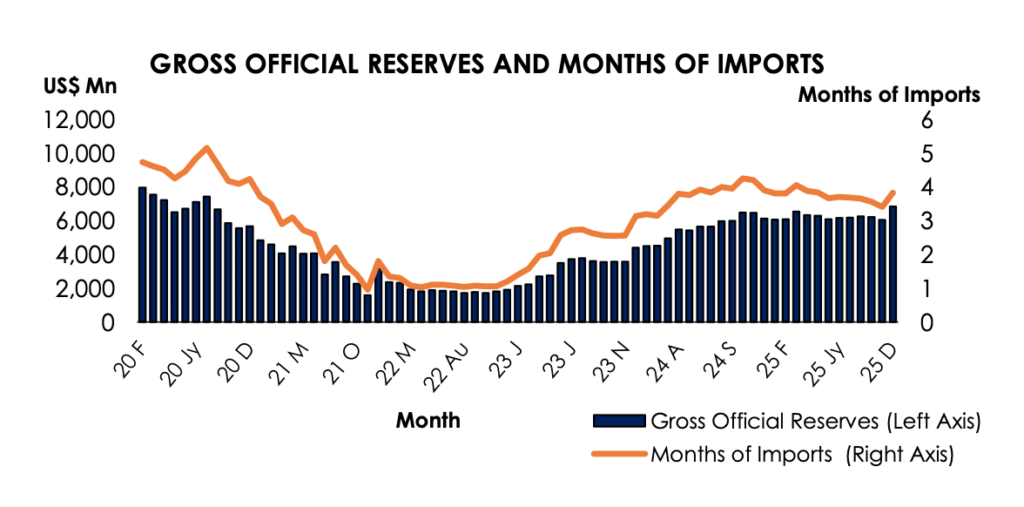
Yes. Sri Lanka’s foreign reserves could come under renewed pressure if the Middle East conflict pushes global oil prices significantly higher. The country relies heavily on imported fuel, and a sharp rise in crude prices would require Sri Lanka to spend more US dollars to secure energy supplies. Since a large share of Sri Lanka’s oil imports originates from the Gulf and passes through the strategically vital Strait of Hormuz, any disruption to shipping or production in the region could quickly raise import costs. Even a $10 increase in global oil prices can add hundreds of millions of dollars to Sri Lanka’s annual fuel import bill, increasing the demand for scarce foreign currency.
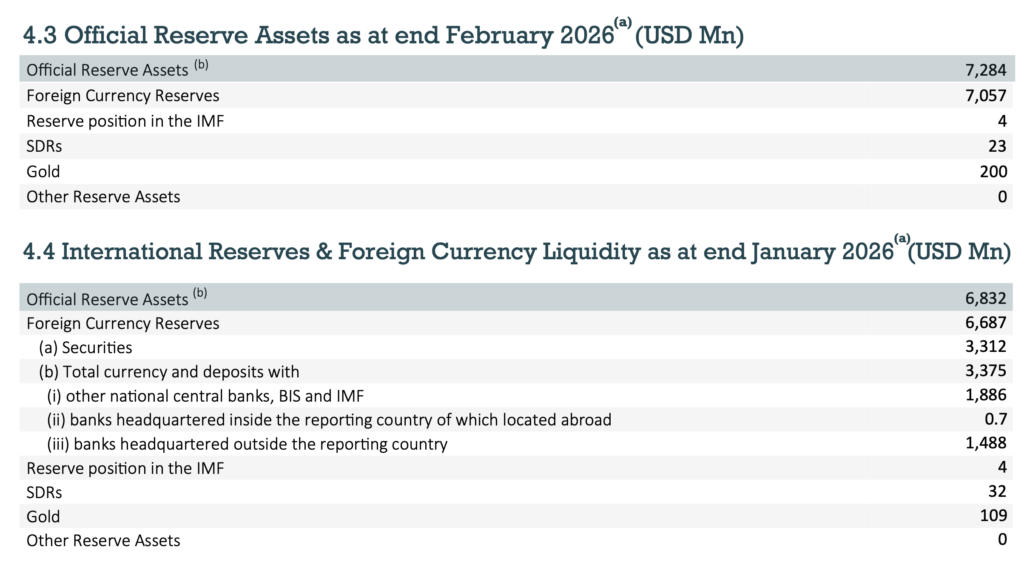
This risk is particularly significant because Sri Lanka is still rebuilding reserves following the Sri Lankan economic crisis (2022), when the country defaulted on its external debt and experienced a severe shortage of foreign exchange. Although reserves have gradually recovered to around $6–7 billion in recent years, they remain relatively modest compared with the country’s import needs and external debt obligations. If higher oil prices widen the trade deficit or slow the inflow of foreign currency from tourism, exports, or remittances, the rebuilding of reserves could stall—potentially increasing pressure on the exchange rate and the broader balance of payments.
3. What impact could the war have on the Sri Lankan rupee?
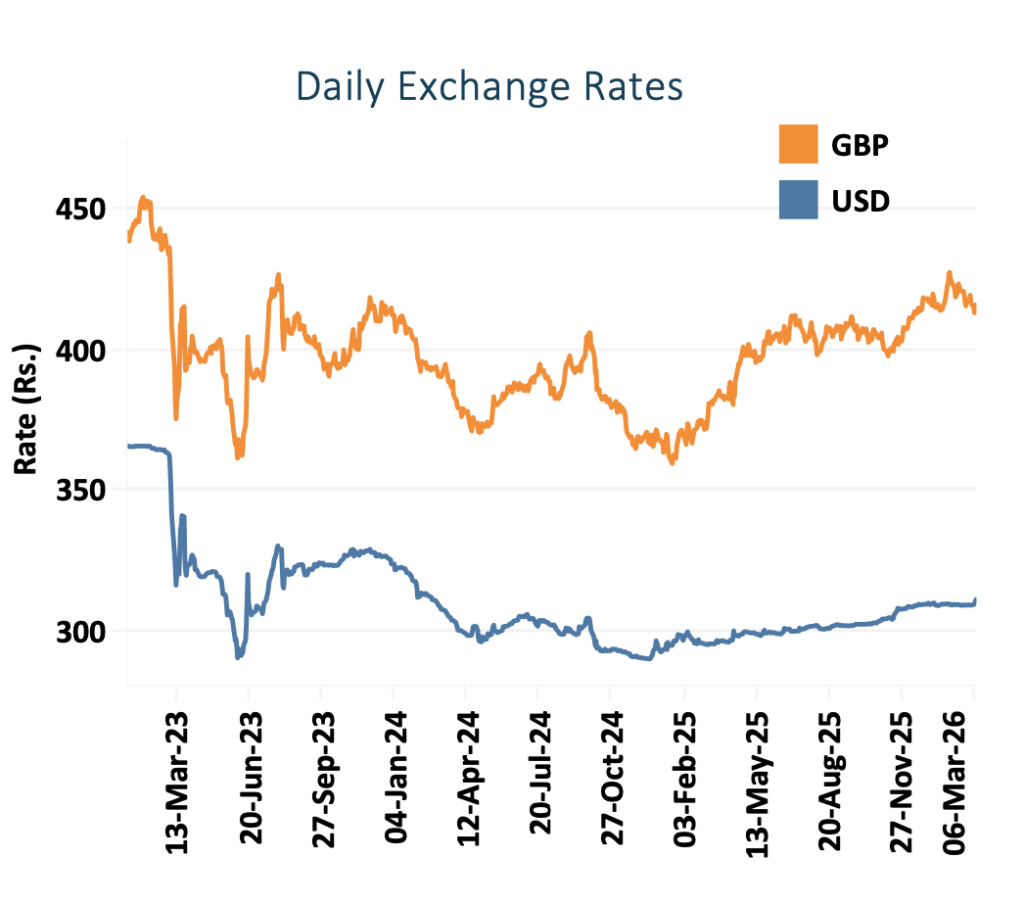
A widening Middle East conflict could place depreciation pressure on the Sri Lankan rupee, primarily through higher energy import costs. Sri Lanka imports almost all of its petroleum requirements, spending roughly $4–5 billion annually on fuel imports in recent years. If tensions disrupt oil shipments through the strategically critical Strait of Hormuz which carries about 20% of global oil supplies global crude prices could surge. Higher oil prices would increase Sri Lanka’s demand for US dollars to pay for fuel imports, widening the trade deficit and putting downward pressure on the rupee in foreign exchange markets.
Currency vulnerability is particularly significant because Sri Lanka’s exchange rate has historically reacted sharply to external shocks. During the Sri Lankan economic crisis (2022), the rupee depreciated by more than 40% against the US dollar as foreign reserves collapsed and import costs surged. Although macroeconomic stability has improved since then, the country remains sensitive to global commodity price swings. If oil prices rise substantially due to the conflict, the resulting increase in import costs could weaken the rupee further, making imports more expensive and potentially reigniting inflationary pressures across the economy.
4. Could remittances from Sri Lankan workers in the Middle East be affected?
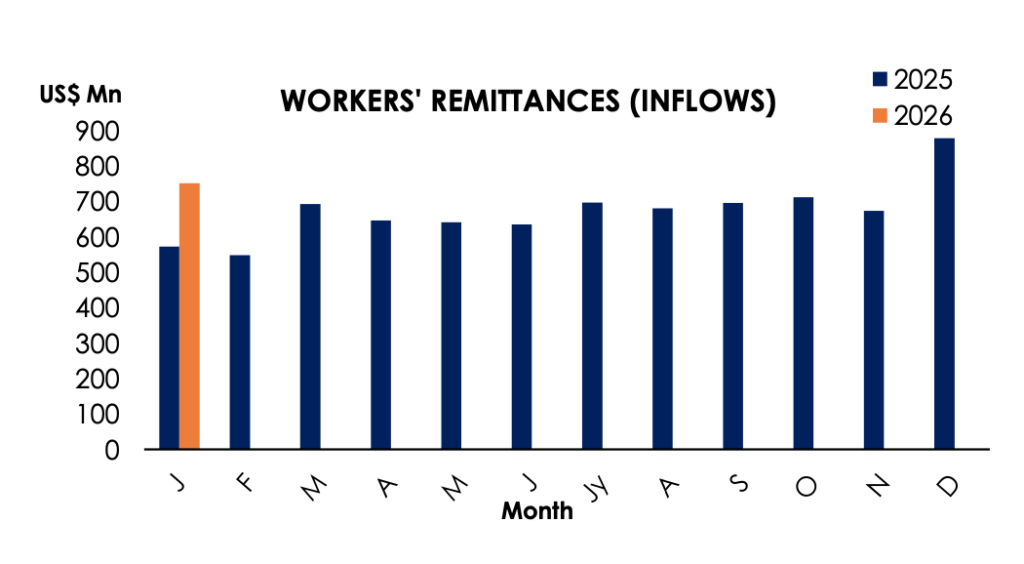
Yes. Remittances from Sri Lankan workers in the Middle East could be affected if the regional conflict disrupts economic activity in Gulf countries. Overseas worker remittances are Sri Lanka’s single largest source of foreign exchange, reaching a record about $7.8–8.0 billion in 2025. Around one million Sri Lankans currently live and work in Middle Eastern countries, including the UAE, Saudi Arabia, Kuwait and Qatar, making the region the dominant source of remittance inflows. If conflict leads to economic uncertainty, reduced construction activity, or labour market disruptions in Gulf economies, employment opportunities for migrant workers could weaken, potentially slowing remittance flows to Sri Lanka.
At the same time, the impact could be mixed. Gulf economies are heavily dependent on oil revenues, and a spike in global oil prices caused by the conflict could actually boost government revenues and infrastructure spending in oil-exporting states, temporarily supporting labour demand for foreign workers. However, if the conflict escalates and affects regional stability or trade, remittance inflows could become more volatile. Given that remittances account for roughly 6–7% of Sri Lanka’s GDP and play a crucial role in supporting household incomes and foreign exchange reserves, any sustained disruption in these inflows could have significant implications for the country’s external sector and economic stability.
5. Could tourism be affected?
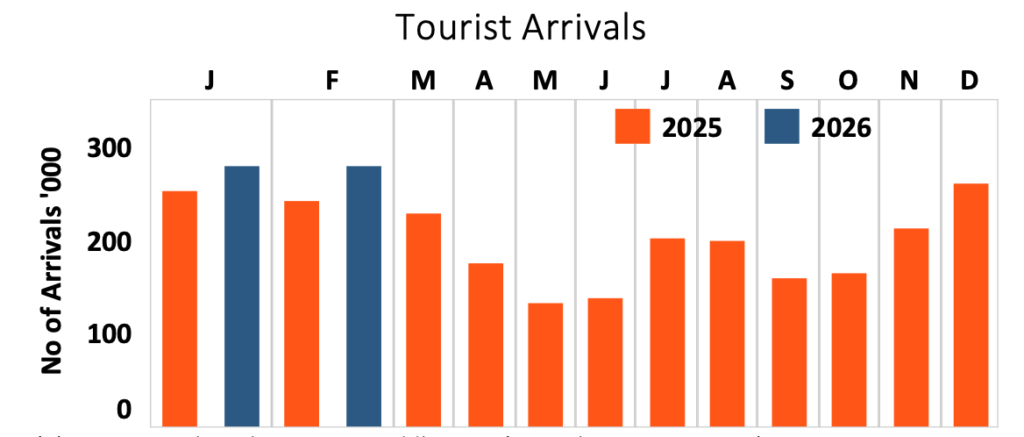
Yes. Tourism in Sri Lanka could be indirectly affected if the Middle East conflict leads to higher global energy prices and increased travel costs. Aviation fuel is one of the largest operating expenses for airlines, and a spike in crude oil prices—particularly if shipping through the strategically important Strait of Hormuz is disrupted—could push up global jet fuel prices. Higher fuel costs typically translate into more expensive airfares, which can reduce long-haul travel demand. For Sri Lanka, where most visitors arrive by air, higher ticket prices could slow the pace of tourism recovery.
Tourism has become a critical source of foreign exchange for the country’s economy following the Sri Lankan economic crisis (2022). Sri Lanka welcomed over 2 million tourist arrivals in 2025, generating roughly $3–3.5 billion in tourism earnings. Popular destinations such as Colombo, Galle, and Sigiriya depend heavily on international visitors. If global economic uncertainty rises or airline capacity declines due to higher fuel costs, tourist arrivals to Sri Lanka could slow, reducing a key source of foreign currency for the country.
6. Could Sri Lanka’s tea exports be affected?
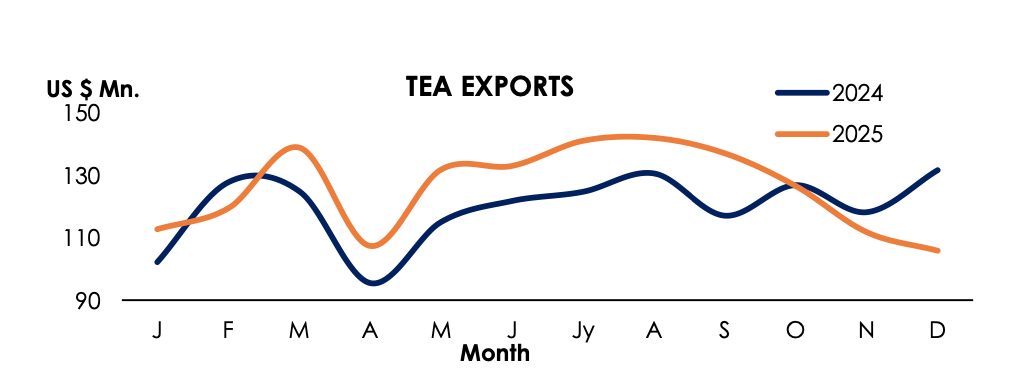
Yes. Sri Lanka’s tea exports could be affected if the Middle East conflict weakens economic activity in key Gulf markets. Tea remains one of the country’s most important agricultural exports, generating roughly $1.3–1.5 billion in annual export earnings in recent years. According to data from the Sri Lanka Tea Board, the Middle East accounts for about 40–45% of total Ceylon tea exports, making it the largest regional market for Sri Lankan tea. Countries such as Iraq, Iran, the United Arab Emirates, Saudi Arabia and Turkey are among the biggest buyers. If the conflict leads to economic slowdowns, trade disruptions, or currency instability in these markets, demand for imported tea could weaken.
The risk is significant because Ceylon tea exports are heavily concentrated in politically sensitive regions. For example, Iraq alone has often accounted for around 15–20% of Sri Lanka’s tea exports, making it the single largest destination in many years. If geopolitical tensions disrupt regional trade routes, banking channels, or consumer demand, Sri Lanka’s tea shipments could decline. Since tea exports are a key source of foreign exchange and support thousands of smallholder farmers across the country, any sustained drop in demand from Middle Eastern markets could have wider economic implications for Sri Lanka’s rural economy and export earnings.
7. How dependent is Sri Lanka on Middle Eastern markets?
Sri Lanka is deeply economically connected to the Middle East through energy imports, migrant labour, and export markets. The country imports most of its crude oil and refined petroleum from Gulf producers such as Iraq, Saudi Arabia, the UAE, and Oman. Much of this energy supply travels through the strategically critical Strait of Hormuz, which carries roughly one-fifth of global oil trade. Because Sri Lanka imports nearly all of its fuel requirements, disruptions in the Gulf can quickly affect the country’s energy security, trade balance, and domestic fuel prices.
The Middle East is also central to Sri Lanka’s external income. More than 1 million Sri Lankans work in Gulf countries, and remittances from overseas workers generated around $7–8 billion in 2025, making them the country’s largest source of foreign exchange. In addition, the region is a key export destination—particularly for Ceylon tea, with roughly 40–45% of Sri Lanka’s tea exports going to Middle Eastern markets according to the Sri Lanka Tea Board. These strong links across energy, labour migration, and trade mean that geopolitical instability in the Middle East can have a direct and significant impact on Sri Lanka’s economy.
8. Could shipping disruptions affect Sri Lanka’s trade?
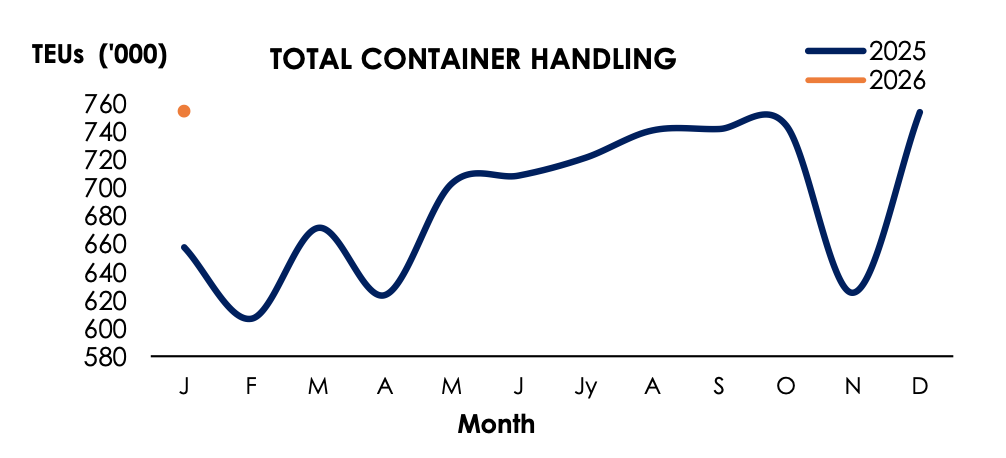
Yes. Shipping disruptions linked to the Middle East conflict could significantly affect Sri Lanka’s trade because the country depends heavily on global maritime routes for both imports and exports. A large share of the world’s oil and container traffic passes through strategic chokepoints such as the Strait of Hormuz and nearby sea lanes connecting the Middle East with Asia. If the conflict leads to tanker attacks, naval confrontations, or higher security risks for commercial vessels, shipping companies may reroute vessels or impose war-risk insurance premiums, increasing freight costs. For Sri Lanka—which imports fuel, food, and industrial goods by sea—higher shipping costs would raise the overall import bill.
The impact could also be felt through Sri Lanka’s role as a regional shipping hub. The Port of Colombo is one of South Asia’s busiest container ports, handling over 7 million TEUs of cargo annually, with a large share consisting of transshipment cargo destined for India and other regional markets. If geopolitical tensions disrupt major shipping routes in the Arabian Sea or increase insurance costs for vessels operating in the region, cargo flows could slow and shipping lines may adjust routes. This could increase logistics costs for exporters and importers, potentially affecting Sri Lanka’s trade competitiveness and its role as a key maritime hub in the Indian Ocean.
9. Could inflation rise in Sri Lanka?
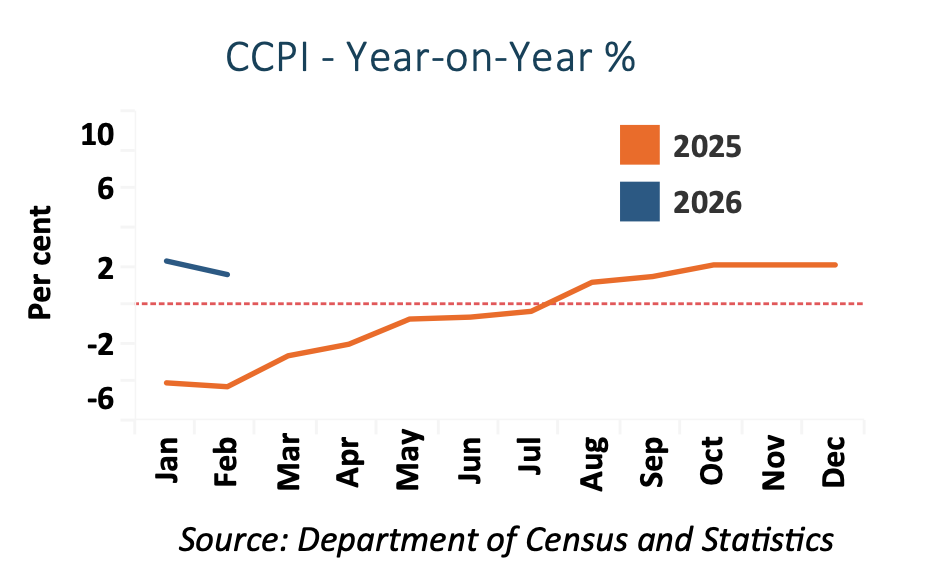
Yes. Inflation in Sri Lanka could rise if the Middle East conflict drives global oil prices higher. Sri Lanka imports nearly all of its fuel, and most of these shipments originate from Gulf producers and pass through the strategically vital Strait of Hormuz. If tensions disrupt tanker traffic or reduce oil supply, global crude prices could surge, raising Sri Lanka’s fuel import costs. Higher fuel prices would quickly feed into domestic transport costs, electricity generation, and industrial production, which in turn could push up the prices of food and other consumer goods.
Sri Lanka has already experienced how energy shocks can fuel inflation. During the Sri Lankan economic crisis (2022), inflation surged to over 70% at its peak, one of the highest rates recorded in the country’s history. Although inflation has since moderated as economic conditions stabilized, the economy remains sensitive to external commodity price shocks. A sustained rise in global oil prices could increase transportation and logistics costs across the economy, potentially reversing recent gains in price stability and placing renewed pressure on household living costs
10. Could Sri Lanka face another balance-of-payments crisis?
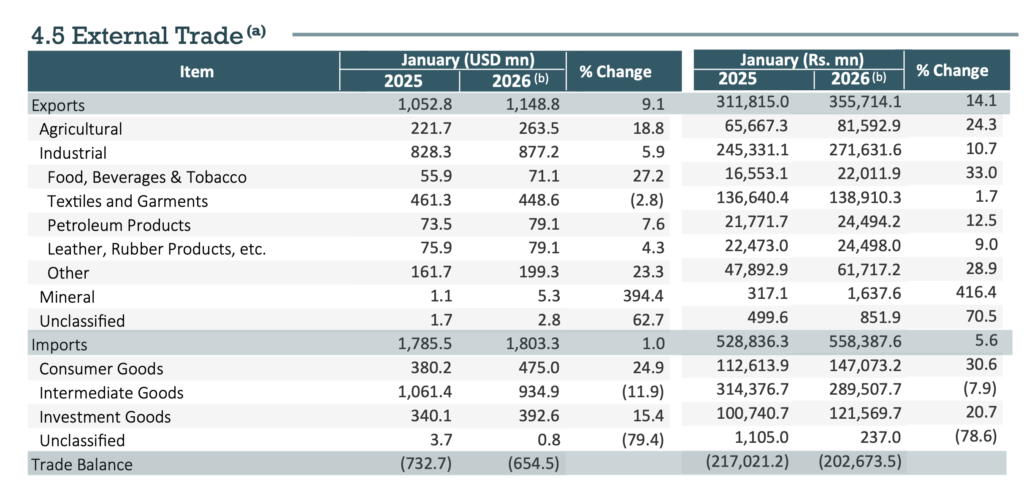
Sri Lanka is unlikely to face another immediate balance-of-payments crisis, but a prolonged Middle East conflict could increase external vulnerabilities. The country is still recovering from the Sri Lankan economic crisis (2022), when a severe shortage of foreign exchange forced Sri Lanka to suspend external debt payments. Since then, foreign reserves have gradually improved to around $5–6 billion, supported by stronger tourism, remittances, and tighter import controls. However, Sri Lanka still relies heavily on imported fuel and essential goods, meaning that a sharp increase in global oil prices—particularly if supplies through the Strait of Hormuz are disrupted—could significantly widen the trade deficit.
The risk would grow if multiple external shocks occur simultaneously. Higher oil prices could increase the country’s annual fuel import bill by hundreds of millions of dollars, while slower tourism, weaker exports such as Ceylon tea, or declining remittances from the Middle East could reduce foreign currency inflows. Sri Lanka also faces large external debt repayments beginning later this decade as part of its restructuring process. If these pressures combine, they could strain the balance of payments and slow the rebuilding of reserves, increasing the risk of renewed external financing stress even if a full-scale crisis is not imminent.
11. How might global energy markets change?
Global energy markets could become significantly more volatile if the conflict in the Middle East escalates. The region produces roughly one-third of the world’s crude oil, and a large portion of global energy exports passes through the strategically critical Strait of Hormuz, where about 20–21 million barrels of oil per day move through the narrow waterway. Any threat to tanker traffic, offshore platforms, or export terminals could quickly tighten global supply. Even without a direct disruption, geopolitical risk tends to push oil prices higher as traders price in potential supply shortages and shipping insurance costs rise.
For energy-importing economies like Sri Lanka, these shifts can have major consequences. If tensions cause crude prices to rise toward or above $100 per barrel, global fuel markets could tighten, increasing the cost of gasoline, diesel, and jet fuel worldwide. Higher energy prices would also ripple through global supply chains, affecting transportation, manufacturing, and food production costs. This could create a broader wave of inflation across many economies and place additional pressure on countries that rely heavily on imported energy.
12. Could the war slow Sri Lanka’s economic recovery?
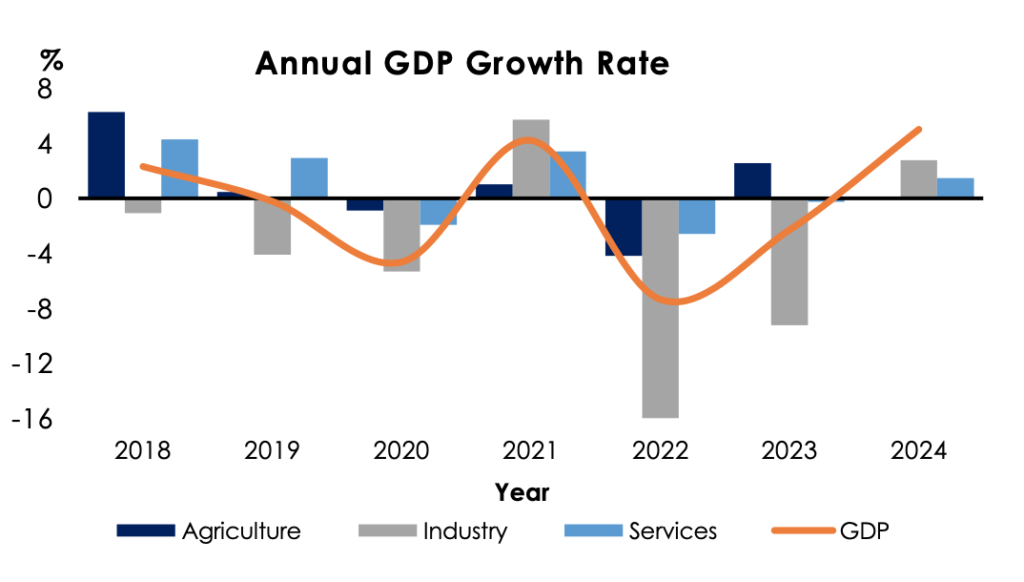
Yes. The war could slow Sri Lanka’s economic recovery by creating new external shocks at a time when the country is still stabilizing after the Sri Lankan economic crisis (2022). Sri Lanka’s economy contracted sharply during the crisis but returned to modest growth in 2024–2025, supported by tourism, remittances, and stabilization policies under the program with the International Monetary Fund. However, the recovery remains fragile. If conflict in the Middle East pushes global oil prices higher—especially if shipping through the Strait of Hormuz is disrupted—Sri Lanka’s fuel import bill could increase significantly, placing pressure on the trade balance, inflation, and foreign exchange reserves.
At the same time, the conflict could affect several of Sri Lanka’s key sources of foreign currency. Tourism, which generated around $3–3.5 billion in earnings in 2025, could slow if global travel costs rise due to higher jet fuel prices. Export sectors such as Ceylon tea could also face weaker demand if Middle Eastern economies slow, while remittances from Sri Lankan workers in the Gulf may become more volatile. If these pressures occur simultaneously—higher energy costs combined with weaker foreign exchange inflows—they could slow economic growth and delay Sri Lanka’s broader recovery.
13. Could global financial markets affect Sri Lanka and CSE?
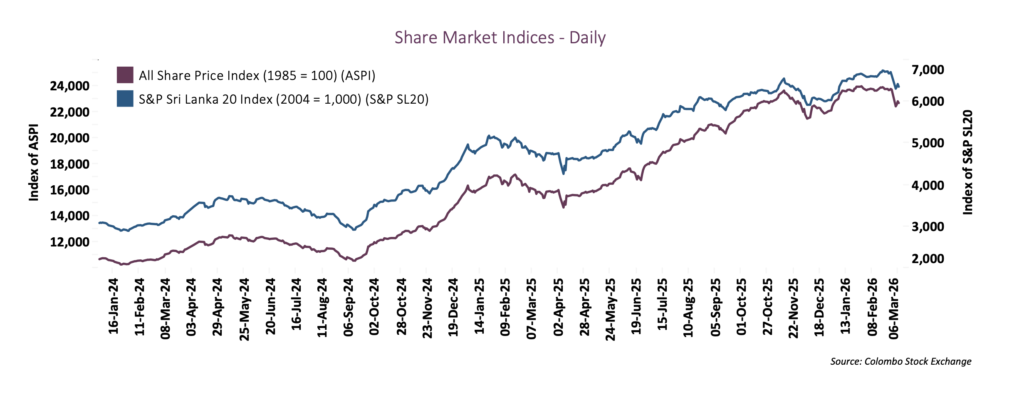
Yes. Global financial market volatility triggered by a major Middle East conflict could affect both Sri Lanka’s economy and the Colombo Stock Exchange (CSE). Geopolitical tensions often lead global investors to move money into safer assets such as US Treasury bonds and gold, reducing capital flows to emerging and frontier markets. When this happens, smaller markets like Sri Lanka can experience reduced foreign investment, increased currency volatility, and higher borrowing costs. For Sri Lanka—still recovering from the Sri Lankan economic crisis (2022)—such global risk aversion could make it harder to attract foreign capital needed to support economic recovery.
The impact could also be visible in equity markets. Although foreign participation in the Colombo Stock Exchange is relatively modest compared with larger markets, global uncertainty can still influence investor sentiment, trading volumes, and sector performance. Rising global oil prices could affect companies in transportation, manufacturing, and power generation due to higher operating costs, while export-oriented firms may face weaker demand if global growth slows. At the same time, heightened geopolitical risk could increase market volatility, leading to short-term fluctuations in share prices and potentially slowing momentum in Sri Lanka’s capital markets.
14. Could migration patterns change?
Yes. Migration patterns could shift depending on how the conflict affects the economies of Gulf countries, which host the majority of Sri Lankan migrant workers. More than 1 million Sri Lankans are employed across the Middle East, particularly in countries such as Saudi Arabia, the UAE, Qatar, Kuwait and Oman. These workers are a vital part of Sri Lanka’s external sector, sending home billions of dollars in remittances each year through channels monitored by the Central Bank of Sri Lanka. If the conflict disrupts economic activity, construction projects, or labour markets in the region, job opportunities for migrant workers could slow, potentially reducing new migration flows from Sri Lanka.
However, the impact could also move in the opposite direction if oil prices rise significantly. Gulf economies depend heavily on energy revenues, and higher oil prices can increase government income and infrastructure spending. This often boosts demand for foreign labour in sectors such as construction, domestic work, and services. As a result, Sri Lanka could actually see increased short-term demand for migrant workers if oil-exporting countries benefit financially from higher global crude prices, especially if oil exports continue to move through the strategically important Strait of Hormuz.
15. Could the conflict affect China’s role in Sri Lanka?
Yes. The conflict could indirectly affect China’s economic engagement with Sri Lanka if global energy prices and trade flows are disrupted. China remains one of Sri Lanka’s largest bilateral creditors and infrastructure investors, largely through projects linked to the Belt and Road Initiative. Major Chinese-backed projects in Sri Lanka include the Hambantota Port and the Colombo Port City, both of which are strategically positioned along key Indian Ocean shipping routes. If the Middle East conflict pushes oil prices significantly higher or disrupts maritime trade routes, China’s global trade and manufacturing sectors could face higher costs, potentially influencing the pace of overseas investment.
At the same time, geopolitical instability in the Middle East could increase the strategic importance of Indian Ocean logistics hubs such as Sri Lanka. As one of the world’s largest trading nations, China depends heavily on maritime energy routes, including shipments passing through the Strait of Hormuz and across the Indian Ocean toward Asia. If global shipping patterns shift or security concerns increase along these routes, ports and logistics infrastructure in Sri Lanka could become even more strategically valuable for regional trade and energy supply chains, potentially shaping China’s long-term economic and strategic engagement with the island.
16. Could Russia benefit from the conflict?
Yes. Russia could benefit economically if the conflict in the Middle East disrupts oil supplies or pushes global energy prices higher. As one of the world’s largest oil exporters, Russia gains when crude prices rise because higher prices increase export revenues from its energy sector. If tensions threaten shipping through the strategically vital Strait of Hormuz—which carries roughly 20% of global oil supplies—global markets could tighten, pushing oil prices upward. In such a scenario, Russian crude could become more valuable in international markets, strengthening export earnings and government revenues.
The geopolitical dimension could also work in Russia’s favor. If Western countries seek alternative energy supplies to stabilize global markets during the conflict, Russian oil and gas could regain importance despite existing sanctions following the Russian invasion of Ukraine. Higher energy prices would also help finance Russia’s state budget, which relies heavily on oil and gas revenues. While the direct impact on Sri Lanka would likely be limited, changes in global energy supply patterns could still influence oil prices and fuel import costs faced by energy-importing economies like Sri Lanka.
17. Could Sri Lanka face another Financial Crisis like what it suffered in 2022
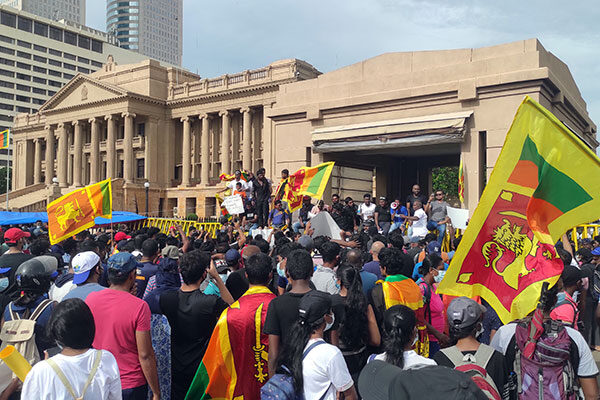
Sri Lanka is unlikely to face another immediate financial crisis like the Sri Lankan economic crisis (2022), but risks could increase if global shocks intensify. Since the crisis, the country has implemented economic reforms under a program supported by the International Monetary Fund, tightened monetary policy, and restructured a large portion of its external debt. Foreign reserves have gradually improved to around $5–6 billion, while tourism, exports, and worker remittances have helped stabilize the external sector. These factors have reduced the likelihood of a sudden collapse similar to 2022, when Sri Lanka ran out of foreign exchange and was unable to pay for essential imports such as fuel and medicine.
However, Sri Lanka’s recovery remains fragile and still exposed to external shocks. A sharp increase in global oil prices—especially if conflict disrupts energy shipments through the Strait of Hormuz—could significantly raise the country’s fuel import bill. If higher energy costs occur alongside weaker tourism, slower remittances from the Middle East, or declining export earnings such as Ceylon tea, pressure on the Sri Lankan rupee and foreign reserves could intensify. While this does not necessarily mean another crisis is imminent, prolonged global instability could slow economic recovery and increase financial stress on Sri Lanka’s external sector.
18. Could the conflict affect global food prices?
Yes. The conflict could push global food prices higher, mainly through rising energy and transportation costs. Oil is a critical input in modern agriculture—fuel powers farm machinery, irrigation systems, and global food transport networks. If tensions in the Middle East disrupt oil supplies or shipping through the strategically vital Strait of Hormuz—which carries about one-fifth of global oil trade—crude prices could increase sharply. Higher fuel prices typically raise the cost of producing, processing, and transporting food worldwide, which can feed directly into global food inflation.
Energy prices also affect fertilizer production, which relies heavily on natural gas. When energy prices rise, fertilizer costs often increase, raising agricultural production costs and potentially reducing crop yields. For import-dependent countries like Sri Lanka, higher global food prices can quickly translate into higher domestic food inflation because the country imports key staples such as wheat, sugar, and dairy products. As a result, a sustained increase in global energy prices caused by geopolitical tensions could indirectly raise food costs and place additional pressure on household living expenses.
19. Could Gulf countries become more important for Sri Lanka?
Yes. Gulf countries could become even more important for Sri Lanka as the country continues to rely heavily on the region for energy supplies, employment opportunities, and export markets. A large share of Sri Lanka’s crude oil and refined fuel imports originates from Gulf producers such as Saudi Arabia, Iraq, and the United Arab Emirates, with much of this supply passing through the strategically critical Strait of Hormuz. If global geopolitical tensions increase, securing stable energy supplies from Gulf partners could become an even higher priority for Sri Lanka’s economic and energy security.
The Gulf region is also central to Sri Lanka’s foreign exchange earnings. More than one million Sri Lankans work in Middle Eastern countries, sending home billions of dollars annually in remittances—one of the country’s largest sources of foreign currency according to the Central Bank of Sri Lanka. In addition, the Middle East remains a key export destination for products such as Ceylon tea. Strengthening diplomatic, labour, and trade ties with Gulf countries could therefore play an important role in supporting Sri Lanka’s economic stability and long-term recovery.
20. What is the biggest risk for Sri Lanka?
The biggest risk for Sri Lanka is a combined external economic shock if the Middle East conflict significantly disrupts global energy markets and regional economic activity. Sri Lanka remains highly dependent on imported fuel, and a sharp rise in oil prices—particularly if supplies through the strategically vital Strait of Hormuz are disrupted—could sharply increase the country’s fuel import bill. Sri Lanka already spends around $4–5 billion annually on petroleum imports, and a sustained increase in global crude prices could widen the trade deficit, weaken the Sri Lankan rupee, and increase inflation across the economy.
At the same time, several of Sri Lanka’s major sources of foreign exchange could come under pressure simultaneously. Remittances from overseas workers—especially those employed in the Middle East—tourism earnings, and export revenues such as Ceylon tea could all be affected if the regional economy slows or global travel and trade weaken. This combination of higher import costs and weaker foreign currency inflows would strain the country’s external sector just as it is recovering from the Sri Lankan economic crisis (2022). If these pressures persist, they could slow economic recovery and increase financial stress on the country’s balance of payments.