
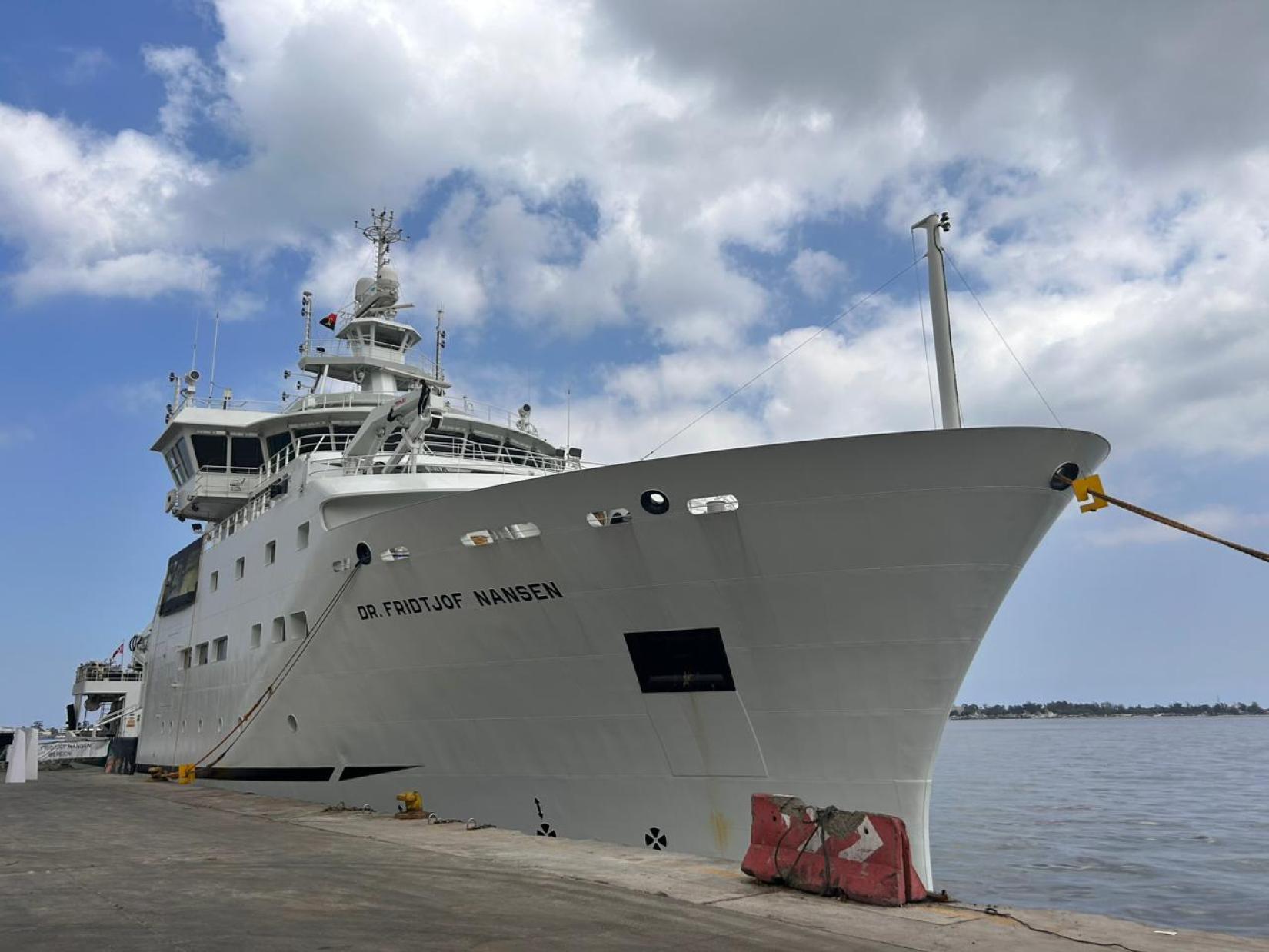
The United Nations-flagged research vessel, Dr. Fridtjof Nansen, has arrived in Sri Lanka to conduct a joint marine survey, as confirmed by the island nation’s Foreign Ministry. This visit follows a delay from eight months ago when the vessel was unable to carry out the same task.
The Dr. Fridtjof Nansen plays a crucial role in assisting countries with the collection of vital scientific data, aimed at fostering sustainable fisheries management and understanding the impacts of climate change on marine ecosystems.
“The survey, spanning 32 days, will focus on assessing marine living resources and ecosystems, providing updated scientific data to support Sri Lanka’s sustainable fisheries management and ocean governance,” stated Sri Lanka’s Foreign Ministry in a recent announcement.
During this mission, scientists will engage in various activities, including hydro-acoustic surveys to estimate the biomass and distribution of key fish stocks within Sri Lankan waters. They will also assess levels of marine pollution and conduct biodiversity monitoring.
The visit is anticipated to enhance local capacity, as it will unite Sri Lankan scientists from the National Aquatic Resources Research and Development Agency (NARA) and other national institutions with international experts, fostering scientific collaboration and knowledge exchange.
Sri Lanka last hosted the Dr. Fridtjof Nansen in 2018, when the vessel undertook a comprehensive survey of the country’s continental shelf and upper slope in partnership with national institutions. Previous surveys by the Nansen program in Sri Lankan waters took place from 1978 to 1980, highlighting a longstanding scientific partnership.
The research vessel’s approval to conduct surveys was delayed last July when it arrived in Sri Lankan waters. The UN’s Food and Agriculture Organization (FAO) eventually decided to cancel the planned research due to the absence of timely approval from Sri Lanka, resulting in direct losses estimated at over $1 million. Following the cancellation, Sri Lankan authorities requested to proceed with the research.
The delay in approving the UN’s FAO research vessel stemmed from the Sri Lankan government’s lag in developing standard operating procedures (SOP) for managing foreign research vessels. Repeated requests from the UN and FAO were declined by Sri Lanka’s Foreign Ministry due to the absence of an SOP. The SOP was expected to be implemented early this month.
(Colombo/March 12/2026)