
Oil producers in the Arab Gulf have already lost at least $15.1 billion in oil and gas revenues since the start of the Middle East war, per estimates by commodities analytics firm Kpler cited by the Financial Times.
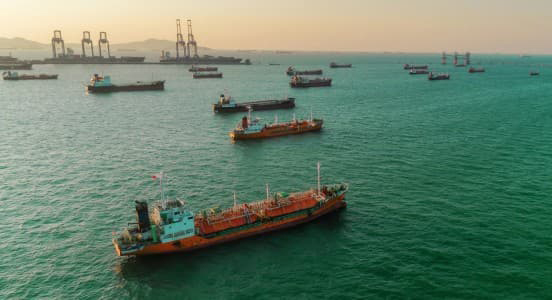
The de facto closure of the Strait of Hormuz has choked off since March 1, millions of barrels per day of crude oil and refined petroleum products, and 20% of the global LNG supply.
Since the war began, Gulf producers have already lost $15.1 billion in revenues, based on estimates that the choked supplies that cannot pass the Strait of Hormuz were worth $1.2 billion per day, based on average 2025 prices and volumes, according to Kpler.
Shortly after the war started, Qatar announced it was halting LNG production at Ras Laffan, the world’s biggest liquefaction complex, and issued force majeure notices to customers.
Combined with the volumes from the United Arab Emirates, the war is trapping 20% of the global LNG supply in the Gulf.
The situation with oil is equally dire—Gulf producers have already shut in about 10% of daily global oil production, and losses are bound to mount in the coming days and weeks as attacks on ships in the Gulf, and on export infrastructure in Oman and Fujairah, are expanding the conflict to a much wider area than the Strait of Hormuz itself.
With limited capacity available to bypass the Strait of Hormuz and storage filling up, Gulf producers have slashed their combined oil output by at least 10 million barrels per day, the IEA said in its monthly Oil Market Report on Thursday.
Alternative routes such as Saudi exports from the Yanbu terminal on the Red Sea, aren’t enough to offset the huge loss of supply from the Strait of Hormuz route.
The East-West pipeline in Saudi Arabia has 7 million bpd capacity on paper, but there is the question about how much the terminals at Yanbu can load, with some estimates putting this capacity at around 3 million bpd, Vortexa said last week.
Prior to the war, Aramco was exporting about 6 million bpd via the Strait of Hormuz.
Saudi Arabia has lost the most revenues since the war started, but the biggest loser in terms of strained government finances would be Iraq, which is the most reliant on oil revenues and doesn’t have a large sovereign wealth buffer as Kuwait, the UAE, or Saudi Arabia do, analysts say.
By Tsvetana Paraskova for Oilprice.com
The post Gulf Oil Producers Have Already Lost $15 Billion Since the Start of the War appeared first on Financial Chronicle Biz English | Sri Lanka Business News.