

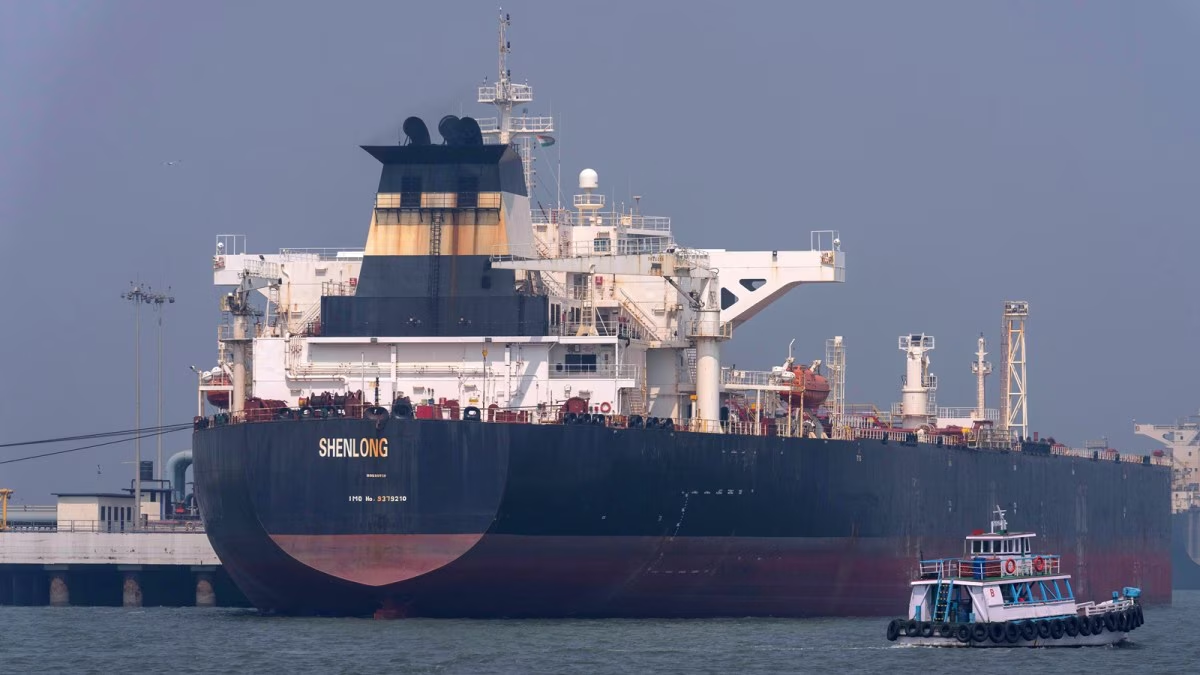
COLOMBO — As Sri Lanka moves cautiously to ration fuel amid global energy uncertainty, India appears better positioned to weather disruptions caused by the crisis in the Middle East and the tensions surrounding the Strait of Hormuz.
Unlike Sri Lanka, which relies heavily on shipments from the Gulf, India has spent the past several years diversifying its energy sources. Today, Indian refineries import crude oil not only from traditional suppliers such as Iraq and Saudi Arabia, but also from Russia, the United States and several Atlantic Basin producers.
The shift has proven strategically important. Russian oil shipments reaching India via Baltic and Black Sea ports travel through the Suez Canal and the Indian Ocean, bypassing the Strait of Hormuz entirely.
That route has allowed India to cushion the impact of any potential disruption in Gulf shipping lanes.
India also maintains substantial strategic petroleum reserves, giving authorities additional time to adjust supply arrangements should global shipping routes tighten.
Sri Lanka, by contrast, remains far more exposed to developments in the Gulf. With limited storage capacity and a heavier reliance on Middle Eastern crude for the Sapugaskanda refinery, any sustained disruption to tanker traffic could quickly translate into domestic fuel pressure.
For now, India’s diversified supply network offers a measure of insulation. But for Sri Lanka, the unfolding energy crisis is a reminder of how closely the island’s economic stability remains tied to events far beyond its shores.