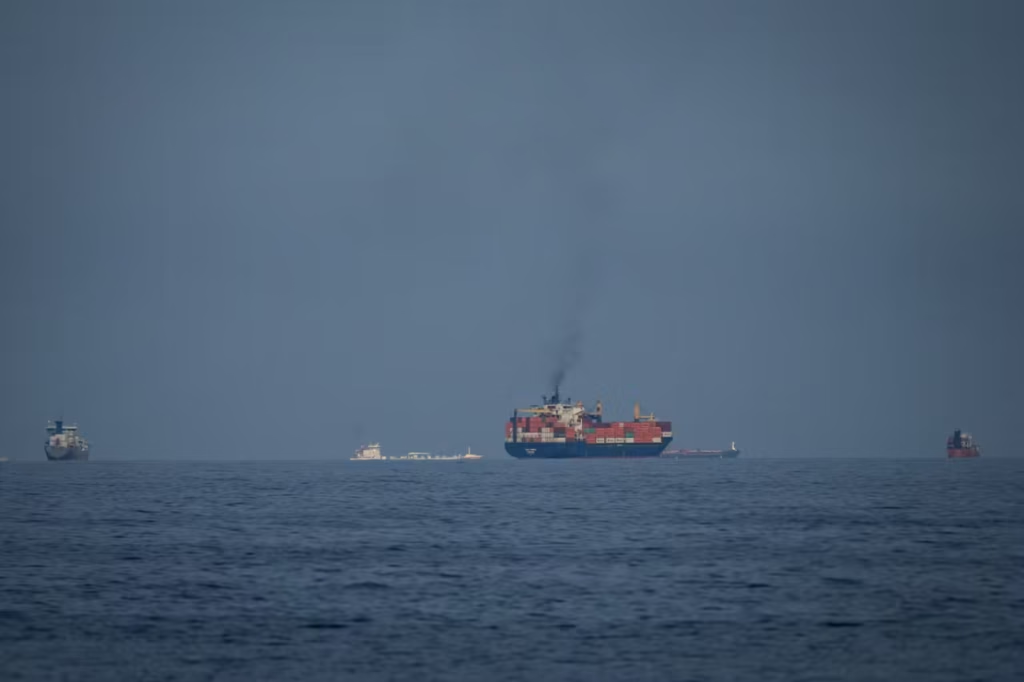

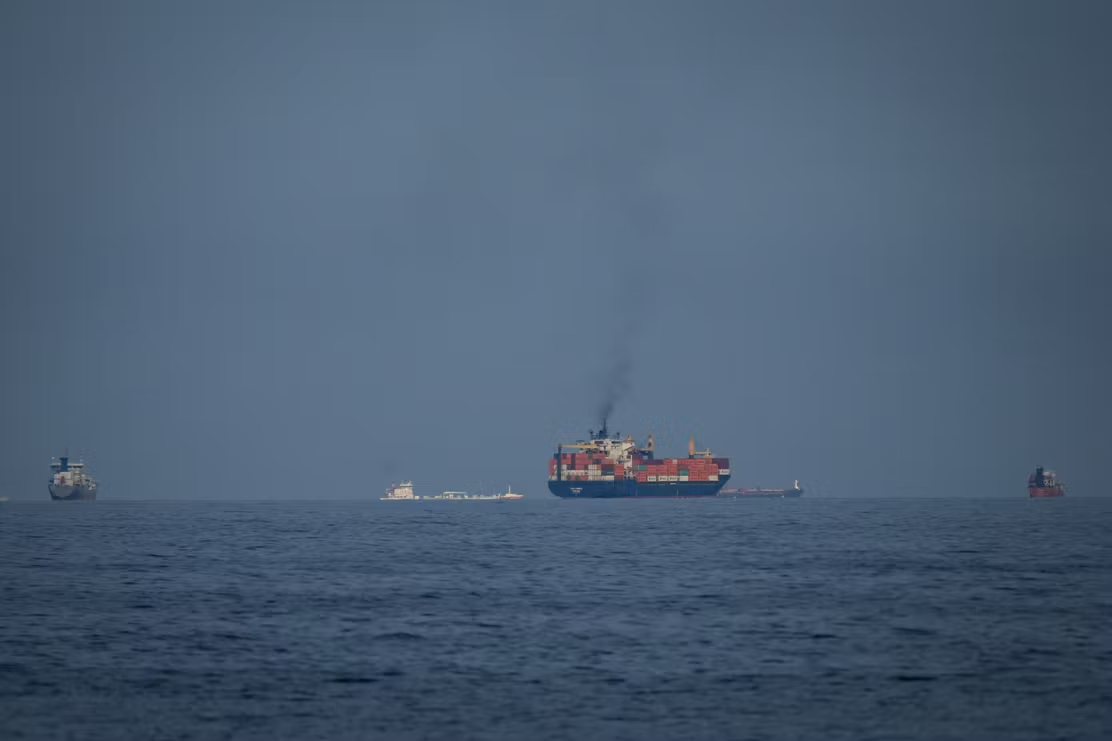
The Strait of Hormuz, through which nearly a fifth of the world’s oil supply flows, has become the focal point of an increasingly volatile military confrontation. What was once a tense maritime corridor is now a live operational theatre.
Recent attacks on commercial vessels, combined with heightened naval deployments and aerial surveillance, have transformed the strait into one of the most dangerous shipping lanes in the world. The United States has responded by increasing its military presence, deploying aircraft, drones, and naval assets aimed at securing transit routes and deterring further escalation.
Iran, for its part, has signalled that it retains both the capability and the willingness to disrupt shipping if it perceives its strategic interests to be under threat.
Missile systems, fast attack craft, and asymmetric naval tactics remain central to its posture.
The risk is not merely military — it is systemic.
Even a partial disruption to shipping through Hormuz has immediate global consequences. Energy markets react within hours. Insurance premiums surge. Shipping routes are reconsidered. The cost of uncertainty alone begins to ripple through global supply chains.
For countries like Sri Lanka, heavily dependent on imported fuel, the implications are direct and severe. What happens in Hormuz does not stay in Hormuz — it is felt at the pump, in transport costs, and across entire economies.
The strait is no longer just a geographic passage. It is the hinge upon which the global economy now precariously turns.
THE ENERGY SHOCK — OIL MARKETS TREMBLE
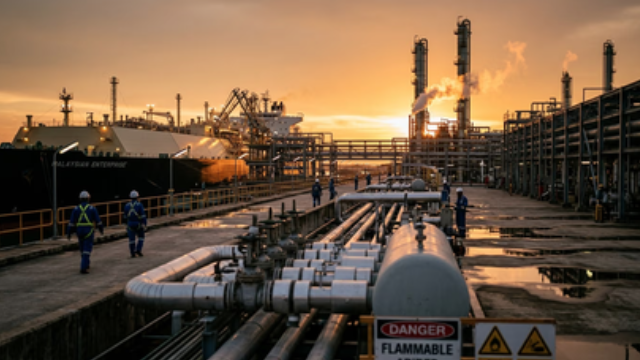
Global energy markets are once again on edge as tensions in the Middle East drive sharp volatility in oil and gas prices. The prospect of sustained disruption in the Strait of Hormuz has triggered immediate reactions across trading floors, with prices climbing amid fears of supply constraints.
Attacks on energy infrastructure, including gas facilities and transport vessels, have deepened concerns that the conflict is moving beyond military targets into the economic domain. This is no longer simply a war of missiles — it is a war of supply chains.
Market psychology is playing a critical role. Even without a full shutdown of Hormuz, the perception of risk is enough to push prices upward. Traders are pricing in uncertainty — and uncertainty is expensive.
For import-dependent economies, the impact is swift and unforgiving. Fuel costs rise. Transport costs follow. Inflationary pressures build.
Governments are forced into difficult policy decisions, balancing subsidies against fiscal realities.
Sri Lanka, still emerging from economic crisis, finds itself particularly exposed. The country’s reliance on imported fuel means that global price movements translate almost directly into domestic pressure. Every upward tick in oil prices tightens the margin for recovery.
The deeper concern is duration. Short shocks can be managed. Prolonged instability cannot.
If the current trajectory continues, this may not be a spike — but the beginning of another sustained energy crisis.
CONFLICT SPREADS — THE GULF NO LONGER INSULATED
What began as a series of targeted confrontations is now expanding across the Gulf, drawing in multiple countries and raising the spectre of a broader regional conflict.
Reports of drone interceptions, missile threats, and heightened alert levels across countries such as Saudi Arabia, the United Arab Emirates, and Bahrain indicate that the conflict is no longer contained. Regional actors are being forced into defensive postures, with air defence systems activated and critical infrastructure placed under heightened protection. The Gulf’s long-standing role as a stable energy hub is being tested.
The strategic concern is escalation through miscalculation. In a crowded and tense operational environment, the risk of unintended engagement increases. A single misidentified aircraft or misinterpreted signal could trigger a wider confrontation.
For global markets, the spread of conflict across multiple jurisdictions compounds uncertainty. It is no longer about one flashpoint, but a network of interconnected risks stretching across the region.
For smaller states watching from the periphery, including Sri Lanka, the message is clear: distance offers no insulation. The economic and strategic consequences of a wider Gulf conflict would be immediate and far-reaching.
The region is entering a phase where containment is no longer guaranteed — and escalation may not be linear.