Colombo – A statement from Donald Trump. A denial from Tehran. And markets that appeared to move before either side had fully spoken.
The controversy now gathering pace is not simply about whether contact was made between U.S.-linked actors and Iran. It is about timing, transparency – and who may have been positioned ahead of the rest.
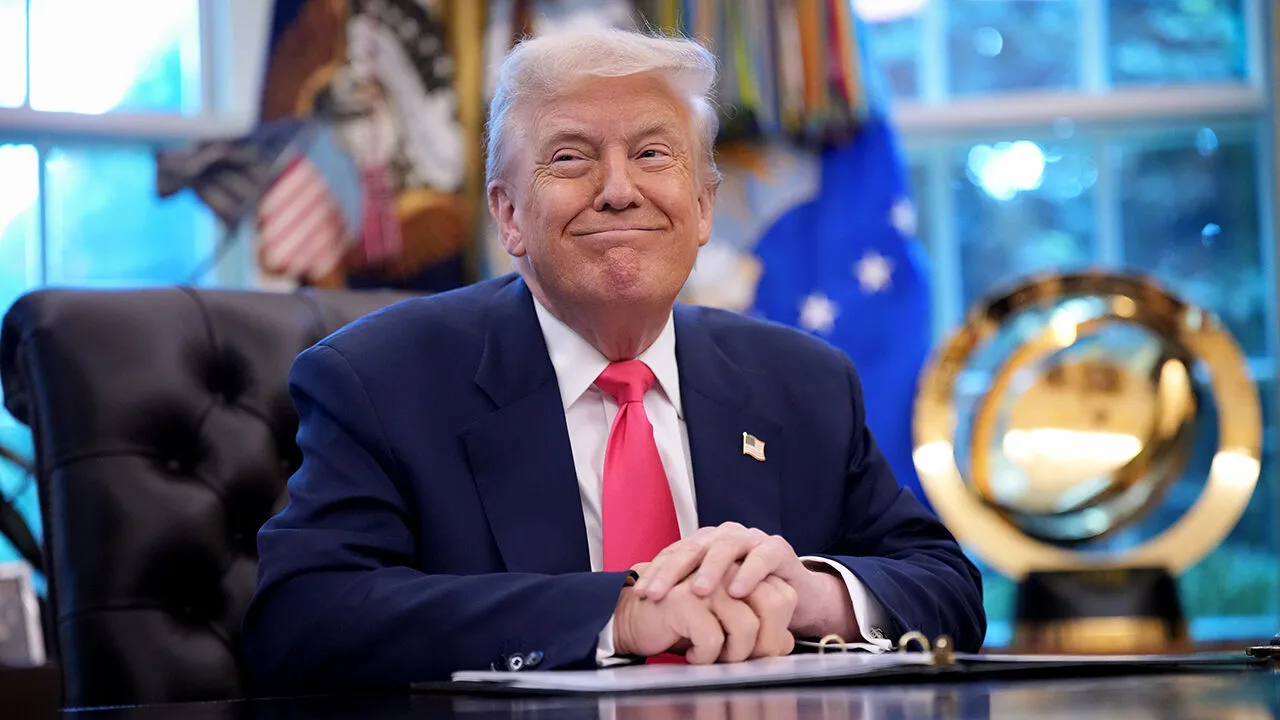
Trump claimed his team had engaged with “some important people” connected to Iran. The phrasing was imprecise, offering no clarity on whether these were formal, informal, or indirect contacts. Iran’s response was categorical: no such meetings took place.
Be that as it may, diplomacy often operates through shadows. Backchannels, intermediaries and third-party relays are not unusual. Both positions can therefore exist simultaneously – no formal talks on record, yet some level of indirect communication behind the scenes.
But the markets tell a different story.
According to widely circulated market intelligence highlighted by the Kobeissi Letter, there were unusual bursts of trading activity shortly before Trump’s announcement. Approximately $1.5 billion in S&P 500 futures and $580 million in oil futures contractsreportedly changed hands in the minutes leading up to the statement – moves that may have generated over $100 million in profit within roughly 20 minutes.
That scale of activity is not routine. Nor is the timing.
Separate market observations noted that Wall Street indices opened sharply higher, with the S&P 500 rising close to 2% and the Dow Jones Industrial Average up more than 2.1% – movements that appeared to begin before Trump’s public assertion of a diplomatic breakthrough.
Be that as it may, markets do not move on rhetoric alone.
They move on expectation. And expectation raises the central question: Who knew – and when did they know it?
This is not, at least at this stage, proof of wrongdoing. Claims of “insider trading” – however strongly expressed in market commentary – remain allegations, not established fact. But the sequence of events has created a pattern that is difficult to ignore.
A vague geopolitical signal. A pre-emptive market reaction. A rapid profit window. And then – reversal.
As tensions in the Middle East continued, oil prices climbed back above $100 a barrel, while equity markets eased after early gains, suggesting that initial optimism may have been short-lived – or prematurely priced in.
Be that as it may, the deeper issue is not whether a single statement moved markets.
It is whether information – formal or informal – is reaching some participants before it reaches the public domain.
In an era where billions can be made or lost in minutes, ambiguity is not harmless.
It is market-moving.
And when political messaging intersects with financial positioning, the line between communication and consequence becomes dangerously thin.
For now, there is no definitive evidence of deception. Iran’s denial does not eliminate the possibility of indirect contact. Trump’s claim does not establish the nature of any engagement.
But what remains is a vacuum of clarity – and a market that appears to have acted within it.