COLOMBO – NEWSLINE DESK (EXPLANATORY NOTE)
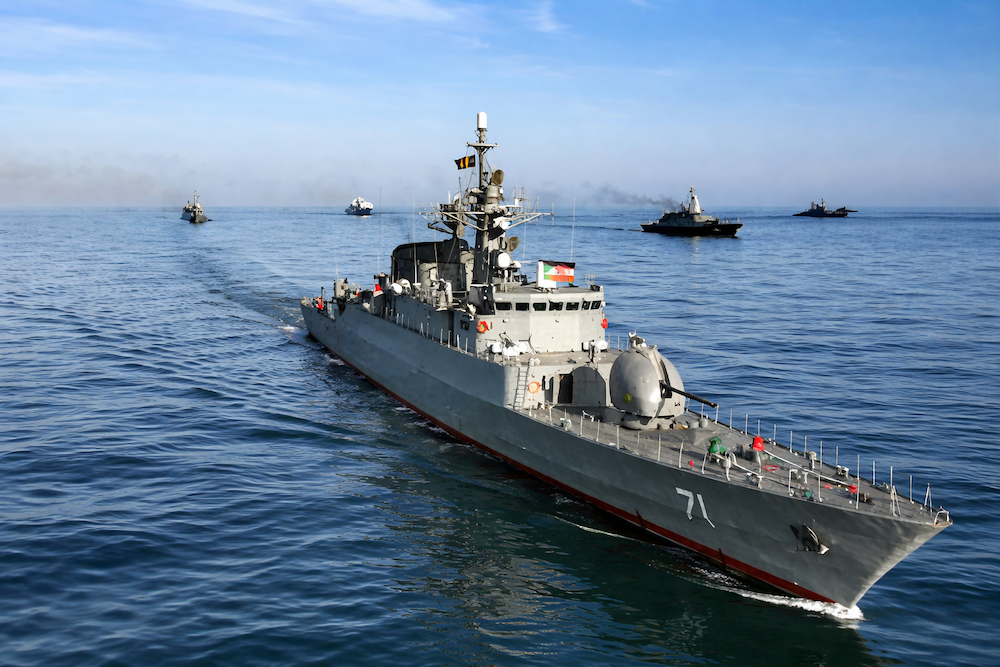
At first glance, the sequence appears contradictory. President Anura Kumara Dissanayake told Parliament that Iran requested permission for three warships to enter Sri Lankan waters. Shortly thereafter, the Iranian Ambassador suggested those vessels had been invited by Sri Lanka.
Two versions. One narrative.
Be that as it may, this is less a contradiction and more a reflection of how naval diplomacy actually works.
Step 1 – The “Courtesy Invite” (Informal Signal)
In naval practice, especially between friendly or non-hostile states, it is common for naval chiefs, defence attachés, or port authorities to extend informal or courtesy invitations. These are not binding, nor are they government approvals. Rather, they signal openness, often along the lines of: “You may consider calling at Colombo.”
Such exchanges frequently occur during port visits, regional exercises, or while vessels are transiting nearby waters—for example, from India. This is diplomatic etiquette, not authorisation.
Step 2 – The Formal Request (State-to-State)
Once such a signal exists, the visiting navy typically submits a formal diplomatic request through official channels such as the Ministry of Foreign Affairs, the Ministry of Defence, or the relevant High Commission or Embassy.
This request includes details such as the number of vessels, purpose of visit, duration, and crew composition. At this point, the matter moves from naval courtesy into the realm of formal state decision-making.
Step 3 – Government Decision (The Real Authority)
The Government of Sri Lanka—not the Navy—makes the final decision. In the current geopolitical climate, that decision is no longer routine.
With tensions high in the Middle East, and Sri Lanka maintaining a position of neutrality, any request involving military vessels—particularly from a state like Iran—is assessed through a broader lens, including diplomatic balance, security implications, and international optics.
In this case, the request was reportedly not approved.
So Where Did the “Confusion” Come From?
The confusion likely arises from different stages of the same process being described as if they were identical. The Iranian side appears to be referring to the initial signal or invitation, while the Sri Lankan side refers to the formal request requiring approval. Both accounts can be technically correct, but incomplete when viewed in isolation.
The Real Issue – Diplomacy in a Tense World
What may once have been routine—a naval courtesy visit—is now geopolitically sensitive.
Sri Lanka today must carefully navigate its relations with the United States, its ties with Iran, and broader regional security dynamics. A port call is no longer just a port call; it is a statement.
The Line That Matters
There is no evidence of procedural irregularity. Rather, what we are seeing is informal military diplomacy intersecting with formal state policy.
And when the latter asserts itself, the former does not automatically follow through.