Melco’s numbers raise questions on the economics behind Colombo’s ‘flagship’casino
The numbers are in – and they tell a story that is both promising and uneasy.
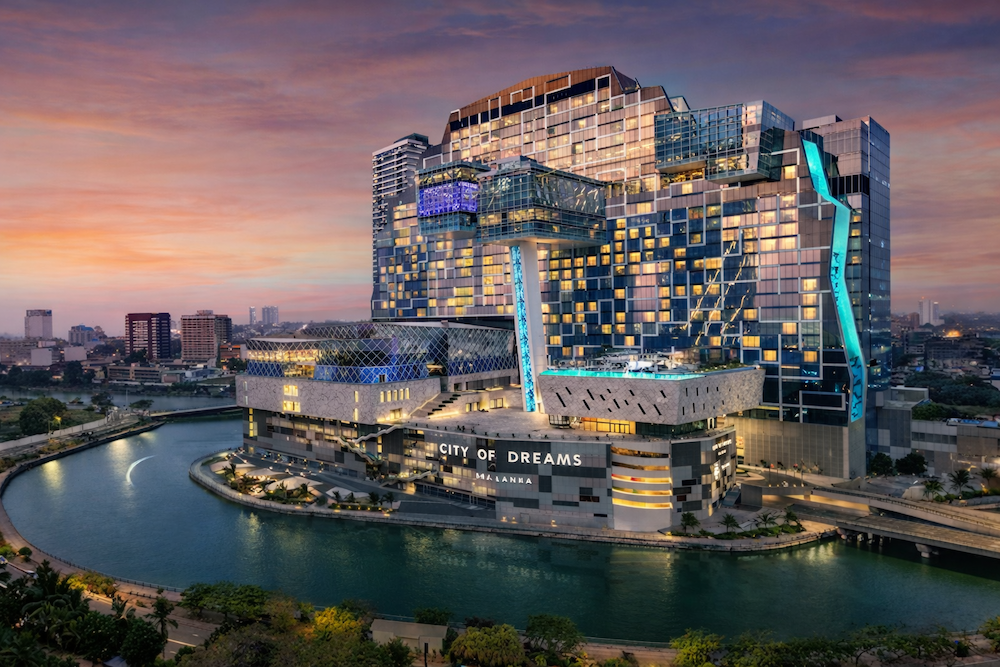
Melco Resorts & Entertainment, the operator behind the casino at City of Dreams Sri Lanka, has reported operating revenue of US$6.4 million for its core Colombo operations in the final quarter of 2025. On the surface, that suggests traction. A new market finding its feet. A project beginning to generate flow.
Be that as it may, the headline beneath the headline tells a different story.
The same filing reveals an operating loss of US$9.062 million over that period, covering both the casino operations and management services linked to the ultra high-end Nüwa hotel. In simple terms, the operation is generating revenue – but not yet profit.
And that gap is not insignificant.
It raises the fundamental question that sits behind all large-scale integrated resort projects:
Is this a long-term play – or an early warning sign?
The cost structure offers part of the answer. The filings show that rent alone for the City of Dreams Sri Lanka integrated resort stood at US$1.79 million for the quarter. That is before operational overheads, staffing, marketing, and the broader cost of establishing a premium gaming destination in a market that is still developing.
Be that as it may, such figures are not unusual in the early stages of major resort launches. Integrated casino resorts are capital-intensive, front-loaded investments. They rely on time, scale, and consistent inflows of high-value customers to reach profitability.
The challenge, however, lies in the environment.
Sri Lanka is not Macau. It is not Singapore. It is a market with potential – but also with constraints. Tourism flows are still recovering. Regulatory frameworks are evolving. And public perception around gaming remains mixed.
Against that backdrop, the recent worker protests – now clarified as contract expiries – take on added significance. Because while management may separate operational ayers between the resort owner and the casino operator, the market does not.
It sees one project.
Be that as it may, the current numbers suggest a project still in its investment phase rather than its return phase. Revenue is building. Losses are absorbing the early-stage costs. The model, for now, is one of patience.
But patience is not infinite.
For Melco, and for its local partners, the path forward will depend on one key variable – scale. Can Colombo attract sufficient regional and international gaming traffic to justify the cost base?
Until that question is answered, the balance sheet will continue to speak with two voices.
One of potential.
The other of pressure.
CITY OF DREAMS RESPONDS: CONTRACT EXPIRY – NOT RETRENCHMENT?
Clarification follows protest outside flagship development COLOMBO – NEWSLINE DESK
City of Dreams Sri Lanka has issued a formal holding statement clarifying the circumstances surrounding the protest that took place outside its Colombo development, following concerns over alleged retrenchment of workers linked to the casino operation.
In its statement dated March 25, City of Dreams Sri Lanka confirmed that the matter relates to fixed-term employment contracts reaching their agreed expiry dates, rather than a broader retrenchment exercise. The company emphasised that all affected individuals had been notified in advance and that payments, including statutory dues and contractual entitlements, are being settled in accordance with Sri Lankan labour laws.
Be that as it may, the clarification comes against the backdrop of visible worker agitation, which had raised questions about the nature of employment practices within one of the country’s most high-profile integrated resort developments.
The statement adopts a firm but measured tone. It underscores compliance with regulatory requirements while expressing appreciation for the contributions of the individuals involved. It also reiterates a commitment to fairness, professionalism, and continuity of operations.
However, the structure behind the project adds an additional layer of complexity.NewsLine understands that the individuals who protested were engaged under the casino operator, rather than directly by the resort owner. The casino itself is operated by Melco, the international gaming group behind the City of Dreams brand, while John Keells Holdings is the owner of the broader resort infrastructure under a separate agreement with City of Dreams. Accounts released in New York reveal that rental received was US$ 1.79 Million – approximately equating to Rs 561 Million.
In response to our earlier query, John Keells Holdings did not issue a public statement. However, it is understood that the position taken is that the protest relates specifically to workers engaged by the casino operator, and not employees of the resort entity itself.
Be that as it may, for those on the ground, such distinctions may offer limited comfort. The optics remain challenging. A protest outside a flagship development inevitably raises broader questions about labour practices, accountability, and the coordination between multiple stakeholders within a single project.
The key issue now is not simply contractual classification, but perception.Are these isolated contract expiries, as stated? Or do they reflect deeper tensions within the operational framework of the development?
For now, the company’s position is clear. Contracts have expired. Obligations are being met. Operations continue. But in a project of this scale and visibility, clarity alone may not be enough.
Perception, as ever, will shape the next phase of this story.