Be that as it may, in today’s public sphere, reputations are no longer shaped solely by performance. They are shaped often decisively by perception. And perception, particularly on social media, does not always wait for facts.
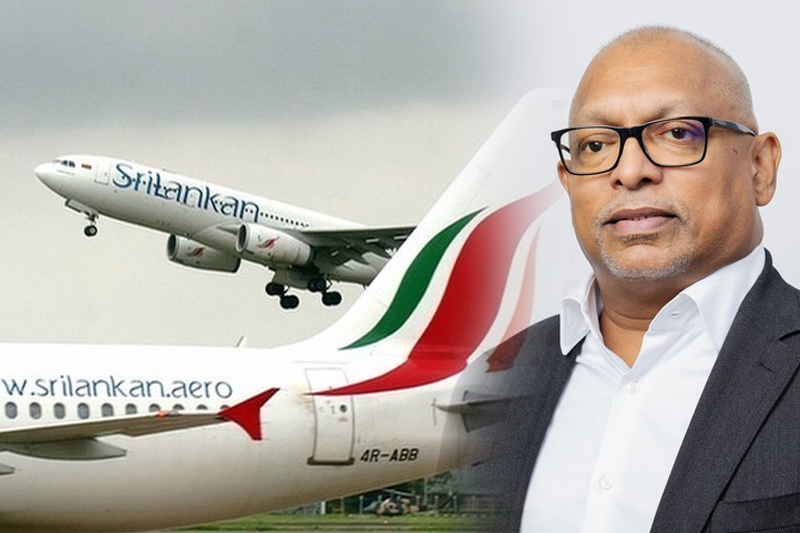
Few recent examples illustrate this more clearly than the scrutiny faced by Sarath Ganegoda during his tenure at SriLankan Airlines.
The criticism has been sharp, persistent, and in some cases, detached from the operational realities of running a national carrier.
Consider first what has actually been achieved.
Under Ganegoda’s leadership, the airline completed a bond restructuring that secured acceptance from over 97% of holders, delivering an effective haircut of approximately 16%. In the context of Sri Lanka’s broader financial crisis, this was not a routine financial adjustment rather it was a material outcome that reduced pressure on an already strained balance sheet.
In parallel, the airline secured the write-off of a penalty amounting to approximately GBP 40 million from a British corporate entity. That is not an insignificant figure by any measure. It represents negotiated relief in a sector where contractual penalties are often rigidly enforced.
Yet these developments have struggled to compete with a different narrative.
Take the criticism surrounding the absence of an additional service to Melbourne. On the surface, it appears straightforward: demand exists, therefore supply should follow. But aviation does not operate on that logic alone.
Fleet constraints are real. Engineering assessments flagged operational risks. Finance highlighted exposure to losses. Without adequate aircraft, without sufficient backup capacity, and with the potential for delays triggering compensation liabilities, the expansion of such a route carries risks that extend beyond a single sector.
In such circumstances, restraint is not necessarily failure. It can be risk management.
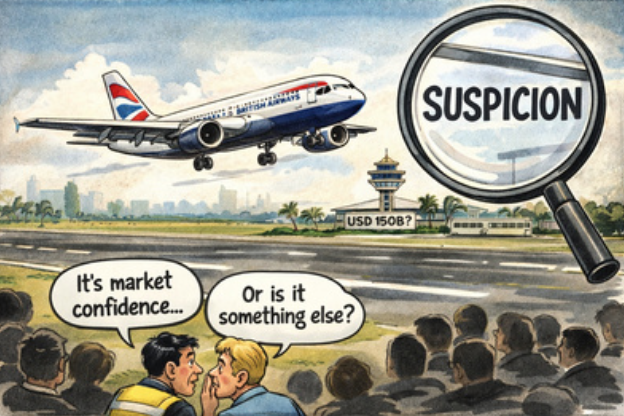
A similar misunderstanding surrounds the claim that SriLankan Airlines has “allowed” other carriers – such as British Airways or Jetstar – to operate on key routes.
The reality is more prosaic, but no less important.
Air traffic rights are determined government-to- government through Bilateral Air Service Agreements. Airlines do not grant or deny access to routes. They operate within frameworks negotiated at state level. To attribute those decisions to airline management is to misread the structure of the industry itself.
None of this is to suggest that criticism is unwarranted. Public enterprises, particularly those with a history as complex as SriLankan Airlines, must be subject to scrutiny. But scrutiny must be grounded in fact.
Otherwise, it risks becoming something else.
The broader issue is familiar.
Political narratives formed in opposition often carry a certain clarity. Once in government, however, those narratives encounter the constraints of reality: of systems, processes, and trade-offs that are less visible from the outside.
In that context, the pace of delivery can appear slower than promised.
Which brings us back to the present.
Sarath Ganegoda may well remain a subject of debate. That is the nature of public life. But the debate itself must be anchored in an understanding of what decisions were his to make: and what were not.
Because in the end, accountability requires precision.
And without it, criticism risks losing its credibility – even as it grows louder.