Sri Lanka’s human–elephant conflict is not getting worse.
That may be the real problem.
flict has reached a point where the numbers no longer shock. They repeat.
Year after year, the figures settle into a grim rhythm. Hundreds of elephants die. Dozens of humans follow. The headlines return, the outrage flickers, and the system moves on – unchanged.
This is no longer a crisis in the traditional sense. It is a condition.
Sri Lanka today records between 250 to 400 elephant deaths annually, alongside 80 to over 100 human fatalities. Over the past decade, that translates into more than 3,000 elephants and over 1,000 people lost. These are not spikes. They are patterns.
And patterns, in public policy, are far more dangerous. Because they signal not failure alone – but acceptance.
At first glance, the State has not been inactive. Electric fencing programmes have expanded. Compensation schemes exist. “Problem elephants” are captured and relocated. Corridors are discussed, and sometimes attempted.
But none of these measures have altered the trajectory.
Because they are not designed to.
They are responses – reactive, localised, and temporary. What Sri Lanka lacks is a coherent, national land-use strategy that defines, clearly and unapologetically, where wildlife can exist – and where it cannot.
The uncomfortable truth is this:
Elephants are not entering human territory.
Humans have expanded into elephant territory.
Over decades, forest cover has reduced dramatically. Migration routes have been fractured. Agricultural expansion has moved into spaces that once sustained elephant populations. The result is not coexistence – but collision.
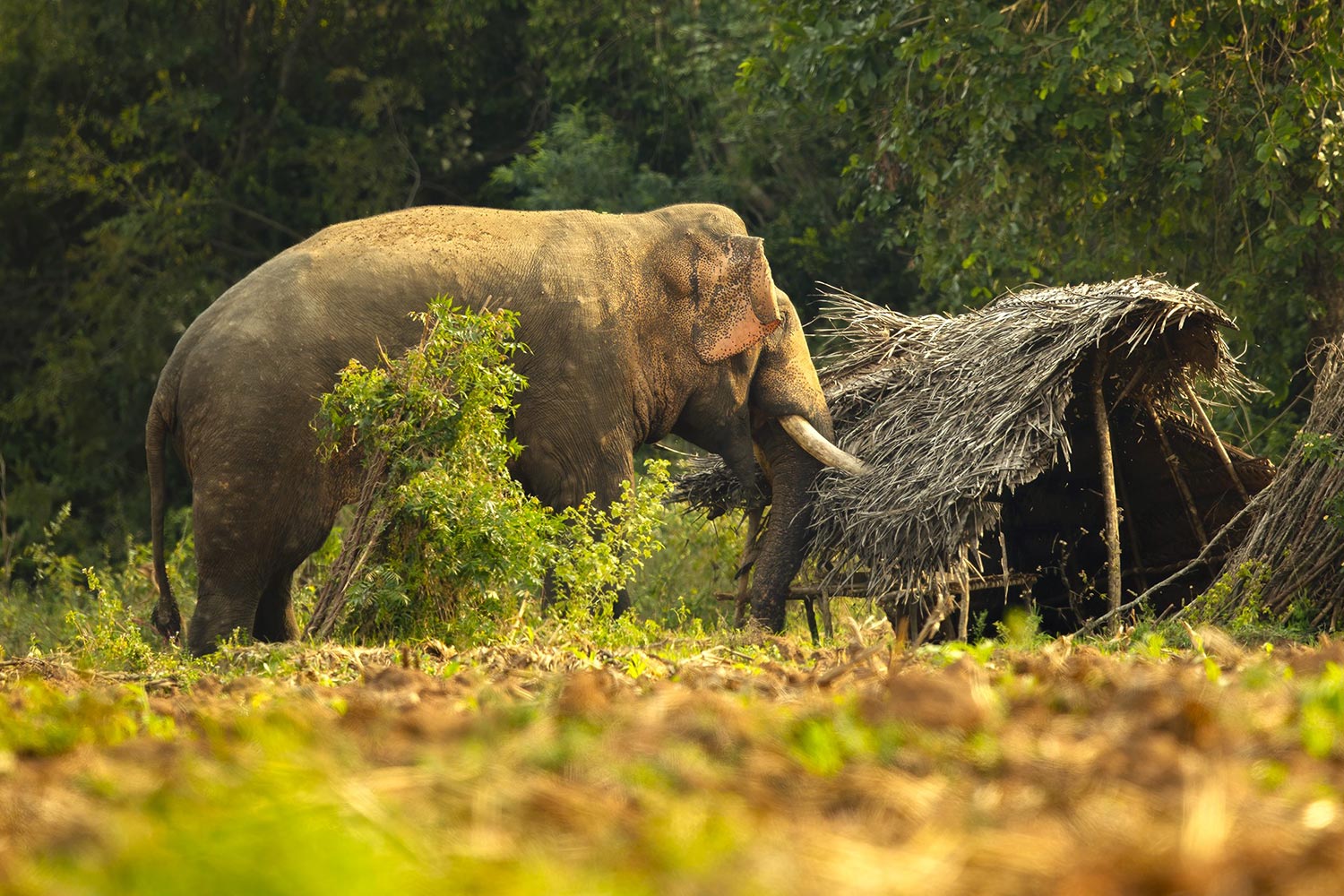
For farmers, this is not a conservation issue. It is survival. Crops are destroyed overnight. Livelihoods vanish. Retaliation becomes inevitable. Shooting, electrocution, and the use of explosive bait are not random acts of cruelty – they are the consequence of a system that has failed to protect either side.
Yet the narrative persists.
That this is an “elephant problem.” It is not.
It is a planning problem.
Without alignment between agriculture, wildlife conservation, and national development policy, every intervention will remain partial. Fences will break. Elephants will return. People will resist.
And the numbers will repeat.
THE COST OF COEXISTENCE
• Elephants killed annually: 250–400
• Human deaths annually: 80–100+
• Elephants lost (10 years): 3,000+
• Human lives lost (10 years): 1,000+
• Primary causes: Habitat loss, crop raiding, retaliatory killing
• Key methods of elephant deaths: Shooting, electrocution, explosive bait
THE REAL QUESTION
Sri Lanka does not lack awareness. It lacks decision.
Because resolving this conflict requires something politically difficult: drawing hard boundaries between development and conservation, and enforcing them consistently.
THE STING
This is no longer a sudden crisis. It is a managed failure – repeated annually, measured in lives, and accepted in silence.