Officials in Sri Lanka are facing immense pressure for their alleged mishandling of Cyclone Ditwah, with the crisis highlighting deep cracks in the country’s emergency response system.
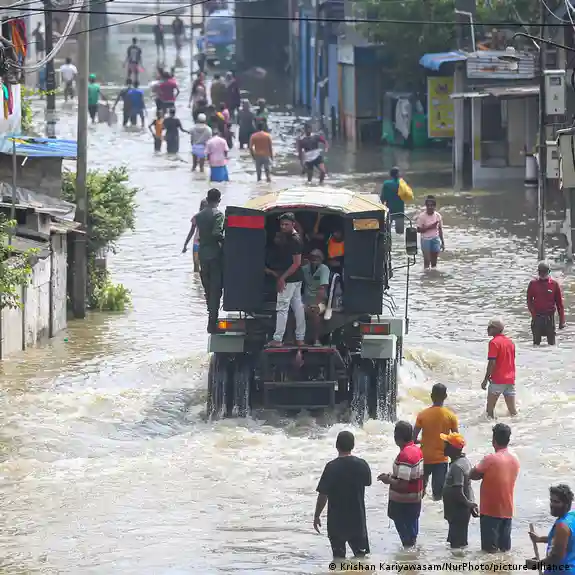
Days after Cyclone Ditwah tore through Sri Lanka, over 1.46 million people across all 25 of the nation’s districts remain affected by the island’s worst flooding disaster in two decades.
According to the government’s Disaster Management Center, the official death toll stands at 410, with 336 people still missing. More than 64,000 people from 407,000 affected families are sheltering in nearly 1,450 government-run safety centers across the country.
Thousands trapped, isolated
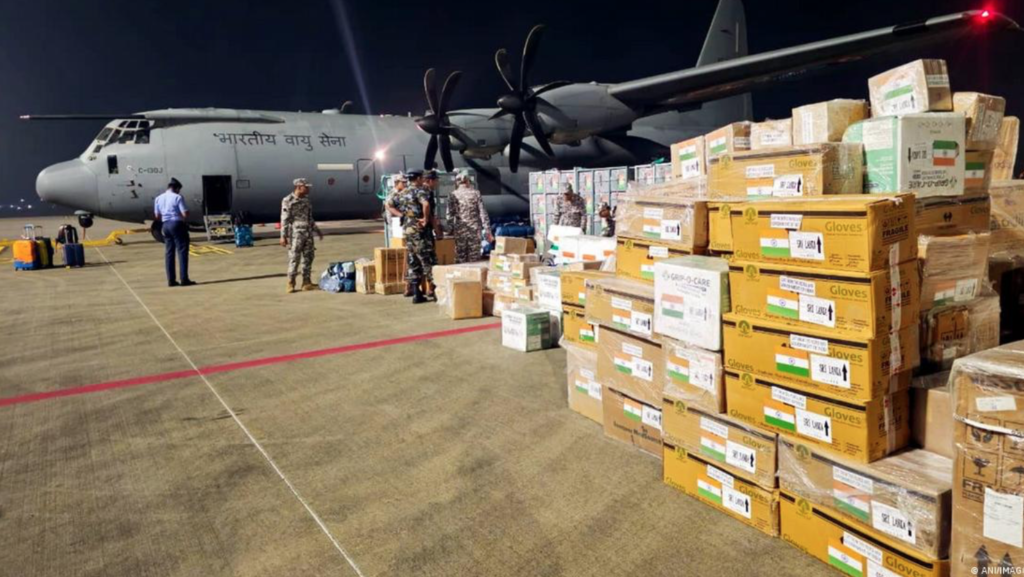
Multiple countries have responded to Sri Lanka’s appeal for assistance with India leading the charge, followed by pledges from the UK, China, Australia, and Nepal. Sri Lankan President Anura Kumara Dissanayake has also declared a state of emergency to deal with the aftermath of the cyclone.
Despite his declaration and the promise of international aid, however, the Sri Lankan public seems increasingly frustrated with the state’s response. Authorities appear to be overwhelmed with rescue demands and are struggling to communicate in a timely manner as critics point out the absence of a unified relief-and-rescue system.
Paikiasothy Saravanamuttu, executive director of the Colombo-based Centre for Policy Alternatives, accuses the Sri Lankan government of failing to heed warning signals and allowing the calamity to spiral beyond human control.
“The government has not come off well in its handling of the crisis and should have called Parliament to convene urgently to review and strengthen disaster management policies,” Saravanamuttu told DW.
According to Saravanamuttu, “this disaster reveals significant gaps in preparedness and response mechanisms” and the existing frameworks need to be evaluated to “prevent future failures.”
Early warnings wasted
While Ditwah made landfall in Sri Lanka on November 28, some voices point out that warning signals were present as early as two weeks before. Experts say that the loss of life was exacerbated by the government’s failure to act in a timely manner.
Cyclone Ditwah pounds Sri Lanka with deadly force
“Unlike tsunamis, hydrometeorological hazards like cyclones arrive with sufficient notice of several days to take precautions. As early as November 12, Sri Lanka’s department of meteorology had publicly flagged the prospect of extreme rainfall later in the month. That should have triggered a process of preparations across the government at central, provincial, and local levels,” Nalaka Gunawardene, a science writer from Colombo, told DW.
“Apparently, that did not happen, and an official response has mostly been reactive when Cyclone Ditwah was imminent or after it made landfall,” added Gunawardene.
“The entire disaster management structure – from policymakers to state officials – should be held accountable for cascading failures that made a bad disaster much worse.”