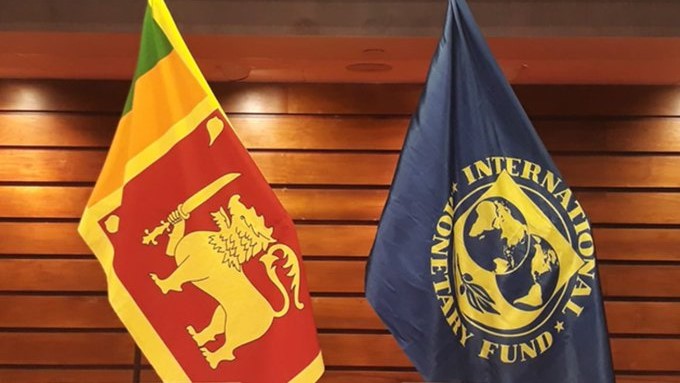
FINANCIAL CHRONICLE – The International Monetary Fund (IMF) and the authorities in Sri Lanka have successfully reached a staff-level consensus regarding economic strategies essential for completing the combined fifth and sixth assessments of Sri Lanka’s reform initiative backed by the IMF’s Extended Fund Facility (EFF), as announced in an official statement.
Upon receiving endorsement from the IMF Executive Board, Sri Lanka will be eligible for approximately US$700 million in financial assistance, according to the IMF’s announcement on Thursday, April 9, 2026.
This announcement follows a visit from an IMF mission team, led by Mission Chief Evan Papageorgiou, which took place from March 26 to April 9, 2026. The team engaged in discussions regarding recent macroeconomic trends and the implementation of financial policies as part of the EFF agreement.
In the statement, Papageorgiou noted, “IMF staff and Sri Lankan officials have reached a staff-level agreement on the combined Fifth and Sixth Reviews under the four-year Extended Fund Facility arrangement.” He highlighted that the IMF Executive Board had approved this arrangement for a total of SDR 2.3 billion (approximately US$3 billion) on March 20, 2023.
However, he pointed out that the staff-level agreement is contingent on the IMF Executive Board’s approval, which depends on the successful implementation of cost-recovery pricing for electricity and fuel while ensuring the protection of vulnerable populations. Additionally, it is necessary to complete the financing assurances review to confirm contributions from multilateral partners and evaluate the progress in debt restructuring.
Following the Executive Board’s review, Sri Lanka would gain access to SDR 508 million (about US$700 million), bringing the overall IMF financial assistance disbursed under this agreement to SDR 1,778 million (around US$2.4 billion).
“Sri Lanka’s ambitious reform agenda continues to yield positive results,” stated Papageorgiou. He added that debt restructuring is nearing completion, with significant advancements made in the debt exchange for Sri Lankan Airlines and further progress on finalizing remaining bilateral agreements.
He noted that Sri Lanka faces considerable exposure to ongoing conflicts in the Middle East, which have led to rising energy prices, disrupted a key tourism air hub, and impacted Sri Lankans employed in that region.
To mitigate disruptions in economic activity, authorities have worked to secure adequate fuel supplies for both households and industries. However, the nation must also address infrastructure and spending needs arising from Cyclone Ditwah.
“The increased economic risks stemming from natural disasters, ongoing trade policy uncertainties, and the conflict in the Middle East highlight the urgent need to accelerate reform efforts to protect macroeconomic stability, enhance resilience to shocks, and maintain a trajectory towards recovery and inclusive growth,” Papageorgiou remarked.
He emphasized the importance of creating fiscal space through effective revenue generation and prudent expenditure management. This requires ongoing initiatives to enhance tax compliance, broaden the tax base, reduce revenue leakages, and improve public financial management.
“Restoring and maintaining cost-recovery pricing for fuel and electricity while supporting the most vulnerable populations is crucial. Continuous vigilance is necessary to minimize fiscal risks and uphold fiscal discipline,” he added.
The IMF has consistently highlighted the importance of safeguarding vulnerable populations from economic shocks. “Prioritizing the protection of the poor and vulnerable, who face the brunt of these challenges, remains essential. This necessitates a robust strengthening of social safety nets through improved targeting, adequacy, coverage, and responsiveness to shocks,” he stated.
Moreover, rebuilding foreign reserves while allowing for exchange rate flexibility is essential in light of global uncertainties. Addressing non-performing loans, fostering sound credit growth, and tackling vulnerabilities in certain small licensed finance companies will contribute to financial stability.
The IMF welcomed the release of the 2026 government action plan concerning governance reforms, noting that effective implementation could advance the anti-corruption agenda and foster growth. “It will be crucial to maintain the independence of Sri Lanka’s anti-corruption body (CIABOC), ensure the reliability of the beneficial ownership registry, and enhance fiscal governance through sound legislation on public-private partnerships, state-owned enterprises, public procurement, and asset management,” he said.
“Achieving robust and sustainable growth for all Sri Lankans requires a commitment to ongoing reforms, including sustaining trade liberalization, accelerating digital initiatives, streamlining business regulations, and modernizing labor laws to reduce rigidity,” he concluded.