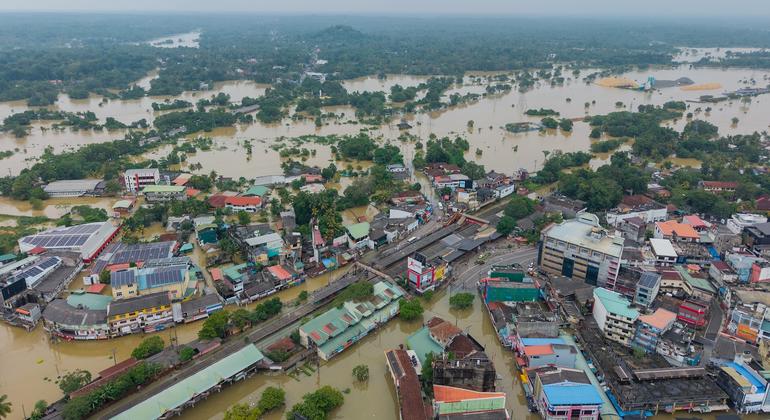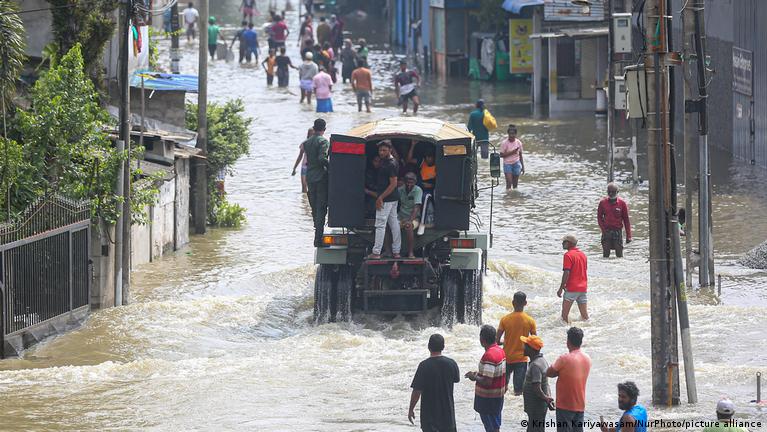
Cyclone Ditwah is being described by President Anura Kumara Dissanayake as the “largest and most challenging natural disaster” in Sri Lanka’s history. The staggering damage—over 2 million affected, more than 600 dead, and losses estimated at USD 7 billion—may appear to be a story of a freak weather event. Yet, what this catastrophe truly reveals is not just the power of nature, but the fragility of a country long burdened by inequality, weakened institutions, shortsighted development, and the political economy of exploitation.
Far from being a random act of nature, Ditwah reflects Sri Lanka’s rising vulnerability to climate change. Tropical cyclones rarely formed this close to the equator in the past, yet Ditwah defied convention, growing in strength even after landfall and unleashing extreme rainfall. Sri Lanka ranks high on the Global Climate Risk Index, but an astonishing 81 percent of the population lacks the adaptive capacity needed to face disasters. The country is entering a new era of climate extremes without the infrastructure or governance to withstand it—a preview of the “Capitalocene,” where economic systems and ecological destruction collide.
This collision is intensified by decades of austerity and neoliberal reforms that have hollowed out state capacity. Sri Lanka may boast a Disaster Management Act, but laws on paper do not save lives when radar systems are outdated, drainage systems are overwhelmed, helicopters are too old to fly, and urban development is allowed to run wild. The ongoing IMF programme, with its emphasis on revenue extraction and reduced public spending, has left the country unprepared and dependent on foreign aid to rescue its own citizens.
As always, the burden of disaster is not shared equally. Workers in Free Trade Zones slept in flooded factories. Plantation workers in line rooms had little warning and even less protection. Urban poor settlements drowned along neglected canals, while FTZ workers were ordered back to work from relief camps, sometimes owning nothing but the clothes they clung to. In a country where class determines vulnerability, Ditwah did not just destroy homes—it exposed the value placed on different lives.
These inequalities are rooted in older injustices. The central highlands—where landslides killed entire families—bear the scars of colonial exploitation. British planters cleared forests to grow tea, causing soil erosion that continues to kill centuries later. The Malaiyaha Tamil community, trapped in indentured legacies, still lives without land rights in some of the most precarious terrains. Their vulnerability is not an accident; it is inherited inequality.
Ditwah also worsens a long-running agrarian crisis. Farmland has been destroyed, livestock losses are unknown, and downstream flooding is exacerbated by mega-dams built without community consultation. For small farmers, the disaster may be a final push toward ruin, debt, and migration. Even as crops drown, consumers face price hikes, shortages, and a likely new wave of food imports that will benefit traders far more than farmers.
And in the reconstruction phase, Sri Lanka risks sliding into disaster capitalism. As billions will be needed for rebuilding, the management of the government’s “Rebuilding Sri Lanka” fund has been handed to the corporate elite—those who dominate plantations, finance, real estate, and trade. With no meaningful representation from farmers, workers, or civil society, rebuilding risks becoming yet another avenue for profit-making by the few, rather than recovery for the many.
Cyclone Ditwah should not simply be remembered as a deadly storm—it must be understood as a turning point. It has illuminated the deep structural inequalities of the country, the eroded capacity of the state, and the ways Sri Lanka’s most vulnerable are sacrificed in the name of economic policy, global finance, and historical neglect. If Sri Lanka rebuilds without addressing these truths, Ditwah will not be the last disaster—it will be the beginning of an era defined by recurring catastrophe, climate inequality, and exploitation under the guise of recovery.