Kelani Valley Plantations PLC (KVPL) has been appointed as the Patron for the Water & Ocean Stewardship Working Group of the UN Global Compact Network Sri Lanka (Network Sri Lanka), affirming the company’s longstanding dedication to environmental responsibility and sustainable business practices.
Dr. Anuruddha Gamage, Head and General Manager of HR and Corporate Sustainability at KVPL, emphasized the company’s holistic approach: “We don’t just grow tea, rubber, or coconut. We grow value. We grow accountability. And we grow our future.” KVPL’s commitment to sustainability is reflected in its history, having been the first Sri Lankan plantation company to sign the UN Global Compact’s Ten Principles in 2006, and aligning with the CEO Water Mandate in 2008. The company has adopted a regenerative, research-driven agribusiness model that seeks to balance ecological integrity with commercial viability.
KVPL’s internal framework, known as its Corporate DNA, integrates Environmental, Social, and Governance (ESG) pillars in line with both international goals and local realities. “We’ve never stepped away from this commitment. Every year, we’ve shown improvements – not just in reporting, but in real, measurable impact,” Dr. Gamage noted.
Water stewardship has become a core element of KVPL’s operations. Dr. Gamage highlighted the vital relationship between business and natural resources: “Without water, without plants, without soil, we cannot have our business.” Historically, the plantation sector viewed water as an unlimited resource, but KVPL has worked to change this perspective through comprehensive training, awareness programs, and strategic partnerships. “We have made our team understand that water is not just a resource; it is a critical limiting factor,” he explained.
KVPL’s initiatives include a project at the Dunedin Skim Rubber Factory, a significant producer of skim rubber in Sri Lanka. The project aimed to reduce freshwater consumption and wastewater generation during production. By measuring water usage and analyzing effluent quality, KVPL identified opportunities to reuse water after simple pretreatment. This system, involving filtration, sedimentation, and dedicated storage, reduced the factory’s daily freshwater requirement by 50%—from 30,000 liters to 15,000 liters—and cut wastewater generation by 19%. The project also resulted in annual savings of approximately LKR 15.6 million in wastewater transport costs, with the initial investment of LKR 316,000 recovered in just five days.
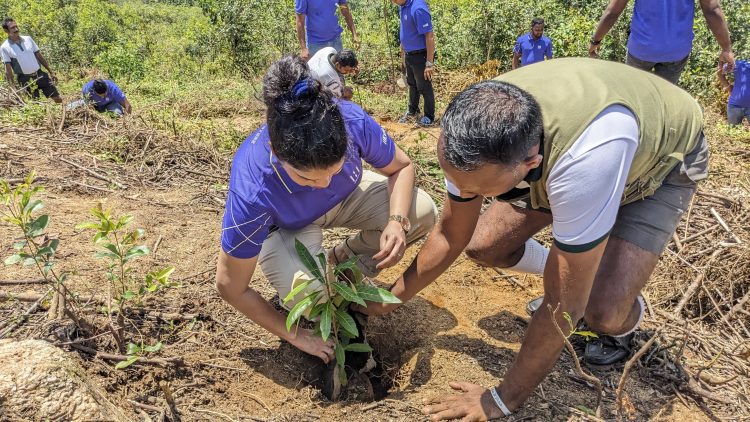
KVPL’s sustainability leadership extends beyond factory operations. The Kelani Valley Protectors Initiative (KVPI), launched under the National Surakimu Ganga Programme, brings together multiple stakeholders to protect water sources, plant native trees, and involve local communities through environmental clubs. Dr. Gamage reported that over 4,500 plants have been planted and more than 8,000 volunteer hours contributed to water conservation efforts.
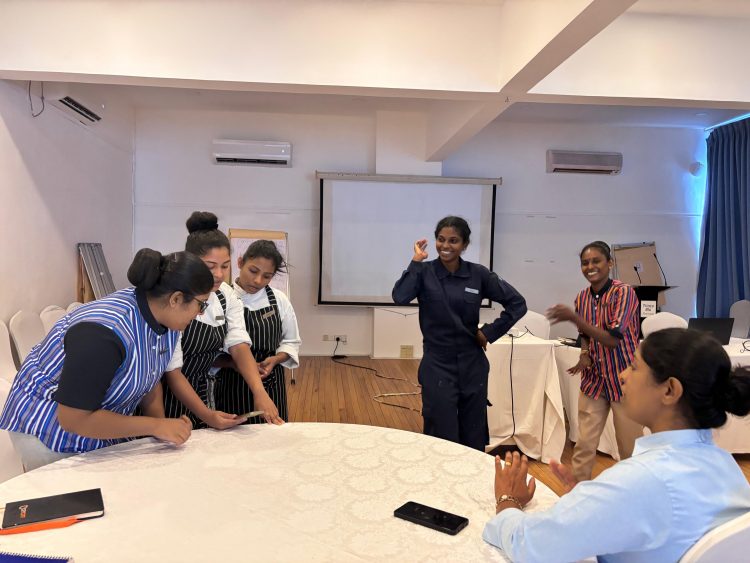
The company’s multi-layered approach bridges scientific research and community engagement. KVPL has established Green Clubs in schools within estate communities, enabling children to act as environmental ambassadors in their homes. “Sometimes the science is too complex to communicate directly. But if you teach a child, that child becomes a bridge,” Dr. Gamage observed.
KVPL’s business philosophy is founded on four pillars: product quality, ethical business, environmental stewardship, and social responsibility. “Environment is one of the key parameters in our business philosophy,” Dr. Gamage stated, highlighting the inseparable connection between financial performance and environmental and social impact.
As Patron for Water & Ocean Stewardship, KVPL aims to serve as a practical example within the sector. “We want to be a practical example to others, to learn from us and for us to learn from them,” Dr. Gamage said. Network Sri Lanka has played a significant role in linking KVPL with global frameworks, capacity building, and peer learning, strengthening the company’s watershed management and community engagement initiatives. This partnership has enhanced KVPL’s reporting, built international credibility, and provided a platform for sharing lessons across industries.
KVPL’s efforts are closely aligned with the UN Sustainable Development Goals, particularly SDG 6 (Clean Water and Sanitation), SDG 13 (Climate Action), and SDG 17 (Partnerships for the Goals). The company has established partnerships with organizations in Japan, Poland, India, Malaysia, and Singapore to expand its knowledge base and impact.
Looking ahead, Dr. Gamage underscored the importance of scaling and collaboration: “If Sri Lanka’s corporate sector doesn’t step up now, we risk becoming irrelevant in a world that’s shifting rapidly toward sustainability. But if we work together, across sectors and silos, we can lead—not lag.”
KVPL’s journey stands as a call to action for businesses, government, NGOs, and communities to unite in the pursuit of water security and climate resilience. “This is a national responsibility, and we are committed to making a difference,” Dr. Gamage emphasized. He concluded: “We are not just a plantation company; we are an agribusiness venture. Our business is with nature, and we cannot forget that.”
With the support of the UN Global Compact Network Sri Lanka, KVPL is deepening its own sustainability practices and inspiring others to take action, demonstrating leadership in water and ecosystem stewardship for a sustainable future.