
“GOVERNMENT IS MORE CENTRE RIGHT THAN LEFTIST“
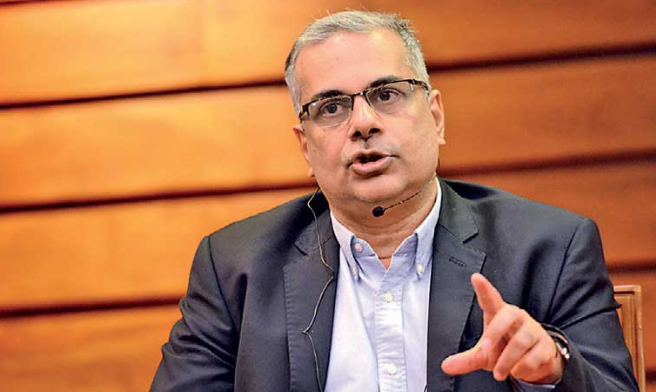
Murtaza Jafferjee the Chairman of the Advocata Institute, was very positive of Sri Lanka’s prospects notwithstanding the damages of Cyclone Ditwah. Jafferjee suggests the economic damage may be lower than initially feared. He cites electricity consumption, which has remained stable at pre- cyclone levels, as a sign that the industrial and service sectors are still functional.
Agriculture
While the broader economy is resilient, the agricultural sector—particularly paddy farming—has been hit hard, with an estimated 10% crop loss expected this year.
Market Response
Jafferjee praised the government for providing cash grants rather than price controls, noting that vegetable prices stabilized quickly due to natural market supply responses.
Governance and Rebuilding Challenges
Slow Decision-Making: Jafferjee expresses concern that a fear of procedural errors among bureaucrats is slowing down rebuilding efforts and capital expenditure.
Infrastructure Innovation
He suggests the government should move beyond traditional tenders and encourage innovative, low- cost engineering solutions for rural infrastructure, such as using soil-stabilizing polymers for roads.
Debt and Structural Reform
Debt Sustainability: Sri Lanka’s public debt-to-GDP ratio has improved from roughly 128% to around 105–110% due to restructuring and faster-than- expected growth.
Addressing Protectionism
He argues that Sri Lanka’s primary growth barrier is “crony capitalism” and high tariffs that protect a small group of influential business people at the expense of consumers. He advocates for embracing free trade and reducing effective protection to a maximum of 50% to drive efficiency.
Productivity in Tea
He highlights a misalignment in the tea industry, where unions oppose output-linked wages in favor of minimum daily rates, hindering the country’s competitiveness compared to nations like India.
The Current Government and Digitalization
Political Mandate: Jafferjee believes the current government (NPP) has a unique opportunity to enact deep reforms because of its massive parliamentary mandate and the President’s efforts to reduce political corruption.
Digitalization: He is optimistic about digital transformation, citing improvements in systems like traffic fine payments as a precursor to more significant procurement and administrative reforms
Conclusion:
Jafferjee is hopeful about the future, noting that while the government was expected to be leftist, it is currently operating more like a “center-right” administration focused on progressive economic legislation.