
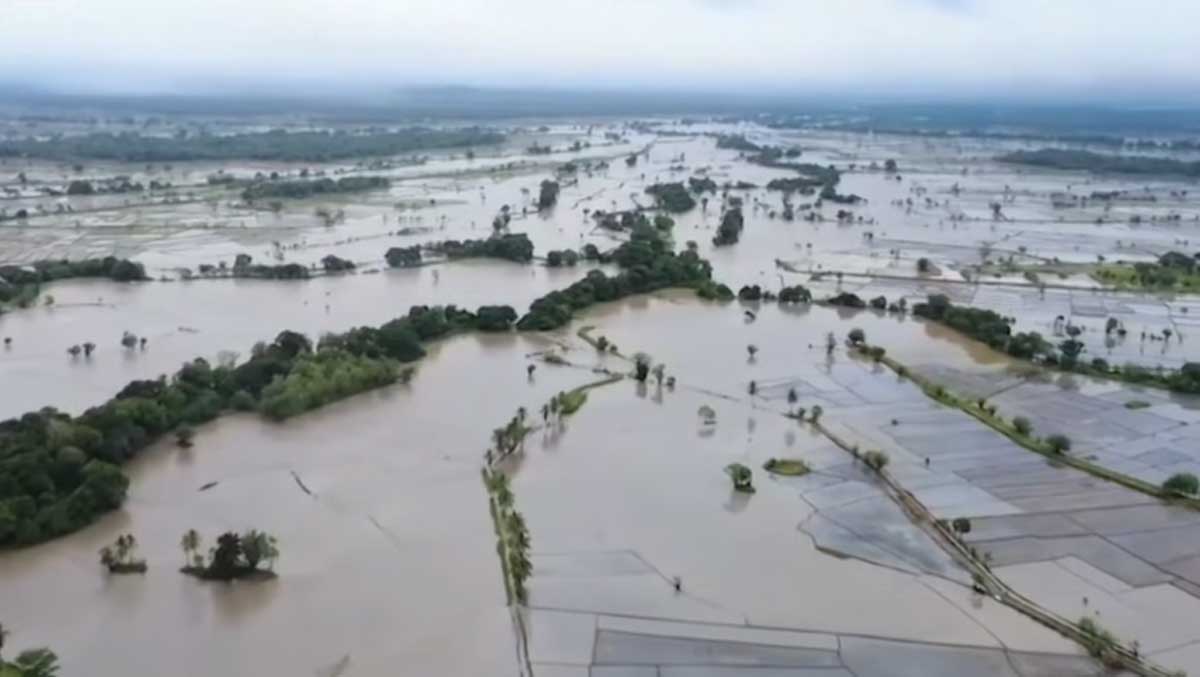
Sri Lanka has suffered direct physical damage estimated at 4.1 billion US dollars, or approximately 4 percent of its gross domestic product, as a result of Cyclone Ditwah, according to a recent study by the World Bank.
In the Kandy district alone, damages were estimated at 689 million dollars, primarily due to flooding, with landslides contributing to a lesser extent.
Infrastructure—including roads, bridges, railways, and water supply networks—accounted for approximately 1.735 billion dollars, or 42 percent of the total damages. The destruction has disrupted connectivity and limited access to markets and essential services across affected regions.
Losses to residential buildings and their contents were estimated at 985 million dollars. The widespread impact on homes underscores the importance of considering building locations, flood control structures, and resilient designs to better withstand high winds and flooding in the future.
The agricultural sector experienced an estimated 814 million dollars in damages, affecting paddy and vegetable crops, subsistence farming, maize, livestock, and agricultural infrastructure. Inland fisheries were also impacted, posing significant risks to food security and the livelihoods of rural communities that are already vulnerable.
“As we look closely at the hardest-hit districts, we see that deep-rooted vulnerabilities have left communities especially vulnerable,” said Gevorg Sargsyan, World Bank Group Country Manager for Sri Lanka and Maldives, in a statement. “In Badulla, Kegalle, and Puttalam, many households were already poor and now face some of the highest losses to homes.”
“In Kandy and Nuwara Eliya, about two in four households are headed by women or older persons. Thousands of women and girls have been displaced or remain in unsafe homes. These realities underscore the need for tailored, community-centered recovery efforts that protect those most at risk.”