
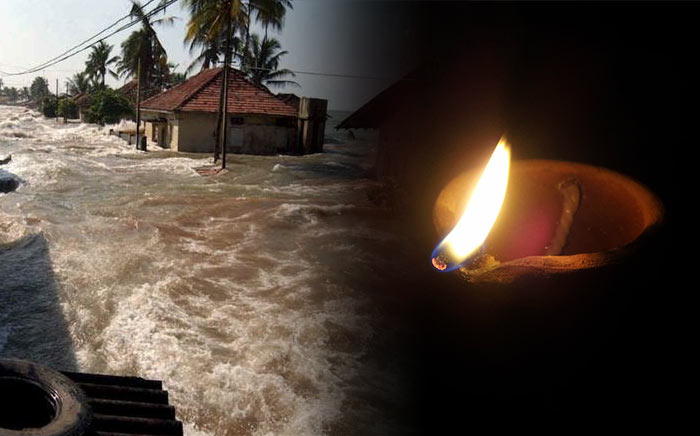
FINANCIAL CHRONICLE – Sri Lanka is set to observe this year’s “National Safety Day” on Friday, December 26, to honor the victims of the 2004 tsunami and those who perished in the recent Ditwah Cyclone, according to a government announcement.
The government has organized interfaith prayer events across all districts, centered around the District Secretariat, as part of the commemoration activities. A two-minute silence will be observed from 9:25 AM to 9:27 AM on December 26, 2025, in memory of the lives lost during these tragedies.
The central commemoration ceremony of “National Safety Day” is scheduled to take place from 8:30 AM to 11:00 AM at the Peraliya Tsunami Memorial in Galle.
On December 26, 2004, Peraliya, a coastal village near Galle in southern Sri Lanka, was struck by the Indian Ocean tsunami. This event resulted in one of the deadliest rail disasters in history when the Queen of the Sea or Samidhra Devi passenger train, carrying approximately 1,700 people from Colombo to Galle, was derailed by waves reaching up to 10 meters high around 9:30 AM.
The powerful waves swept the train off its tracks, pushing carriages over 100 meters inland, resulting in the deaths of at least 1,000 passengers, including many locals who had sought safety atop the train cars. Only 150 survived. The village of Peraliya was nearly obliterated, with hundreds of villagers killed and most buildings destroyed.
The 2004 Indian Ocean tsunami, triggered by a massive 9.0-magnitude earthquake off Sumatra on December 26, caused widespread devastation along Sri Lanka’s eastern, southern, and western coasts. It destroyed coastal communities, infrastructure, and over 100,000 homes, resulting in approximately 35,000 fatalities and displacing around 500,000 people, making it Sri Lanka’s deadliest natural disaster.
Cyclone Ditwah, a severe cyclonic storm, struck Sri Lanka’s eastern coast on November 28, 2025, bringing torrential rains, flooding, and landslides across the nation. Amplified by the northeast monsoon, the cyclone severely impacted almost every district, affecting over 2.2 million people. The disaster caused over 800 deaths or disappearances, displaced hundreds of thousands, and led to significant agricultural losses and disrupted supply chains.