
Subject: Urgent Inquiry into Government Sponsorship of Postponed Concert and Public Financial Loss
Reference:Public Concern Regarding “Ne-Yo Live in Sri Lanka” Concert
This outlines serious public concerns and potential financial governance failures following the indefinite postponement of the “Ne-Yo Live in Sri Lanka” concert, organized by Brown Boy. Core issues include:
· Public Deception: Allegations that ticket revenues have been collected but not refunded, leaving consumers financially cheated.
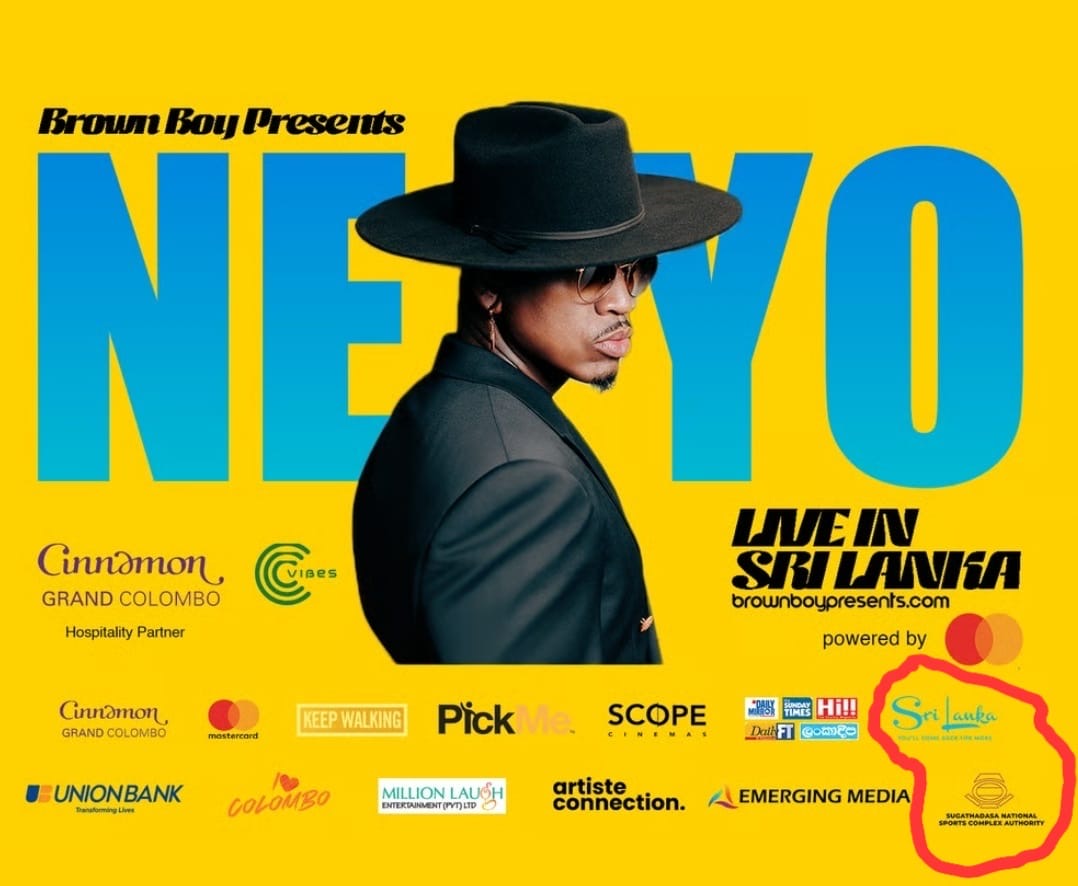
· Misuse of Public Funds: The involvement of two state institutions the Sports Ministry’s Sugathadasa National Sports Complex Authority (SNSCA) and the Sri Lanka Tourism Promotion Bureau as sponsors, raising critical questions about due diligence, approval processes, and the safeguarding of public money.
This situation suggests a possible breach of financial regulations and a failure in fiduciary duty by the sponsoring entities, demanding immediate investigation and accountability.
- Background & Incident Overview
· the organizer, Brown Boy.
· Public outrage erupted as ticket holders reported no clear communication regarding refunds, despite monies being paid.
· It was revealed that Sri Lanka Tourism and the SNSCA (Ministry of Sports) were listed as official sponsors, implying the use of state resources for the event.
- Key Issues & Regulatory Concerns
A. Consumer Protection & Financial Fraud:
· Ticket buyers are left without their money or the service paid for.
· The lack of a transparent refund mechanism suggests potential malpractice by the private organizer.
B. Governance & Use of Public Funds:
· Due Diligence Failure: How did government institutions vet the private organizer’s financial stability, track record, and contractual safeguards (e.g., escrow accounts for ticket sales, cancellation clauses)?
· Approval Process Violation: Which officials authorized the sponsorship? Was there compliance with Government Circulars on Sponsorship/Donations and Public Finance Management guidelines?
· Objective Justification: What was the stated public benefit (e.g., tourism promotion, sports development) that justified this expenditure? Was a cost-benefit analysis conducted?
· Absence of Safeguards: Why were there no apparent contractual protections for the government and the public in case of cancellation? Were public funds used for upfront payments?
- Implications
· Direct Financial Loss: Risk of permanent loss of public funds granted as sponsorship.
· Erosion of Public Trust: Damages the credibility of involved state institutions.
· Precedent: Sets a dangerous precedent for irresponsible sponsorship of private commercial ventures using state money.
· Accountability Gap: Highlights a systemic lack of oversight and accountability in the disbursement of public funds.
- Recommendations
- Immediate Investigation: The Auditor General’s Department and the Committee on Public Enterprises (COPE) should initiate a special audit into the sponsorship approval process and fund flows.
- Demand Transparency: The involved Ministries must immediately:
· Disclose the total sponsorship amount granted.
· Publish the sponsorship agreement (with commercial redactions).
· Clarify the official who approved the sponsorship. - Consumer Justice: The Consumer Affairs Authority (CAA) must intervene to secure ticket refunds for the public.
- Policy Review: The Ministry of Finance must review and strengthen circulars governing state institution sponsorships to private entities, mandating rigorous risk assessment and protective clauses.
The Ne-Yo concert debacle is not merely a private event failure. It is a stark case study in the potential mismanagement of public funds and regulatory oversight failure. The involvement of state sponsors transforms a commercial mishap into a matter of public financial accountability. Swift, transparent action is required to recover funds, protect citizens, and hold responsible parties accountable to prevent recurrence.