
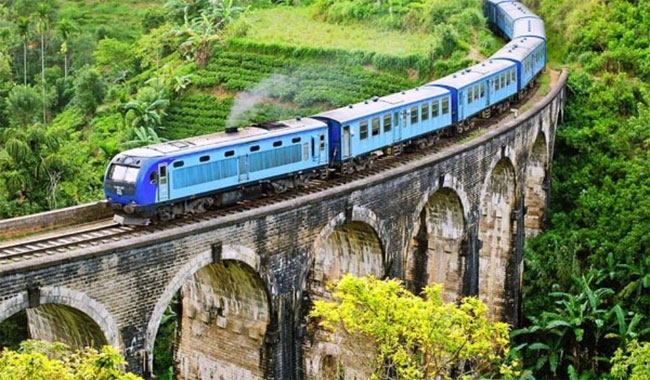
Sri Lanka’s rail network—long romanticised as both a commuter backbone and a tourist experience—has entered another period of prolonged disruption, with implications that extend well beyond daily inconvenience.
According to officials on the ground, the impact is not short-term. A station master at Mount Lavinia confirmed that the Colombo–Kandy service is unlikely to operate for at least six months, underscoring the scale of the operational setback now facing Sri Lanka Railways.
This matters because the Colombo–Kandy line is not merely a domestic commuter route. It is a structural artery of the tourism economy.
Kandy: Not Optional, But Foundational
Kandy is not a discretionary stop on Sri Lanka’s tourism circuit. It is central to almost every standard itinerary—linking the capital to the Hill Country, cultural sites, tea estates, and onward routes to Ella, Nuwara Eliya, and the east.
For many visitors, the train journey itself is part of the product:
• predictable travel time
• relatively low cost
• scenic continuity
• integration with onward rail routes
The absence of a functioning rail link disrupts this entire chain.
Tourism Risk Is Cumulative, Not Immediate
The disruption will not necessarily appear in headline arrival figures overnight. Its effects are more subtle:
• Tour operators quietly re-route or shorten itineraries • Rail-dependent circuits are downgraded or removed
• Online reviews and travel forums begin flagging “logistical difficulty”
• Competing destinations gain marginal advantage
In tourism, friction compounds faster than it reverses.