
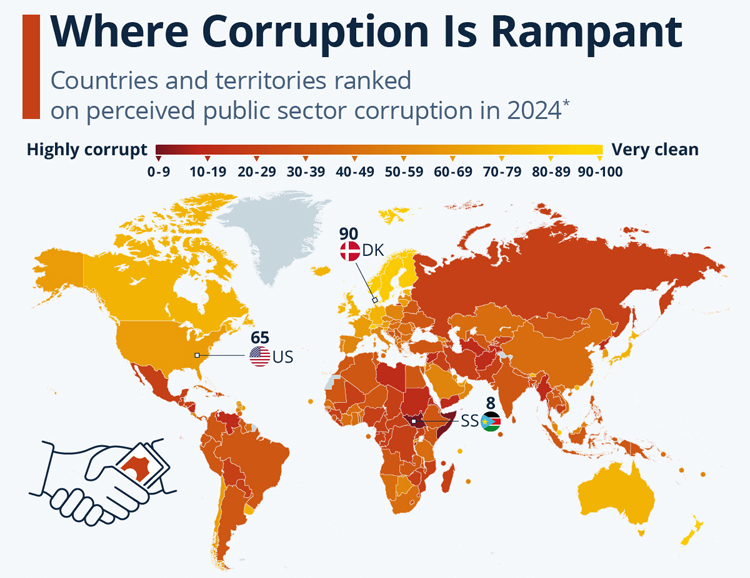
In 1977, Sri Lankans voted out their Socialist government, largely due to widespread corruption, which many attributed to excessive state controls. The succeeding administration, which remained in power for 17 years, has since been described by some as a “17-year curse.” During this era, senior public officials began using ‘Pajero’ jeeps, a move that the opposition criticized as symbolic of “Pagava and Jarava” (bribery and corruption). Former Malaysian Prime Minister Mahathir Mohammed once remarked that corruption is relative and exists everywhere. The term “corruption” is defined as illegal, unethical, or dishonest behavior, especially by individuals in positions of power (Cambridge Dictionary). In the context of elections, corruption was a pivotal issue, prompting Sri Lankans to make an unprecedented decision in 2024 to elect a new leadership perceived to have socialist ideologies aimed at curbing bribery and corruption. With upcoming development initiatives and the ‘Ditwah’ rehabilitation, vigilance from both citizens and policymakers will be crucial in combating corruption. In this regard, the recent efforts by the Communist Party of China (CPC), which governs the world’s second-largest economy, could provide valuable insights.
How does China manage corruption?
The Political Bureau of the CPC Central Committee convened on Thursday to evaluate discipline inspection work and establish priorities for 2026 to bolster China’s anti-corruption efforts. During the meeting, Chinese President Xi Jinping emphasized that maintaining clean governance and fighting corruption is an ongoing journey. His perspective on fostering a corruption-free party to drive national economic growth serves as a lesson for Sri Lankans. The meeting reaffirmed the implementation of the CPC’s ‘8-point decision’ to enhance party and government conduct, promoting more standardized and institutionalized official behavior (Media reports).
The ‘8-point decision,’ adopted by the CPC leadership in December 2012, addresses chronic bureaucratic issues, official privileges, extravagant banquets, and research tours. Western analysts have noted that these regulations highlight the contrast between China’s approach to corruption and the lack of such measures in the West. They observe that China’s laws address issues from major concerns to details like official meals and business trips, indicating a distinct approach. President Xi’s vision of focusing on the number of problems solved, rather than the number of meetings held, speeches given, or documents completed, offers a valuable lesson for public leaders. The Chinese belief in the relationship between tangible results and the commitment of public officials serves as an important lesson for Sri Lankans to ensure public funds reach those most in need.
The ‘8-point decision’ includes the following components:
- Grassroots Research: Better understanding of actual conditions through in-depth studies.
- Streamlined Meetings: Making meetings more efficient and improving conduct.
- Concise Documents: Reducing paperwork and improving writing.
- Standardized Visits Abroad: Regulating procedures for working trips.
- Improved Security: Observing principles that improve relations with the people.
- Better News Reporting: Enhancing media coverage.
- Strict Publication Rules: Controlling articles published by officials.
- Frugality & Anti-Corruption: Promoting simple living and strict adherence to anti-corruption rules (IDCPC).
Views expressed are personal. Photo source: www
The post Socialist anti-corruption drive should never stop! appeared first on Sri Lanka Chronicle Biz English | Sri Lanka Business News.