
Today, the Central Bank of Sri Lanka (CBSL) unveiled a forward-looking policy agenda, projecting an economic growth of approximately 4-5% by 2026. This forecast builds on the progress of the past two years, despite recent challenges such as Cyclone Ditwah. The announcement highlights the bank’s dedication to maintaining macroeconomic stability as a cornerstone for sustained prosperity, even amidst global uncertainties and climate-related vulnerabilities.
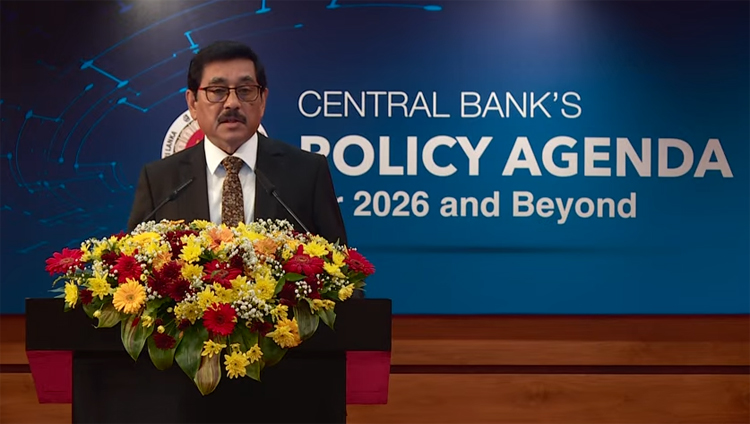
The policy document, titled “Central Bank’s Policy Agenda for 2026 and Beyond,” outlines Sri Lanka’s notable achievements in 2025. Real economic activity continued its upward trend despite trade policy uncertainties, financial market volatilities, and geopolitical tensions. The agenda credits this resilience to a broad-based expansion of credit to the private sector and a reduction in public sector borrowing.
Significant growth in private sector credit supported key industries and households, strengthening demand conditions. This expansion helped sustain growth despite external pressures, such as a surge in vehicle imports spurred by pent-up demand and fears of potential restrictions. For the third consecutive year, the external current account recorded a surplus, stabilizing the exchange rate with gradual depreciation and increasing gross official reserves to over US$6.8 billion by the end of 2025, marking the highest level since the recent crisis.
However, Cyclone Ditwah in late 2025 caused significant damage, presenting both challenges and opportunities. The Central Bank noted that while supply chain disruptions could impede short-term growth, reconstruction efforts and associated spending are expected to provide a positive stimulus. The document reaffirms that, continuing the growth momentum of the past two years, the economy is anticipated to grow by around 4-5% in 2026. It emphasizes that established buffers in fiscal, external, and monetary sectors will facilitate a quicker recovery compared to previous disasters.
In the agenda’s address, Governor of the Central Bank Dr. P. Nandalal Weerasinghe stressed that resilience is “not a choice, but a necessity.” The bank remains alert to supply-side shocks from increasingly frequent extreme weather events, advocating for national-level measures to mitigate such impacts, including enhanced disaster preparedness and long-term resilience building. It acknowledges the limited tools available to central banks for addressing supply-driven inflation.
Looking forward, CBSL’s priorities include enhancing data-driven monetary policy through improved modeling to capture post-crisis dynamics and high-frequency data collection for agile responses. Inflation is expected to rise gradually in 2026, reaching the 5% target by the second half, with ongoing reviews of the inflation targeting framework to incorporate stakeholder input and adapt to potential shocks.
The agenda also links economic growth to financial system stability, noting improvements in asset quality, profitability, and capital buffers in the banking and finance sectors. Initiatives such as the Countercyclical Capital Buffer framework and the expansion of the Sustainable Finance Roadmap 2.0 aim to strengthen the system against cyclical and climate-related risks, supporting inclusive growth.
The government’s fiscal consolidation efforts were commended for aligning with the bank’s objectives, creating a platform for higher investments and sustainable development. The Central Bank reiterated its commitment to promoting financial inclusion through Phase II of the National Financial Inclusion Strategy, set to be formulated in 2026, with a focus on underserved populations and green finance.
As Sri Lanka transitions from recovery to enhanced growth, the policy agenda cautions that preserving hard-earned gains requires continued reforms. “The period ahead calls for a decisive shift from recovery to resilience by strengthening policy credibility, reinforcing economic buffers, and enhancing the economy’s capacity to absorb shocks,” it concludes.