
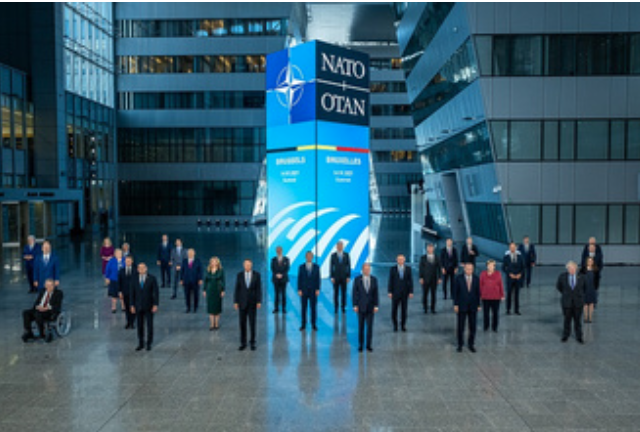
There is a sound the international system makes when it is embarrassed. It is not a bang. It is not even a protest. It is silence — carefully worded, diplomatically padded, and institutionally evasive.
That is the sound coming out of NATO this week.
After the United States unilaterally deposed Venezuela’s president, rendered him to U.S. custody, seized Venezuelan-linked oil tankers on the high seas, and then announced it would “oversee the transition” — including Venezuela’s oil business — the world waited for the guardians of the “rules-based order” to speak.
They didn’t. At least, not collectively.
And that silence tells us almost everything.
NATO’s Quiet Is Not Neutral
There has been no formal NATO endorsement of Washington’s actions. There has also been no condemnation. Instead, we are offered the diplomatic equivalent of throat-clearing: allies speaking individually, cautiously, aware that anything firmer risks implicating them in something that looks, uncomfortably, like imperial muscle memory.
This matters because NATO is not a debating society. It is an alliance that claims moral authority rooted in law, restraint, and multilateralism. When its leading member acts first and asks questions later — or worse, writes its own answers — NATO’s credibility becomes collateral damage.
Silence here is not unity. It is avoidance.
What the U.S. Says It Is Doing
Washington’s position is that it is enforcing sanctions, disrupting criminal oil networks, and acting against what it describes as a “shadow fleet” operating to fund an illegitimate regime.
This framing is legally clever and politically convenient. It avoids words like blockade, act of war, or extraterritorial enforcement. Instead, it leans on domestic court warrants, sanctions law, and a flexible interpretation of maritime authority.
The problem is that international law does not run on U.S. domestic statutes.
What Maritime Law Actually Says
Under the United Nations Convention on the Law of the Sea (UNCLOS) — inconveniently still the backbone of global maritime order — freedom of navigation is sacrosanct. States may board and seize vessels only under narrow conditions: piracy, statelessness, slave trading, or explicit UN Security Councilauthorization.
None of those conditions clearly apply here.
The seized tankers were not U.S.-flagged.
There is no UN mandate.
Sanctions are not, in themselves, a license for high- seas interdiction.
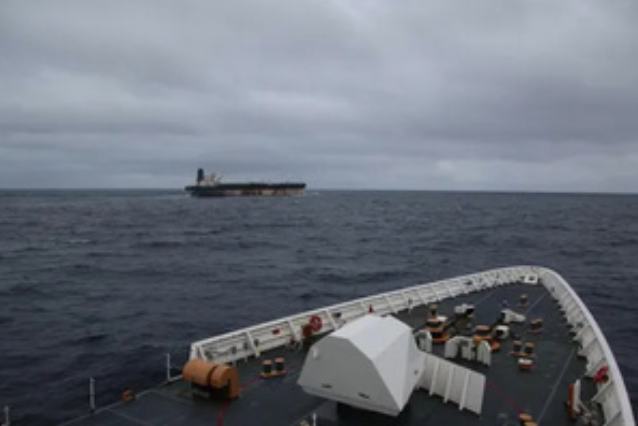
This is why Russia — with all the moral ambiguity that entails — has called the seizures “piracy”. China has called them unilateral and illegal.
Several non-aligned states have quietly nodded, even if they will never say so on record.
The uncomfortable truth is this: the legal argument for these seizures is thin, and everyone in Brussels knows it.
Why NATO Doesn’t Want the Microphone
If NATO endorses the U.S. action, it tacitly accepts that powerful states may police global commerce unilaterally, outside UN frameworks, when it suits them.
If NATO condemns it, the alliance fractures publicly.
So NATO does what large institutions do best under moral stress: it says nothing and hopes the news cycle moves on.
But silence is not cost-free.
Every time the alliance looks away from legal inconsistency by a dominant member, it weakens its own lectures to others. When NATO invokes international law against Russia in Ukraine, or China in the South China Sea, the response will be simple, brutal, and effective:
You didn’t seem this concerned in Venezuela.
The Oil Problem No One Wants to Name
The most revealing moment came not with the seizure itself, but with Washington’s declaration that it would “oversee” Venezuela’s transition — and its oil sector.
That sentence did more damage than a thousand naval manoeuvres.
Because suddenly, the operation stops sounding like law enforcement and starts sounding like resource administration. And that, historically, is where the democratic world loses the argument.
You cannot depose a government, detain its leader, seize its primary export assets, and then claim neutral stewardship. That is not oversight. That is control — however temporary, howeverwell-intentioned.
The global south hears this language clearly. So do Latin Americans. So, quietly, do Europeans.
The Rules-Based Order, Rewritten in Pencil
This episode exposes an uncomfortable hierarchy in international law:
Rules are universal — until they are inconvenient. Sovereignty is sacred — until it belongs to the wrong government.
Multilateralism matters — until unilateral action is faster.
NATO’s silence does not legitimise the U.S. action. It merely reveals the limits of the alliance’s moral coherence when power and principle collide.
This is not about defending Venezuela’s leadership. It is about defending the idea that law restrains power, not the other way around.
Because once enforcement becomes selective, legality becomes optional. And once legality becomes optional, the difference between democracies and empires narrows dangerously.
The Turning Point
NATO did not speak because it could not do so honestly without confronting a contradiction at the heart of the modern order.
If the rules-based system only applies to adversaries — and bends for allies — then it is not a system. It is a script.
And the world, increasingly, is no longer buying the performance.