
Sri Lanka enters the first week of January 2026 with the familiar choreography of a country that insists it is “stabilising” while tripping over the same cracks in the pavement — only now with better PowerPoint slides.
The rupee sliding past Rs. 310 to the dollar is not a market tantrum; it is a reminder. Stability, we are told, has returned.
But stability that collapses at the sight of a dollar is not reform — it is performance.
Remittances are up, tourism arrivals are respectable, and yet the currency behaves like a nervous witness who knows the story doesn’t quite add up.
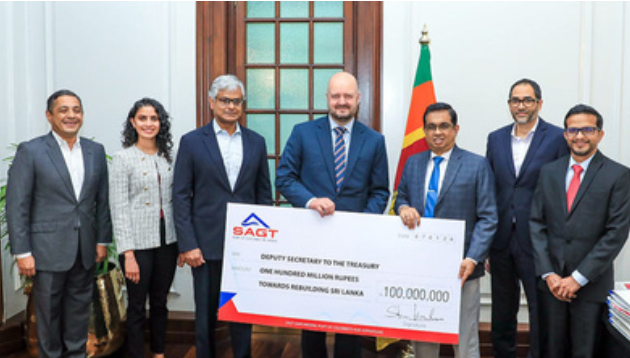
On cue, the private sector steps in where the state strains. Corporate Sri Lanka — led by groups such as John Keells Holdings and Dialog Axiata — has pledged hundreds of millions for Cyclone Ditwah recovery. The generosity is real. So is the quiet indictment embedded in it: when disaster strikes, institutions salute, corporates pay, and accountability remains somewhere “under review”.
Meanwhile, governance moves at its own leisurely pace. Sri Lanka still functioned for weeks without an Auditor General — a constitutional absurdity in a country supposedly obsessed with “public finance discipline”. Oversight bodies stall, committees flail, and no one seems particularly embarrassed. In Sri Lanka, paralysis is rarely treated as an emergency unless it inconveniences power.
Internationally, Colombo hosts India’s Army Chief with warm smiles and familiar assurances. Defence cooperation deepens, security dialogues multiply, and Sri Lanka continues its careful diplomatic tightrope walk — aligned, but not anchored; courted, but cautious. It is geopolitics conducted with practiced ambiguity, even as the region sharpens its edges.
Elsewhere, the headlines are less flattering and more revealing.
Five people die after consuming illicit liquor — a story that resurfaces with numbing regularity. Every time, promises are made. Every time, the underground economy of poison thrives. Regulation talks loudly; enforcement whispers.
A seaplane crashes into Gregory Lake, raising uncomfortable questions about safety, oversight, and the rush to brand every risky venture as “tourism development”. Aviation expansion is now a buzzword. Reality, however, has a habit of intervening mid-flight.
The government proudly announces a national action plan against human trafficking for 2026– 2030. On paper, it is thorough. On the ground, Sri Lanka remains a transit point, a source country, and a case study in how plans proliferate faster than prosecutions. Strategies do not rescue victims; enforcement does.
In crime and courts, familiar names reappear. Former ministers remain in remand. Airport thefts make headlines.
Law and order oscillates between spectacle and inertia — tough when televised, timid when structural reform is required.
And then there is cricket. Pakistan arrives. The pitches are ready. The commentary boxes hum. Cricket remains Sri Lanka’s comfort zone — a familiar refuge where continuity is celebrated, even when everything else feels unresolved. When governance disappoints, the boundary rope still delivers.
Sri Lanka is not collapsing. Nor is it transforming. It is hovering — propped up by private generosity, international patience, and public endurance. The danger lies not in crisis, but in complacency: mistaking survival for success, and stability for reform.
The headlines tell us where we are. The silences tell us why we are still here.