
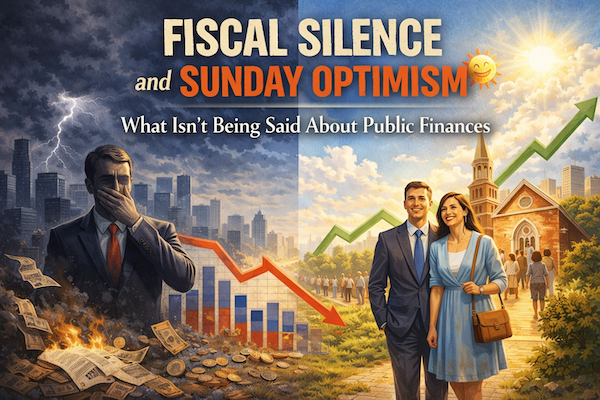
Business sections on Sunday were cautiously upbeat. Stability. Recovery. Normalisation. The language is familiar — and selective.
What is largely absent is a clear discussion of how the state is financing itself.
Sri Lanka’s fiscal position has improved at the surface. Revenue collections are stronger. Borrowing pressure appears reduced. Auctions are calmer. Markets are less volatile.
But these improvements are not accidental. They are engineered — through import taxation, suppressed spending, deferred obligations, and creative liquidity management.
This is not criticism; it is observation.
Sunday optimism rarely interrogates sustainability. Temporary revenue inflows are treated as structural fixes. Asset drawdowns are framed as recovery. Deferred costs are invisible.
The danger lies in mistaking fiscal quiet for fiscal health.
True recovery would involve:
Clear disclosure of contingent liabilities Transparent reporting on state bank exposures Explicit treatment of pension-linked risks
Honest discussion of post-restructuring debt dynamics
Instead, the silence persists. Stability is marketed; structure is avoided.
Sri Lanka has mastered the art of buying time. What it has not yet demonstrated is the discipline to use that time for reform.
Sunday optimism is understandable. But optimism without disclosure is not confidence — it is deferral.