
By Faraz Shauketaly
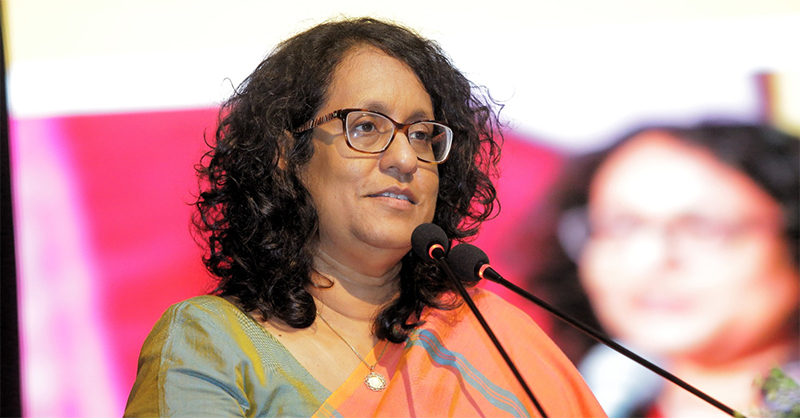
Sri Lanka has an old habit: when reform finally knocks, we don’t open the door—we interrogate the doorbell, question the wiring, and accuse the carpenter of having ulterior motives. Education reform, that most sacred of national minefields, has once again become the stage on which our political insecurities, cultural anxieties, and oppositional reflexes are being performed with theatrical enthusiasm. At the centre of this drama stands Prime Minister and Education Minister Harini Amarasuriya, calm, composed, and—by local political standards—almost suspiciously rational.
When Dr. Amarasuriya addressed education officials and principals in Madampe, she did not arrive bearing revolutionary slogans or pedagogical manifestos written in Scandinavian ink. She did something far more subversive: she insisted the reforms would continue.
Grade 1 students, she said, would receive their new textbooks on January 29. The reforms, she reminded her audience, are not some indulgent experiments but a necessity—something the country needs and something its children deserve.
That simple statement—education reform is necessary —has proven more controversial than it should ever be in a country that routinely laments its outdated curricula, exam obsession, and factory-style schooling. In Sri Lanka, everyone agrees education must change, provided nothing changes.
Enter the opposition, stage left, armed with signatures, slogans, and a No-Confidence Motion (NCM) that is simultaneously alive, dead, and “to be submitted at the appropriate time”—a phrase that in local politics usually means “whenever it suits the news cycle.” The Samagi Jana Balawegaya (SJB) now claims credit for forcing the government to “walk back” the reforms. According to its General Secretary, the NCM triggered street protests, religious interventions, and ultimately a humbling of an allegedly arrogant government.
It is an impressive claim. One might almost believe that curriculum design in Sri Lanka is now determined by clipboard arithmetic and political brinkmanship rather than policy review. The suggestion that thousands of pages of reform work collapsed overnight due to the threat of parliamentary embarrassment is flattering to the opposition—but it also reduces education governance to a game of political chicken.
Then came the scandal that swallowed everything else: the appearance of a web address linking to adult content in a Grade 6 English module. It was careless. It was unacceptable. It warranted investigation. And it is being investigated—by the CID, no less, with a timeline stretching into months. Yet this error, serious as it is, has been elevated from a quality-control failure into a civilisational crisis, conveniently eclipsing all substantive discussion about pedagogy, outcomes, or reform design.
The SLPP, for its part, has chosen a more philosophical line of attack. Its concern is not the website but the soul of Sri Lankan education itself. The reforms, it warns, appear inspired by Finland and Denmark—those dangerous places where students are encouraged to think, teachers are trusted, and learning is not reduced to past-paper memorisation. What, the SLPP asks, will happen to our British and Commonwealth heritage? Will our O/Ls and A/Ls still be recognised abroad? Will Sri Lankan students suddenly find themselves academically stateless?
These are not illegitimate questions. Recognition matters. Pathways matter. Continuity matters.
But they also deserve honest answers rather than alarmist framing. The Foreign Minister has been clear: the structure remains intact—13 years of schooling, O/Ls and A/Ls preserved, international recognition unaffected. A module-based approach does not amount to educational apostasy. It is a method, not a mutiny.
And yet, the debate rarely lingers here, where it should. Instead, it drifts—back to personalities, politics, and power. Is this really about curriculum design, or is it about whether a Prime Minister who speaks calmly, consults experts, and refuses to theatrically retreat can survive in a political ecosystem addicted to outrage?
Dr. Amarasuriya has not claimed infallibility. The government has postponed the Grade 6 rollout, citing both the CID investigation and public concern. That is not arrogance; it is adjustment. It is what functioning administrations do—pause, correct, and proceed. But in Sri Lanka, flexibility is often interpreted as weakness, and persistence as obstinacy. One cannot win.
The opposition insists the NCM is still alive. The government says it is ready—offering debate dates, even a two-day discussion. The silence that followed is telling. Perhaps the reform debate is less useful once it threatens to become substantive.
In defending Harini Amarasuriya, one is not defending every line of every module or every administrative misstep. One is defending the idea that education reform should be judged on its merits, not weaponised for short-term political gain. One is defending the principle that a mistake in a textbook, however serious, should lead to accountability and correction—not to the abandonment of reform altogether.
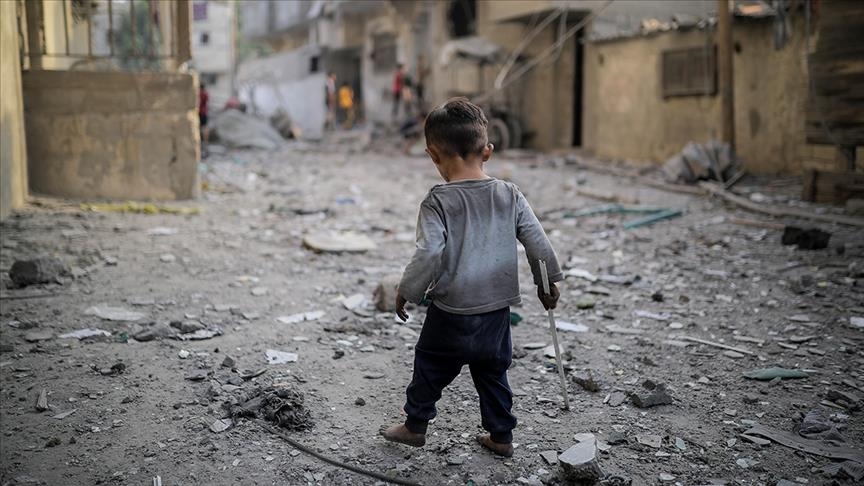
Sri Lanka’s children are not ideological pawns. They are not footnotes in no-confidence motions. They are the future recipients of decisions made today— decisions that will either prepare them for a complex world or trap them in an outdated one.
So yes, investigate the error. Debate the model. Question the safeguards. Improve the process. But let us not pretend that defending the status quo is an act of cultural preservation or that sabotaging reform is an act of patriotism.
In the end, the question is not whether Harini Amarasuriya can defend these reforms. It is whether Sri Lanka can finally defend the idea that education is too important to be reduced to politics by other means.