Sri Lanka is revising the basis for imposing value-added tax (VAT) on imported rough stones to revive its gem trade, which has shifted to Thailand, Dubai, and Hong Kong following increased taxation. This move aims to rejuvenate the gem polishing and value addition sectors, which have suffered since the introduction of an 18% VAT and a 2.5% Social Security Contribution Levy on these imports, according to S. P. Chaminda, Chairman of the Sri Lanka Gem and Jewelry Authority.
“We made this decision to strengthen the industry,” Chaminda told reporters. “Our gem industry was gradually relocating to countries like Thailand, Dubai, and Hong Kong due to their more simplified and liberalized tax policies.”
Chaminda highlighted that the reduction in imports had adversely affected those involved in cutting, polishing, and heat treatment of stones, especially in areas like Ratnapura and Beruwala. Previously, Sri Lanka Customs charged a flat fee of $200 per parcel for stone clearance, irrespective of weight or value. However, the assessed value-based VAT significantly reduced import volumes.
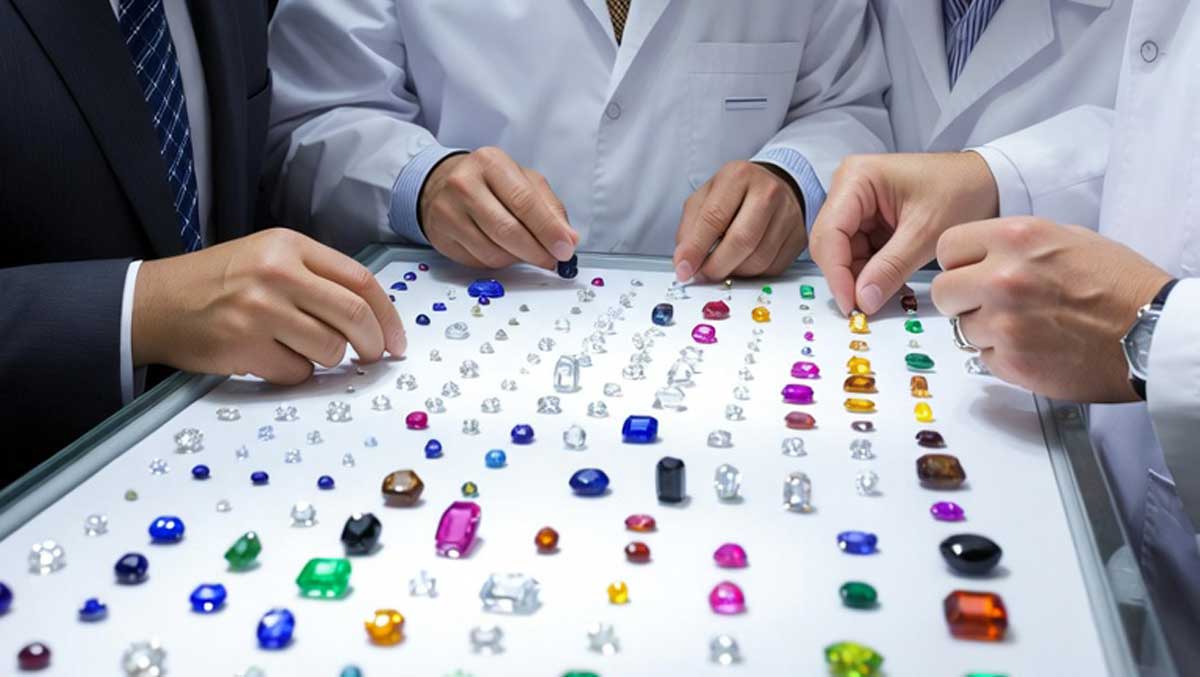
Following discussions with the Ministry of Industries and the Finance Ministry, VAT will now be calculated based on a deemed value according to weight. Precious stones will have a deemed value of $900 per kilogram, while semi-precious stones will be valued at $50 per kilogram. “A kilogram of precious stones will now incur a 20.5% charge on the $900 deemed value, equating to approximately 57,200 rupees,” Chaminda explained. “A semi-precious stone will be charged $10.25, or around 3,174 rupees.”
For stones weighing less than a kilogram, charges will be applied per carat. Precious stones like rubies, sapphires, and emeralds will be charged at $5 per carat, and semi-precious stones at $1 per carat. “For example, a 1-carat stone will have VAT and SSCL applied on its $5 deemed value, amounting to around $1,” Chaminda noted. For a 1-carat semi-precious stone, the deemed value would be $0.20, translating to approximately 12 rupees after taxes.
Additionally, the authority is enhancing the quality of gem certification by upgrading existing labs to issue internationally accepted certificates. “The certification will verify whether the gem is of Sri Lankan origin or if it is natural or heat-treated,” Chaminda said.
Sri Lanka is also planning to establish a refinery to produce fine gold domestically, as import taxes have hindered gold flows. Jewelry industrialists have pointed out that gold import taxes are exceedingly high, nearing 45%, Chaminda mentioned. Discussions are ongoing to explore the possibility of adjusting these taxes.
“Import bans previously halted gold importation entirely,” Chaminda noted. “Currently, a substantial tax of around 45% is imposed, making it challenging for businesses to survive. This tax is an IMF condition, as Sri Lanka is part of an IMF loan program, limiting our flexibility in relaxing these measures.”
Critics have remarked that Sri Lanka’s macro-economists, who reduce rates based on flawed monetary doctrines, often evade accountability, while citizens face numerous obstacles. Import and exchange controls are seen as clear indicators of the central bank’s evasion of responsibility for a flawed, inflation-prone operating framework. Since February 1952, Sri Lanka has faced external challenges, evolving from a promising nation with a currency board to one experiencing monetary instability due to aggressive macroeconomic policies initiated by a newly established central bank, resulting in repeated IMF interventions.
The gem trade shifted to countries like Hong Kong, which operates under a true currency board, and Dubai, with a currency board-like arrangement, both lacking a policy rate. Meanwhile, the Bank of Thailand has maintained negative domestic assets for many years.
(Colombo/Jan20/2026)