There is a new sound in the country.
It is not anger. Not yet.
It is quieter than that — a kind of civic throat- clearing.
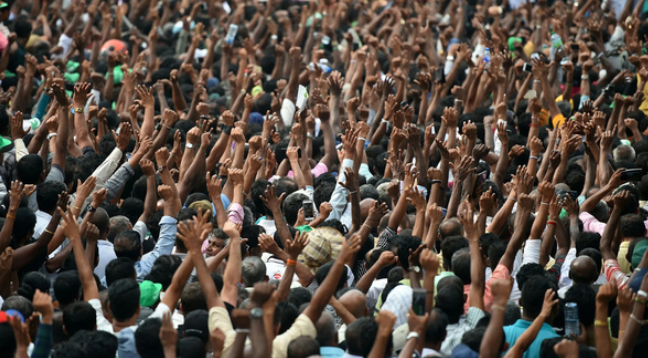
The rallies still happen. The slogans are still printed. The social media warriors still report for duty. But listen carefully and you’ll hear it: the applause is shorter, the cheers less enthusiastic, the benefit of the doubt beginning to expire.
The question doing the rounds in drawing rooms, buses, WhatsApp groups and boardrooms alike is deceptively simple: is public support for the ruling party waning — or are Sri Lankans merely pausing, arms folded, waiting to see if promises turn into prosecutions?
Because this government did not come to power on charisma alone. It came on a single, unambiguous moral contract: those who broke the country would be heldaccountable.
Not reviewed.
Not “looked into.” Held. Accountable.
The Promise That Changed the Ball Game
In opposition, the rhetoric was muscular. Corruption was not presented as a philosophical problem but a criminal one. The public was told — repeatedly — that files were ready, evidence existed, and that the rot ran all the way to the top.
That promise mattered. In a country exhausted by inflation, austerity, and moral fatigue, accountability, was the emotional currency of the campaign. It was the assurance that sacrifice would at least be accompanied by justice.
Fast-forward to government — and the optics are suddenly… complicated.
The Wickremesinghe Episode: A Case That Raised More Questions Than It Answered
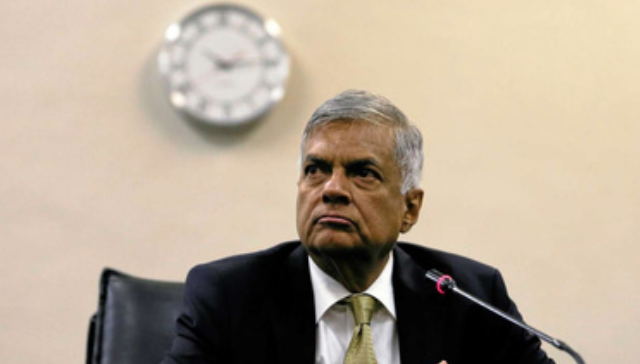
The arrest of Ranil Wickremesinghe was billed — in some quarters — as a watershed moment. Proof, perhaps, that no one was untouchable.
Yet, as details emerged, it became less a triumph of accountability and more an exercise in legal ambiguity. The much-talked-about UK visit, once framed as emblematic of wrongdoing, now appears less certain as a prosecutable offence.
This is not a defence of Wickremesinghe. It is a defence of standards.
Because when a government promises accountability and delivers a case that struggles to clear its own evidentiary hurdles, the public does not see justice. It sees risk — the risk that accountability is being performed, not pursued.
And Sri Lankans, after decades of selective justice, have developed an unusually sharp eye for theatre.
The Elephant in the Room (and It Is Wearing a Name Tag)
Which brings us to the question everyone asks — usually in a lowered voice, often with a raised eyebrow:
What about the Rajapaksas?
More specifically: what about Namal?
Namal Rajapaksa was not an incidental figure in opposition rhetoric. Allegations were made. Accusations were articulated. The public was told — implicitly and sometimes explicitly — that accountability would extend to the family that dominated Sri Lankan politics for over a decade.
So far, that extension appears… pending.
This is where perception hardens into suspicion. Not because people demand vengeance, but because precedent matters. If those at the very apex of power escape scrutiny — or are seen to — the entire accountability narrative collapses under its own weight.
The public’s working theory is brutally simple:
If the highest levels are not touched, the past is not finished — it is merely resting.
And a rested past has a habit of returning.
Is Support Waning — Or Just Conditional?
Here’s the uncomfortable truth for the ruling party: what looks like waning support may actually be conditional support under review.
Sri Lankans are not revolting. They are evaluating.
They understand — perhaps better than their leaders — that prosecutions take time, that cases must be watertight, and that shortcuts lead to acquittals. But they also understand something else: delay without explanation looks indistinguishable from reluctance.
The silence is what unsettles.
The lack of a clear prosecutorial roadmap.
The absence of transparent timelines.
The feeling that accountability has become a moving target.
This is not ideological disappointment. It is transactional. The public voted for outcomes, not intentions.
The Comeback Question
History offers a warning the government would do well to heed: unfinished accountability creates political resurrection.
If the architects of the past are seen to walk free — or merely age gracefully — the narrative will shift. From “they ruined the country” to “at least they knew how to run it.”
That is how comebacks are born. Not through nostalgia, but through disappointment.
The Crossroads Moment
The ruling party still has time. But time, like patience, is not infinite.
It must decide whether accountability is: a moral posture, or
a prosecutorial project.
Because the public will not judge this government on speeches, commissions, or press conferences. It will judge it on names, charges, courts, and outcomes.
Until then, the silence will continue — not the silence of fear, but the silence of citizens waiting to see whether power will finally keep its word.
And in Sri Lanka, silence is never neutral.