Sri Lanka keeps making the same mistake when it comes to Ayurveda: it tries to measure itself against India.
That is a category error.
India is not a benchmark; it is a continent with a balance sheet. It has scale, state backing, mass manufacturing, and an internal market large enough to absorb everything from certified practitioners to dubious miracle cures. Sri Lanka cannot out-India India — and does not need to.
Sri Lanka sits in what economists politely call “India + the fringe.” And in wellness tourism, the fringe is where margins live.
Scale Is India’s Game. Yield Is Ours.
India dominates Ayurveda by volume. Clinics by the tens of thousands. Treatment at every price point. Government ministries devoted to AYUSH.
Sri Lanka’s advantage lies elsewhere: controlled scarcity, setting, and spend-per-client.
Ayurvedic treatment tourism is not about how many people you treat. It is about how much value you extract per patient-week — and how convincingly you sell authenticity, supervision, and outcome.
On that metric, Sri Lanka is underperforming not because it lacks heritage, but because it has not decided to own the premium lane unapologetically.
The Proof Already Exists — We Just Don’t Like Looking at It
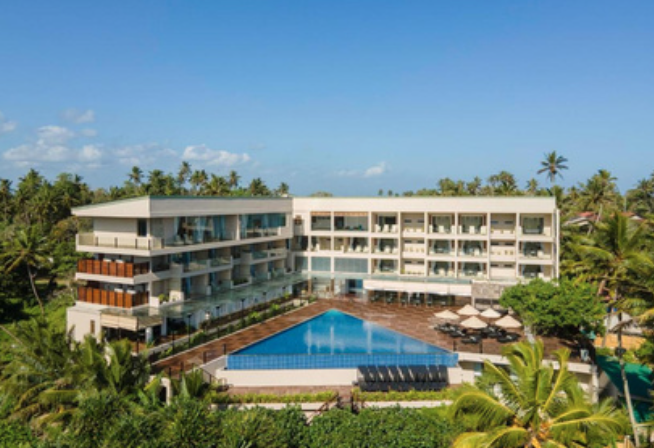
Take Thema Collection and its flagship Ayurvedic wellness concept, Ayurvie.
This is not Ayurveda as a side-attraction wedged between a buffet and a sunset cocktail. It is destination-first, treatment-led wellness, designed around:
Length-of-stay programmes
medically supervised Panchakarma
diet, environment, and therapy integration pricing that assumes a serious, international client
The numbers here do not depend on footfall in the thousands. They depend on weeks, not nights — and clients who do not blink at paying for credibility.
In other words, the economics are not tourism-as- volume. They are tourism-as-treatment.
The Numbers Sri Lanka Thinks It Needs — And Doesn’t
Sri Lanka often talks about wellness tourism as though it needs millions of visitors to “move the needle.”
It doesn’t.
Let’s be blunt:
One properly structured Ayurvedic retreat client staying 21–28 days
At a medically credible, internationally marketed facility Can generate the revenue of multiple leisure tourists cycling through in a week
The fringe strategy is not about matching India’s patient counts. It is about extracting disproportionate value per visitor.
Sri Lanka does not need to be the pharmacy of Ayurveda. It can be the clinic.
Why the Fringe Works (If We Let It)
Sri Lanka’s natural advantages are obvious, but routinely squandered:
An island geography that sells containment and calm
A heritage of indigenous medicine that predates wellness fads
A tourism base already familiar with premium hospitality
Short internal travel distances — critical for recovery- based stays
What has been missing is discipline.
The fringe only works if:
standards are enforced
charlatanism is policed
medical claims are regulated
and Ayurveda is treated as a clinical offering, not a spa accessory
Without that, the premium collapses and the country slides into price competition — which India will always win.
The Strategic Error to Avoid
Sri Lanka’s policymakers still flirt with the idea of “scaling Ayurveda exports” as though the goal is factories first and clinics later.
That is backwards.
The real export is outcomes and reputation. Products follow credibility, not the other way around.
Kerala became a global Ayurveda reference point not because it exported bottles, but because it exported trust.
Sri Lanka’s opportunity is similar — but smaller, sharper, and potentially more profitable if handled correctly.
The Choice Ahead
Sri Lanka is already in the India + fringe position. The market has decided that for us.
The only question is whether we:
embrace it deliberately, or
continue pretending we are something we are not
Ayurvedic treatment tourism will never be a volume play for Sri Lanka — and that is precisely why it can be a numbers game that actually adds up.
In wellness, as in politics, the margins belong to those who understand their lane — and stay in it.