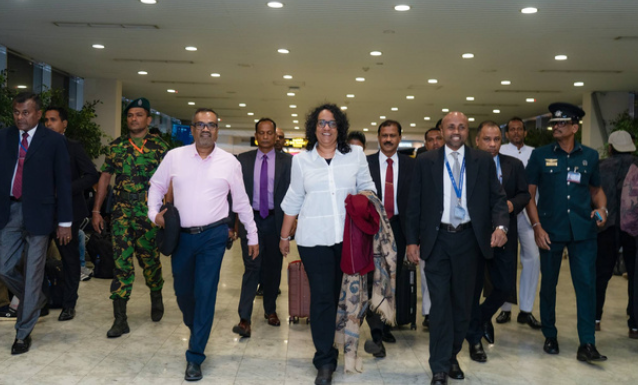
When Sri Lanka’s Prime Minister Harini Amarasuriya boarded a plane to Davos, Switzerland in late January, it was not a photo op. It was a strategic economic engagement — and a message that the country is, at long last, ready to meet markets and partners on their own terrain.
Amarasuriya led Sri Lanka’s delegation to the 56th Annual Meeting of the World Economic Forum (WEF) in Davos-Klosters, a gathering that this year drew more than 3,000 global leaders under the theme “A Spirit of Dialogue.” That includes heads of state, multinational CEOs, senior policymakers and innovators confronting a world awash with geopolitical uncertainty and economic fragility.
So how important was it — and how exactly does it matter for Sri Lanka?
Visibility in a Fragmented World
Davos is the high table of global economic conversation. It is not where decisions are always made, but it is where narratives are shaped and confidence is calibrated. Sri Lanka’s economy is in a delicate phase of post-default recovery, and the optics of absence can easily be interpreted abroad as disengagement.
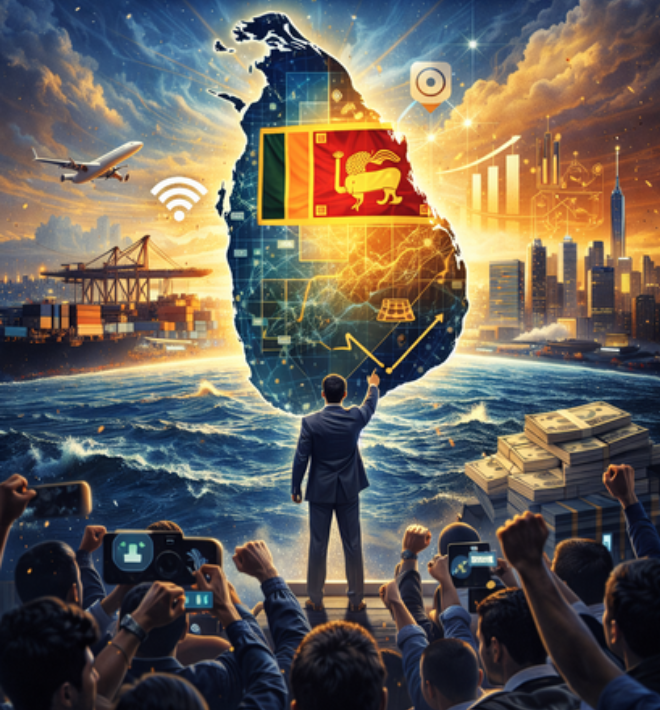
Prime Minister Amarasuriya’s presence prevented that. It showed Sri Lanka is not looking inward in isolation; it is staking a claim to a voice in conversations about growth, digital transformation, climate resilience, tourism and investment — precisely the topics being discussed at Davos.
Bilateral Engagement — Hard, Not Soft Power
The economic summit is more than speeches. On the sidelines, the Prime Minister held a series of high- level bilateral meetings — with the Asian Development Bank’s President, the European Commissioner for International Partnerships, Swiss business communities and Sri Lankan expatriate entrepreneurs in Europe. These were not social calls — they focused on economic reform priorities, investment matchmaking, sustainable development cooperation and market access.
Crucially, the discussions included long-term investment frameworks that Sri Lanka desperately needs. The country’s foreign exchange situation, reform agenda and search for stable capital flows are not abstract problems; they require aligned policy and investor confidence. Engaging high-level partners in Davos helps turn dialogue into dollars — or at least into roadmaps that mayleadthere.
Tourism as Diplomatic Capital
In Davos, the Prime Minister also framed tourism — Sri Lanka’s largish foreign exchange earner — as soft power and diplomatic capital, not just receipts and arrivals. Tourism today competes with global narratives of sustainability, digital experience and climate risk. Positioning Sri Lanka’s tourism sector in that broader context is an important signal to investors who think in terms of regional networks, not isolated destinations.
Testing that language in front of global stakeholders is more meaningful than domestic tours pitched mainly at applause.
Partnerships Over Promises
Perhaps most importantly, Davos allowed Sri Lanka to articulate its reform trajectory to a global audience in real time — and to hear back from them. This kind of mutual exchange matters far more than scripted bilateral visits because it is anchored in shared risks and opportunities.
Whether the focus was education reform, digital transformation, climate resilience, or economic recovery frameworks, Sri Lanka’s engagements were aligned with broad global priorities that transcend simple aid or charity — and instead emphasise mutual investment and co-creation.
What History Will Remember
Going to Davos is rarely a domestic headline. But for a country trying to rebuild credibility and reposition itself on global economic maps after a sovereign debt crisis, it matters — deeply.
What Sri Lanka says at home about policy is important. But what it says abroad — and to whom — influences how capital assesses risk, how investors weigh opportunities, and how partners conceive cooperation.
Prime Minister Amarasuriya’s presence in Davos was not ceremonial. It was a bid for confidence — and for clarity in a volatile world.
Because in global economics, presence is persuasion, and engagement is evidence.
And right now, Sri Lanka needs both.