Sri Lanka is a country that can sell “paradise” with one hand and then quietly invoice the future with the other.
So when Erik Solheim arrives in Dambulla for Sunday’s panel — “Sustainable Tourism in Sri Lanka” at Amba Yaalu, Dfambulla, Kandalama — it is not just another guest speaker moment. It’s a timely intervention into a national habit: celebrating tourism “arrivals” while arguing with the reality of what tourism actually delivers.
Solheim is not a hotelier. He is not a tour operator. He does not sell room nights. He sells something more awkward: the idea that tourism must be profitable, yes — but also measurable, fair, and survivable.
And he has been selling that argument across continents.
A Familiar Face, With an Unfamiliar Discipline
Solheim is best known globally as a former head of UN Environment (UNEP), where he served as Executive Director and UN Under-Secretary-General. He also served in the Norwegian government as Minister of the Environment and Minister of International Development, and is associated with Norway’s high-profile push on rainforest conservation and climate-linked development policy.
But the version of Solheim showing up in Sri Lanka is less about titles and more about a worldview: sustainability is not a side project; it is the only business model that survives.
UNEP under Solheim explicitly pushed that message into travel and tourism, framing tourism as a sector that must reduce its footprint, clean up standards, and stop confusing marketing with impact. In one UNEP blog post, he urged consumers and the industry to make tourism “green and clean” and pointed to recognised sustainability criteria used in the sector.
In 2017, Solheim also put his name to global-level messaging with the UN tourism establishment on sustainable tourism and climate responsibility — a reminder that the argument is not fringe: it’s mainstream policy.
“Sustainable Tourism” — The World’s Most Abused Phrase
Here is the uncomfortable truth: sustainable tourism is now like “good governance” — everybody supports it,
often in direct proportion to how little they practise it.
Solheim’s approach, judging by his public writing and interviews, leans toward a blunt metric:
Does the local economy feel richer, or is the destination simply busier?
That matters in Sri Lanka, where tourism has a well-earned reputation for producing impressive arrival numbers — while allowing significant value to leak elsewhere through offshore bookings, foreign intermediaries, and payment systems that don’t reliably settle into the Sri Lankan economy.
Solheim has previously spoken publicly about Sri Lanka’s opportunities in eco-tourism and broader green development, and in a Sri Lankan media interview said he wanted to help bring more tourists and green investment — while stressing that Sri Lanka’s core economic decisions remain Sri Lanka’s responsibility.
That “help, not hijack” posture is part of his appeal: he is an outsider who speaks like an ally — but not a flatterer.
His Sri Lanka Lens: Green Opportunity, Climate Vulnerability
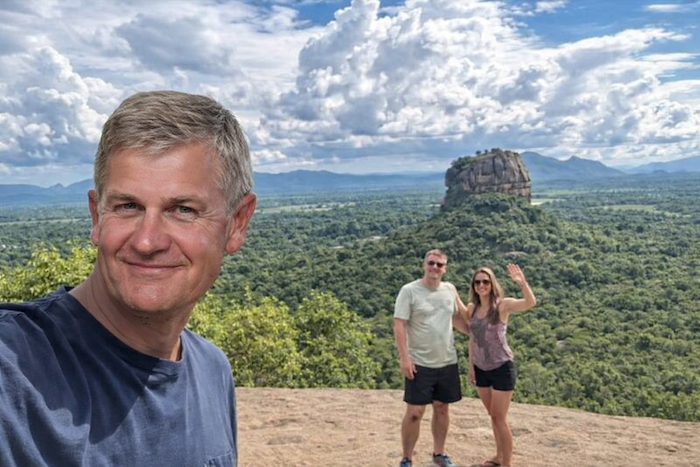
Solheim’s Sri Lanka commentary has repeatedly linked tourism to climate reality — pointing to the country’s vulnerability to extreme weather, and the need to treat eco-tourism and renewables as job-creating opportunities rather than boutique morality And he appears personally invested in returning to the Cultural Triangle region: in a recent public post, he said he was looking forward to visiting Sri Lanka in late January and referenced being “back to Sigiriya” while engaging with the ZeroPlastic movement and ecological tourism.
That matters because it signals something rare in visiting dignitaries: he’s not arriving to lecture from a conference hotel in Colombo and fly out before the traffic hits. He’s showing up where the sustainability argument becomes real: water, waste, communities, forests, and heritage.
The “Other Countries” Track Record: What He Tends to Push
Solheim’s global portfolio is not “tourism projects” in the narrow sense. It is broader: environment- development policy, rainforest protection partnerships, pollution action, and green investment —things that determine whether a destination can keep attracting visitors without destroying what they came to see.
In practice, when Solheim speaks about sustainable tourism internationally, he typically circles a few repeatable themes:
Stop chasing volume; chase value.
Destinations that compete on cheapness end up trapped in low-yield tourism.
Treat nature as capital, not scenery.
If you consume it faster than you restore it, you are not “developing”; you are liquidating.
Make sustainability measurable.
Certifications, criteria, and standards matter because “we are doing our best” is not a metric.
Link the environment to jobs and prosperity.
He frequently frames green choices as economic opportunities rather than sacrifices.
This is exactly the conversation Sri Lanka needs— because Sri Lanka has a habit of turning sustainability into a brochure page, instead of an operating system.
Why Sunday at ‘Amba Yaalu’ Matters
This panel is hosted in the very geography where sustainable tourism either works—or fails quietly.
Kandalama is not just scenery. It is the front line of Sri Lanka’s tourism future:
Cultural Triangle pressures
water and waste constraints
community benefit questions
the “how do we spread tourism income inland?” dilemma
And the event itself is framed around profitability through sustainability—an important correction to the childish notion that sustainability is anti- business. The real test is whether Sri Lanka is ready to accept Solheim’s implied challenge:
Stop selling the island as a miracle — and start running tourism like a serious economic engine that keeps its money, protects its assets, and pays the rural hinterland.
Because arrivals may bring applause.
But as Sri Lanka is learning in every sector: applause is not foreign exchange