Sri Lanka’s Parliament — the institution meant to police excess, restrain power, and model democratic conduct — has now found itself defending a decision that raises an uncomfortable question: can due process be optional, even at the heart of democracy?
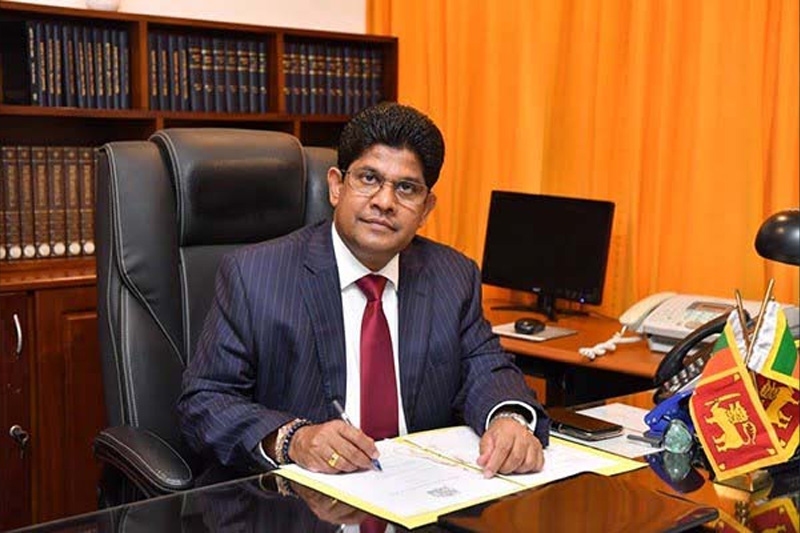
The immediate suspension of Parliament’s Chief of Staff and Deputy Secretary General, G.K.A. Chaminda Kumara Kularatne, has triggered sharp reactions from opposition leaders and former lawmakers, not merely because of who was suspended, but how it was done.
According to parliamentary sources, Kularatne was suspended with effect from January 23, pending the completion of a disciplinary inquiry. He had assumed duties in the post on September 15, 2023. Beyond that, official explanations have been notably thin — an omission that has only amplified concern.
In democracies, procedure matters as much as outcome. It is not the suspension itself that alarms critics, but the perception that it was executed without a prior hearing, a cornerstone of administrative justice.
Opposition Leader Sajith Premadasa invoked an old but enduring legal principle — audi alteram partem — hear the other side.
“In any democracy, officials are given a hearing before they are punished,” Premadasa said, warning that the Speaker’s decision to interdict the Deputy Secretary General without such a hearing “sets a dangerous precedent” and risks appearing personal rather than institutional. He has indicated he will formally protest the move in Parliament.
That concern was echoed — and sharpened — by opposition MP Shanakiyan Rasamanikkam, who framed the issue not as an employment dispute, but as a systemic alarm bell.
“This is not just interference with a public servant,” Rasamanikkam argued. “This is happening inside Parliament itself — a core pillar of democracy. When due process collapses at Parliament, the message sent to the country is deeply dangerous.”
The words “inside Parliament” matter. When procedural shortcuts occur in the legislature, they do not remain contained; they cascade.
Former MP Charitha Herath added another layer of unease, pointing out the political context. The current administration campaigned explicitly on non-interference, institutional independence, and respect for the rule of law. Yet this episode follows earlier public friction involving the Auditor General and the Attorney General — institutions that are meant to operate without political pressure.
Herath’s warning was blunt: actions perceived as undemocratic do not merely erode institutions — they boomerang politically.
Parliamentary sources, however, strongly reject claims of political motivation. They insist the suspension was neither arbitrary nor retaliatory, but the result of complaints and a preliminary inquiry into Kularatne’s appointment and service record.
According to these sources, the Parliamentary Staff Advisory Council acted on recommendations from a senior public service investigation officer, deciding that suspension was necessary pending a formal disciplinary probe.
The allegations, if substantiated, are serious.
Sources claim Kularatne provided false information to secure confirmation in his post, obtained a permanent appointment before completing his probation, and previously held temporary political appointments under former governments — factors that allegedly should have precluded confirmation. It is further alleged that he drew a salary scale above the designated grade, resulting in financial loss to the State, and breached established public service procedures.
On this basis, the Council has reportedly barred him from entering parliamentary premises until the inquiry concludes.
None of this, however, resolves the central dilemma.
If the allegations are true, then the inquiry must proceed swiftly and transparently. If they are not, then reputations have already been damaged without recourse. Either way, process cannot be sacrificed in the name of expediency, especially within the legislature itself.
Parliament cannot demand accountability from the Executive while appearing casual with procedure at home. Nor can it preach rule of law while practising administrative shortcuts.
The real test is not whether wrongdoing is punished — it is whether justice is seen to be done.
In Sri Lanka’s fragile democratic moment, that distinction is not academic.
It is existential.