
Sri Lanka’s demand for paint is gradually recovering after disruptions caused by Cyclone Ditwah, with varying recovery rates across different geographical regions, according to Nishal Ferdinando, Chief Executive of JAT Holdings. The World Bank-led assessment reported that Cyclone Ditwah inflicted damage worth 4.1 billion US dollars on infrastructure, with residential buildings accounting for 24 percent, or 985 million dollars, and non-residential buildings 14 percent, or 562 million dollars, of the total damage.
Ferdinando, speaking at an economic forum organized by First Capital Holdings, a unit of Sri Lanka’s Janashakthi Group, stated, “In the paint industry, the disaster was lesser in Colombo in terms of structures damaged, but in Kandy, the total structural disaster is quite high.” He further explained that while demand for paint is expected to increase in Colombo within two months, Kandy’s recovery might take around six months due to the extensive damage the district suffered.
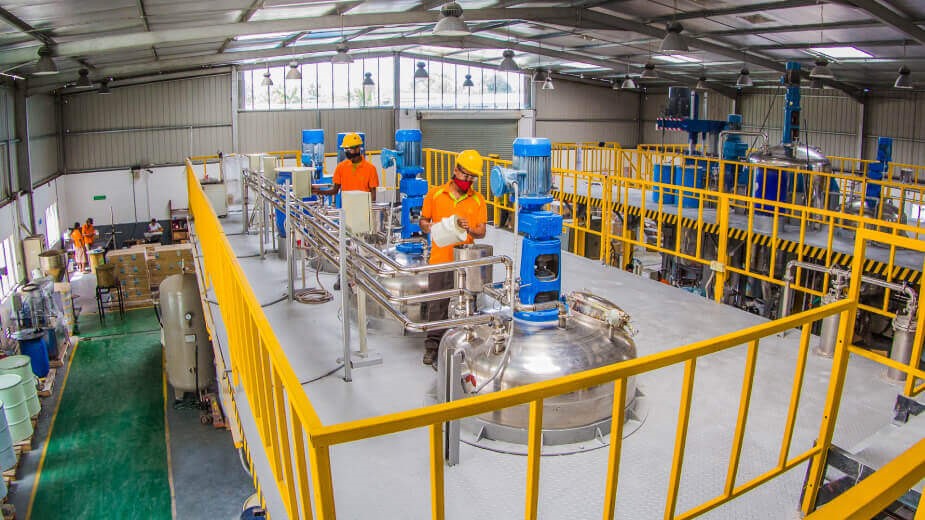
Among JAT’s extensive network of 6,000 dealers selling paints and wood coatings, 300 were affected by the cyclone, as Ferdinando informed FINANCIAL CHRONICLE. While three dealerships were completely destroyed, others have resumed operations, with some able to salvage their stock. In several regions, recovery in January exceeded the company’s expectations, although its sustainability hinges on government recovery initiatives.
Ferdinando commended government efforts in swiftly restoring road links, saying, “We could access the places in about three weeks.” He emphasized the opportunity for Sri Lanka to “build back better” with resilient buildings in flood-prone areas, advocating for a collaboration between the government, construction sector, and building material sector to propose resilient designs.
The recovery of the construction sector might face delays due to a shortage of skilled labor. Ferdinando noted, “Upskilling and having your labor demand during this time is going to be critical.”
Expanding internationally, JAT has ventured into countries like Bangladesh and acquired the New Zealand-based industrial coating firm Miratone. Ferdinando stated, “When going international, there are categories, being in emerging markets and in developed markets.” He highlighted the unique challenges of entering developed markets like Australia and New Zealand, particularly regarding compliance and operational culture.
Ferdinando shared insights from JAT’s 15-year competition in Sri Lanka against major global paint brands, maintaining market share through quality and innovation. “In terms of compliance, innovation, and quality, we can certainly compete,” he said, emphasizing the need for finding niche markets or strategic collaborations.
JAT has formed international partnerships to enhance its technical capabilities, including collaboration with California Polytechnic State University (Cal Poly). Ferdinando emphasized, “Through collaboration and thinking out of the box, we can compete from a capital point of view.” He mentioned JAT’s plan to leverage artificial intelligence to reduce product development time, estimating that AI could cut the product development lifecycle by one-third over two years. (Colombo/Jan27/2026)