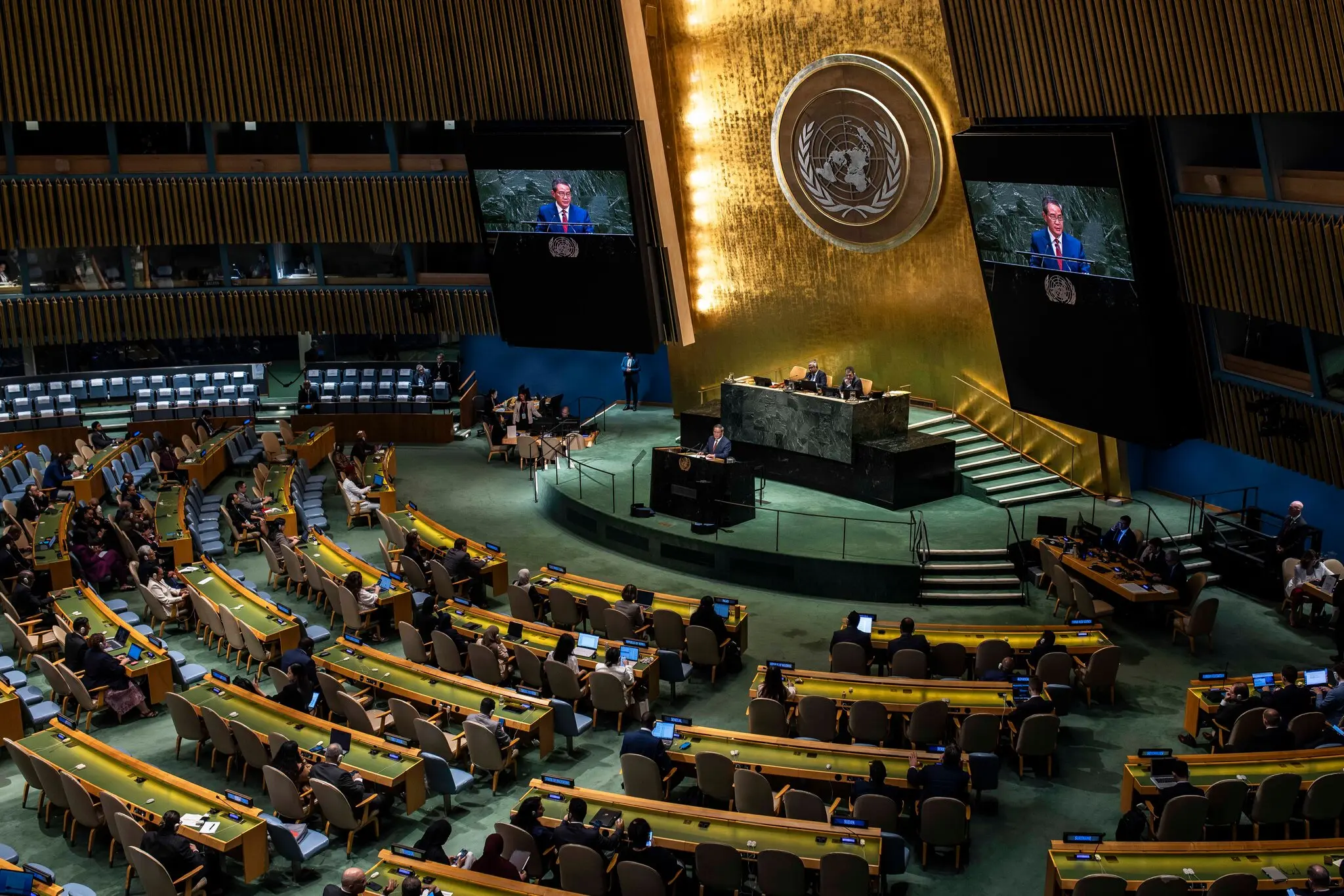
The New York Times reports that the United Nations has warned of an imminent financial collapse, saying it could run out of money by July 2026 if major member states — particularly the United States — fail to settle billions of dollars in unpaid dues. Senior U.N. officials say a cash shortfall would force the closure of the U.N. headquarters in New York by August, disrupt Security Council meetings, cancel the September General Assembly of world leaders, and shut down the Office for the Coordination of Humanitarian Affairs, which manages global emergency responses.
U.N. Secretary-General António Guterres cautioned ambassadors of all 196 member states that the crisis is unlike previous budget strains, warning that program delivery is already at risk. Although the General Assembly approved a $3.45 billion budget for 2026, the organization faces a liquidity crisis because countries are delaying or withholding mandatory payments. According to senior officials cited by The New York Times, the United States alone accounts for about $2.2 billion in unpaid dues for 2025 and 2026 — roughly 95% of the current shortfall.
Other countries also owe funds, including Venezuela ($38 million) and Mexico ($20 million), but the scale of the U.S. arrears is unprecedented. The problem is worsened by a longstanding 1945 financial rule requiring the U.N. to return unspent budget funds to member states, even when underspending results from unpaid contributions. Guterres has urged countries to both pay immediately and reform this rule to prevent structural financial risk.
The crisis comes amid U.S. decisions to withdraw from or cut funding to multiple U.N. agencies and to reduce peacekeeping contributions. Beyond annual dues, the U.S. also owes $1.9 billion for active peacekeeping missions, $528 million for closed missions, and $43.6 million for international tribunals. While Washington has indicated it may pay $160 million toward peacekeeping, it has declined to fund tribunals, prompting U.N. peacekeeping missions to cut budgets by 15%.
U.N. spokesman Farhan Haq warned that the organization no longer has the cash reserves to continue operating as in previous years. While agencies like UNICEF, the refugee agency, and the World Food Program have separate funding streams and would continue, the central humanitarian coordination office would close. Analysts say morale is already low across the U.N. system, and unpaid staff and disrupted conflict mediation efforts could soon become reality.
Experts quoted by The New York Times note that similar warnings have occurred before, but this time the risk appears more immediate, with Guterres pressing major donors to act before the organization’s operations grind to a halt.
Sources – The New York Times