Every March, Colombo performs a ritual.
Executives take “urgent leave.” Politicians rediscover school colours. Corporate sponsors erect tents. Champagne meets schoolboy whites.
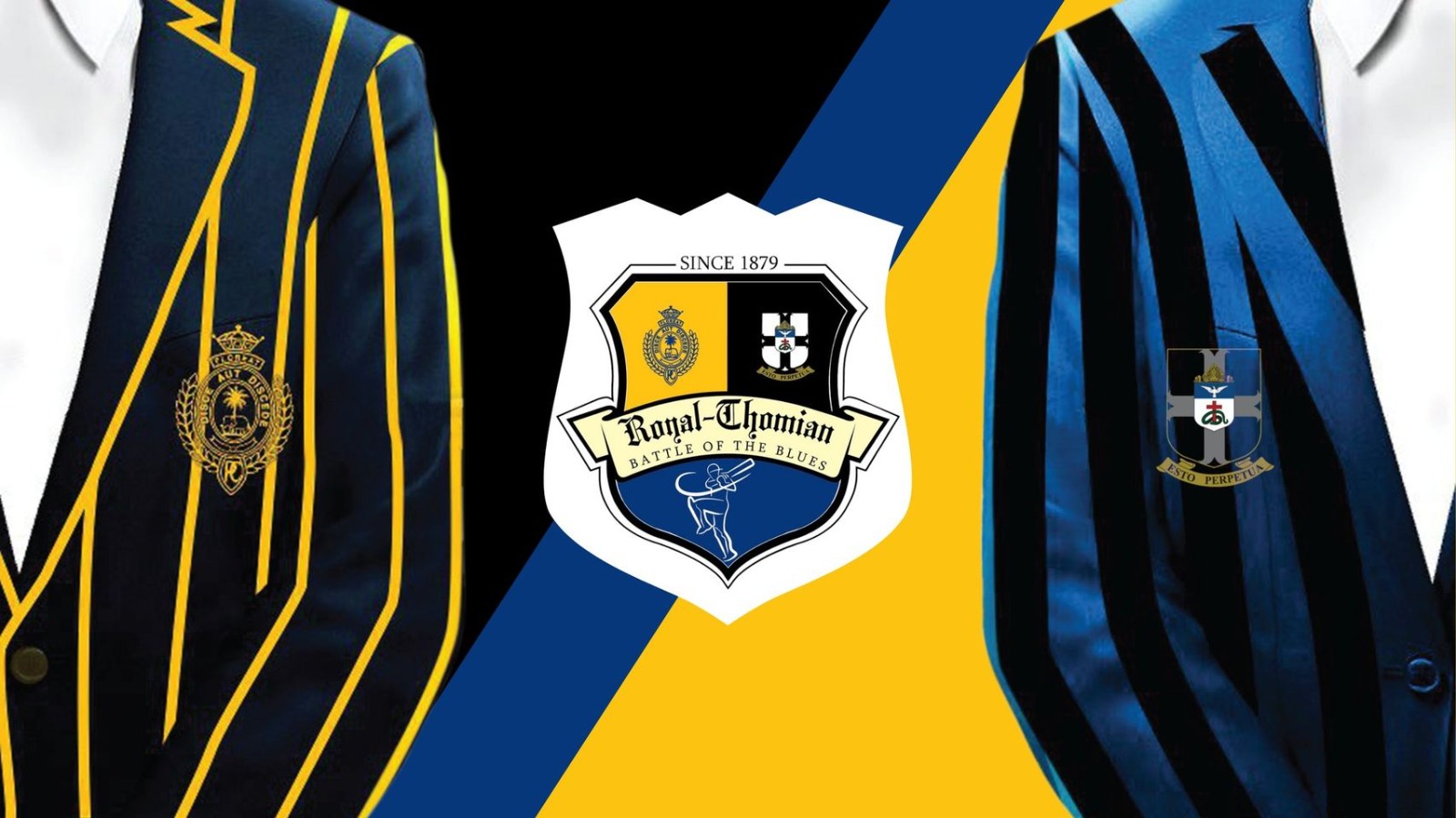
It is, officially, a three-day cricket match between Royal College Colombo and S. Thomas’ College Mount Lavinia — the storied Battle of the Blues, widely regarded as the world’s longest uninterrupted annual school cricket series.
Since 1879, it has survived empire, war, insurrection, economic collapse, and pandemic.
Impressive.
But what exactly are we celebrating?
Continuity — For Whom?
Yes, the Royal–Thomian endures.
But so too do the networks forged beneath its tents.
This is not merely a school match. It is a reunion of influence. A convergence of alumni who populate boardrooms, senior civil service posts, diplomatic missions, media houses, and Parliament itself.
The old joke is that if you scratch a Cabinet minister or a CEO, you may find Royal blue or Thomian blue underneath.
It is not entirely a joke.
In a country still wrestling with social mobility, the Battle of the Blues quietly showcases the continuity of elite pathways. The rivalry may be playful. The pipeline is real.
The Romance of Rivalry
To its defenders, the match is harmless nostalgia. A tradition where rivalry stops at the boundary rope. Three days of noise that end in camaraderie. That is true — to a point.
But let us not confuse ritual with inclusivity. The spectacle projects equality on the field. Eleven boys versus eleven boys. Talent versus talent.
Off the field, the infrastructure of privilege remains largely intact.
Access to elite schooling still correlates with socioeconomic advantage. The tents are not inexpensive. The sponsorship tables are not symbolic.
The Royal–Thomian is meritocratic inside the crease.
It is less so outside it.
The Colonial Echo
Both institutions were born in a colonial era. Their structures, traditions, and alumni influence were shaped within that context. Sri Lanka has decolonised politically.
But socially? The signals are subtler.
Blazers. Brass bands. Prefects. Ritualised pageantry.
The match is proudly Sri Lankan today — loud, vibrant, unapologetic. Yet its cultural grammar remains steeped in a heritage that once defined hierarchy.
Is that continuity charming — or revealing?
The Counter-Argument
Here is the balancing truth. The Royal–Thomian has adapted. It is no longer a colonial relic. It has produced national cricketers, civil servants, scholars, and reformers.
It also represents something Sri Lanka desperately needs: rivalry without violence. Competition without rupture. Identity without fragmentation. For three days, class resentment softens into cricket banter.
That is not trivial.
What It Really Symbolises
The Battle of the Blues is special not because it is old. It is special because it endures — and because endurance in Sri Lanka is rare. But endurance alone does not make an institution immune from scrutiny.
Traditions should not be dismantled for their heritage. They should be examined for their influence.
If the Royal–Thomian is to remain relevant beyond nostalgia, it must represent not only continuity of rivalry — but widening of opportunity.
Otherwise, it risks becoming a pageant of inherited advantage disguised as sporting romance.
NEWSLINE Verdict
For three days, Sri Lanka argues about batting averages instead of bond yields. That relief is welcome. But beneath the chants and school songs lies a quieter reality: the Battle of the Blues is not just about cricket. It is about who has always had access to the field — and who is still waiting at the gate.
Tradition is powerful.
But in a changing Sri Lanka, tradition must also answer questions.