Twelve to the Gallows. But May 9 Was Bigger Than a Mob.
Justice has now spoken.
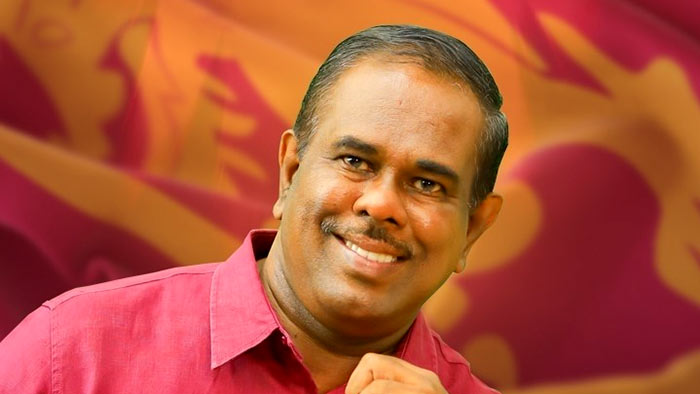
The High Court has sentenced twelve individuals to death over the killing of former Polonnaruwa District MP Amarakeerthi Athukorala and his police security officer on 9 May 2022. Several others were acquitted. After nearly four years of legal process, verdict has finally replaced speculation.
But let us be clear.
This was never just a murder trial.
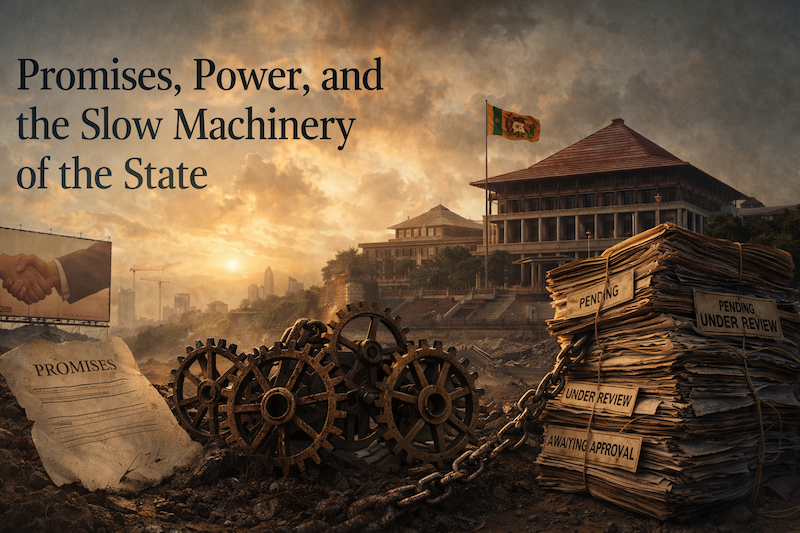
This was a reckoning with a day when Sri Lanka briefly stopped being governed.
The Day the State Folded
9 May 2022 was not spontaneous combustion. It was escalation.
After ruling party loyalists attacked protesters near Temple Trees and Galle Face, retaliation spread like fire across the island. Political houses burned. Offices were stormed. Vehicles torched. Law enforcement — confused, fragmented, hesitant — appeared overwhelmed.
Into that chaos drove Athukorala.
His vehicle was stopped in Nittambuwa. Shots were fired. Civilians were injured. The MP and his armed police officer fled. They sought refuge. They did not survive.
Today, twelve have been condemned to hang. But the deeper question remains untouched:
How did the Republic reach a point where an elected Member of Parliament could be hunted down in broad daylight?
Mob Justice Is Still Murder
Let there be no ambiguity.
A mob killing is not protest. It is not revolution.
It is not accountability.
It is murder.
And the court, in imposing the severest penalty available under Sri Lankan law, has drawn a line: rage is not a defence.
But verdicts punish individuals. They do not explain systems. The Uncomfortable Layer Beneath the Sentence
Those twelve men did not create the economic collapse. They did not bankrupt the Treasury.
They did not engineer the shortages.
They were actors in a moment shaped by national breakdown.
Sri Lanka in May 2022 was: fuel-starved
cash-poor
leaderless in credibility furious in temperament
Political arrogance had simmered for months. Citizens queued for days for essentials. Trust had evaporated. The attack on peaceful protesters earlier that day lit the fuse.
The State hesitated. The streets did not.
When institutions wobble, mobs fill space. Acquittals Matter Too
Several accused were acquitted. That fact matters.
It suggests the court separated fury from evidence. It suggests judicial process — despite delay — retained independence. That must be acknowledged.
But acquittals do not dilute the gravity of what occurred. They sharpen it.
Because what happened was not a crowd dispersal gone wrong. It was a moment when law dissolved.
What the Verdict Does — and Does Not Do
The death sentences may satisfy the demand for consequence.
They do not answer:
Why intelligence failed that day.
Why police command structures collapsed.
Why political provocations were allowed to escalate. Why the country reached a psychological boiling point.
Those questions belong not only in courtrooms, but in history May 9 Was a Mirror
The killing of Amarakeerthi Athukorala was not merely a crime against a politician. It was a mirror held up to a collapsing State. When the public loses faith in governance, violence stops being unthinkable.
When authority fractures, survival replaces order.
And when elected representatives cannot rely on institutional protection, democracy is operating on fumes.
NEWSLINE Verdict
Twelve have been sentenced to death. Justice, in legal terms, has moved. But May 9, 2022 was not only about twelve men. It was about what happens when political recklessness, economic catastrophe, and institutional paralysis converge.
The court has punished the hands that struck. History will judge the failures that allowed the blows to fall.
Sri Lanka must decide whether it has learned from that day — or merely sentenced it.