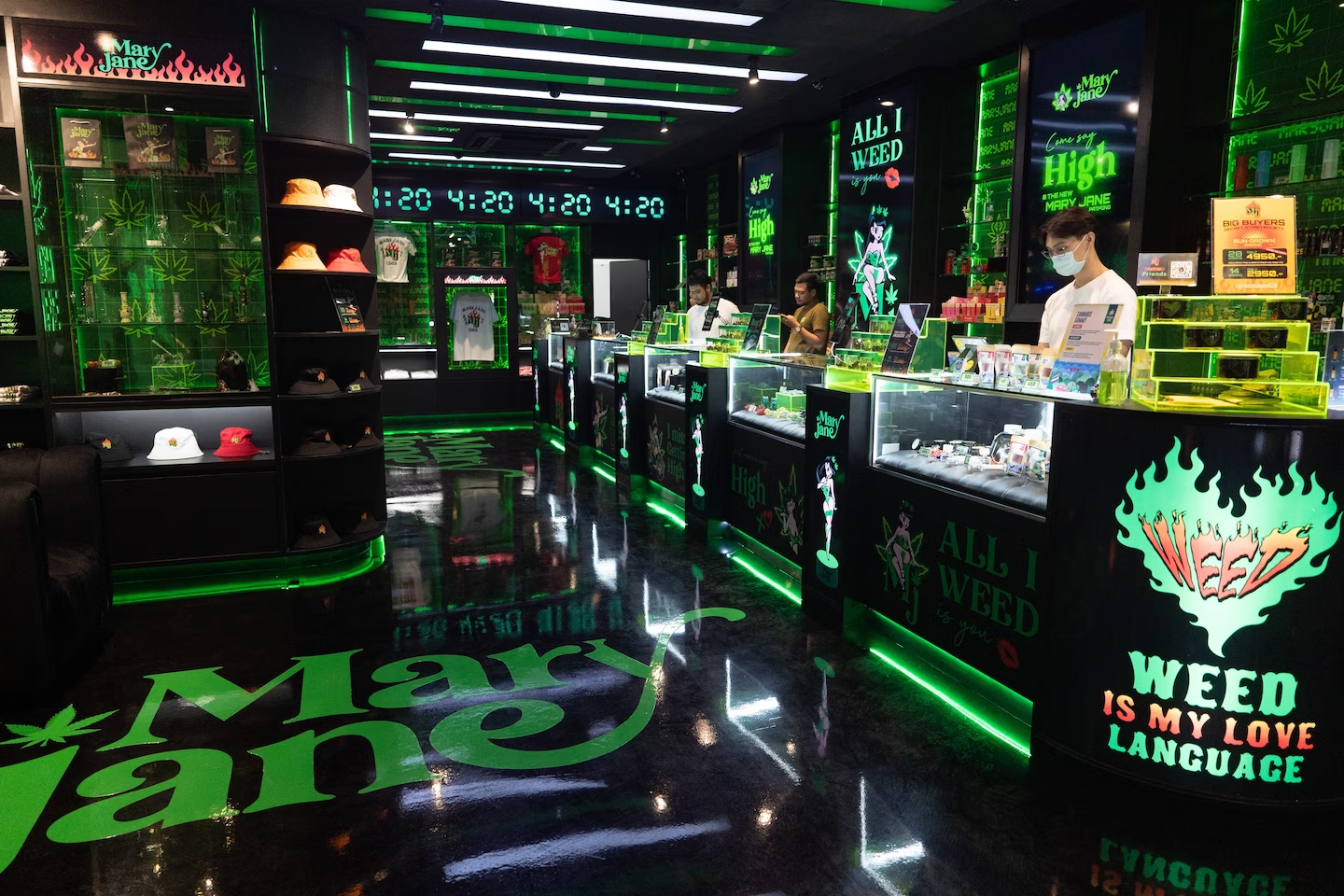
If you walked the streets of Bangkok in 2022 or 2023, you did not need Google Maps to find a cannabis shop.
Your nose would guide you.
When Thailand removed cannabis from its narcotics list in 2022 — the first Asian country to do so — nearly 18,000 weed shops bloomed almost overnight. Neon green marijuana leaves flashed across city blocks like pub signs in London. Backpackers rejoiced. Cheap highs replaced cheap cocktails.
The idea sounded almost elegant: boost wellness tourism, give farmers a new cash crop, reduce prison overcrowding, and inject post-COVID oxygen into an economy where tourism accounts for roughly 15% of GDP.
It looked bold. Modern. Progressive. It became a mess.
With regulation thin and enforcement patchy, the industry ballooned into a free-for-all. Cannabis flooded the market. Margins collapsed. Shops multiplied faster than customers. The smell of weed became as common as street food.
Families complained. Parents recoiled. Previously non- stoner Thais — including minors — were exposed. The backlash was swift.
By mid-2024, the ruling party reversed course: cannabis could be sold only with a doctor’s prescription.
The result? Overnight decimation.
Thousands who had invested savings into cannabis storefronts shut their doors. Others survived through “creative compliance” — telehealth prescriptions issued in minutes, rarely refused. Signs outside shops read: “Free prescription with every purchase.”
Legal? Technically.
Spirit of the law? Debatable.
Thailand’s cannabis experiment was not immoral. It was mismanaged.
Now Look at Sri Lanka
Sri Lanka has authorised licensed cultivation of cannabis for medicinal export purposes only, under Board of Investment frameworks and regulatory controls.
Not recreational. Not domestic legalisation. Export.
The argument is economic: foreign exchange, pharmaceutical opportunity, post-crisis diversification.
On paper, it sounds disciplined — far more controlled than Thailand’s decriminalisation leap.
But here is the question Sri Lanka must ask before congratulating itself:
Are our institutions strong enough to regulate what we authorise?
Thailand’s problem was not cannabis.
It was capacity.
Weak guardrails. Inconsistent enforcement. Policy executed faster than oversight could keep pace. Sri Lanka knows something about weak guardrails. We struggle to regulate construction, imports, pharmaceuticals, fisheries — you name it. Enforcement is uneven. Corruption risks exist. Monitoring capacity is not world-class.
If cannabis cultivation remains tightly controlled, export- bound, and transparently monitored — it could generate real value. If oversight slips, diversion risks emerge.
And once diversion begins, credibility evaporates.
The Social Undercurrent
Thailand discovered something else: once you normalise supply, public sentiment shifts — sometimes violently.
Surveys now show the overwhelming majority of Thais do not want recreational cannabis culture. Even tourism authorities worry about alienating high-value family travellers.
Sri Lanka must avoid walking into the same trap.
We are not Thailand. Our tourism brand is not party- driven. Our social fabric is more conservative. Religious sentiment is strong. Law enforcement culture is rigid.
A sloppy rollout would not just hurt business — it would ignite backlash.
The Real Lesson
Thailand’s cannabis story is not a morality tale.
It is a governance lesson. Policy without regulation is theatre. Reform without enforcement is chaos. Markets without discipline self-destruct. Sri Lanka does not need another experiment that begins with optimism and ends with reversal.
We have had enough of those.
NEWSLINE Verdict
Thailand’s weed boom became a weed reckoning.
Sri Lanka must decide whether it is building a carefully regulated export industry — or lighting the fuse on a future correction. If this is about foreign exchange, then treat it as pharmaceutical agriculture, not political theatre.
Because once a policy goes up in smoke, putting it out is far harder than lighting it.