
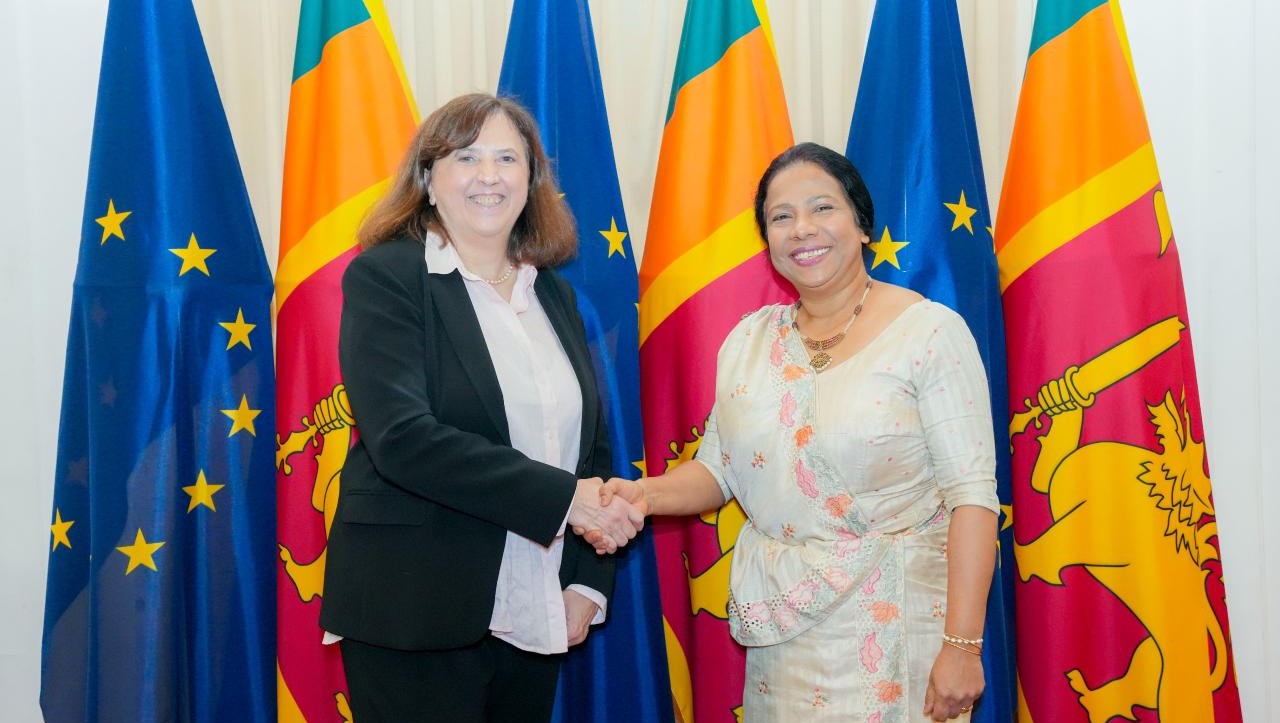
FINANCIAL CHRONICLE – The European Union (EU) has emphasized the need for Sri Lanka to honor its commitments, particularly the implementation of the 27 core conventions under the current Generalized Scheme of Tariff Preferences Plus (GSP+) trade concession, according to a joint statement by Sri Lanka’s Foreign Ministry and the European Union.
For Sri Lanka’s export-driven economy, the GSP+ scheme has long been both a crucial support and a restrictive condition. The Ministry of Foreign Affairs recently confirmed the country’s intention to reapply for the scheme. This announcement echoes the events of 2010, when the EU withdrew the concession due to significant human rights abuses following the end of the civil war. The loss of GSP+ in 2010 had a substantial impact on the apparel sector, resulting in factory closures and thousands of job losses.
The joint statement noted, “Sri Lanka appreciated the GSP special incentive arrangement’s (GSP+) contribution to sustainable development in the country and expressed its intention to reapply for the scheme after the current cycle ends.” It further highlighted, “The EU stressed the importance of the time-bound delivery on the commitments under the current GSP+, including in particular the work on the anti-terror legislation, bringing it in line with the international conventions.”
The EU encouraged engagement with the United Nations’ competent bodies on counter-terrorism. Sri Lanka reaffirmed its commitment to implementing the 27 core conventions under the current GSP+ scheme, and the EU encouraged regular updates on progress.
The EU’s 2010 withdrawal of the GSP+ served as a stark reminder that duty-free access to the world’s largest trading bloc is conditional. Although Sri Lanka regained this status in 2017, the recent meeting in Colombo reinforced that the EU’s expectations are firm and enduring.
The EU has specifically focused on the repeal of the Prevention of Terrorism Act (PTA) and the amendment of the Online Safety Act, insisting that these be aligned with international conventions.
For the current administration led by President Anura Kumara Dissanayake, the challenge is twofold. Domestically, the government must carefully manage national security legislation, while internationally, it must demonstrate progress beyond the “rights abuses” era that led to the withdrawal in 2010.
As the EU continues to encourage regular updates on progress, analysts suggest that the path to the next cycle of trade benefits is dependent on concrete human rights reforms, leaving no room for past legislative delays.
(Colombo/February 13/2026)