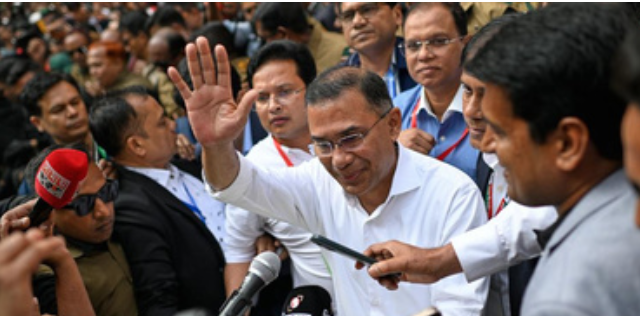
Dhaka — Bangladesh’s main opposition party, the Bangladesh Nationalist Party (BNP), has claimed victory in Friday’s general elections — a milestone moment in the country’s political history that international observers are watching closely.
Unofficial tallies and multiple media projections suggest the BNP, led by Tarique Rahman, is poised to secure a decisive parliamentary majority in the 13th Jatiya Sangsad. The party has said it won enough seats to govern independently after crossing the constitutional threshold of 151 seats in the 300-seat directly elected chamber, even as the Bangladesh Election Commission had not yet formally declared results at the time of writing.
Media reporting based on early counts indicated BNP’s strong showing, with figures suggesting the party may capture well over 200 constituencies and position itself to lead the government. This election marked the first since the July 2024 uprising that ended the long tenure of former Prime Minister Sheikh Hasina and reshaped the country’s political landscape when her party, the Awami League, was unable to contest under its banner.
In announcing its claimed victory, BNP has framed the result as a democratic renewal following years of political contention, with a reported turnout of close to 60 per cent in Thursday’s polls. The party has also expressed gratitude for early recognitions of its win from regional partners, including India, underscoring hopes for strengthened bilateral ties under its leadership.
Not all political forces have immediately accepted this narrative without reservation. The Islamist Bangladesh JamaateIslami alliance, another key player, has raised concerns over vote counting and has called for scrutiny of the process.
Beyond raw numbers, this election carries wider significance. It is the first general election since the popular upheaval that dramatically altered Bangladesh’s political calculus in 2024. A simultaneous referendum on constitutional measures designed to prevent future executive dominance was also held, reflecting reformist momentum among parts of the electorate.
Analysts caution, however, that the transition detailed by the BNP’s announcement requires formal confirmation from electoral authorities. The central question now is less about the headline figures and more about how swiftly and transparently official certification occurs — and whether the incoming government can translate its claimed mandate into political stability and policy traction at home and abroad.