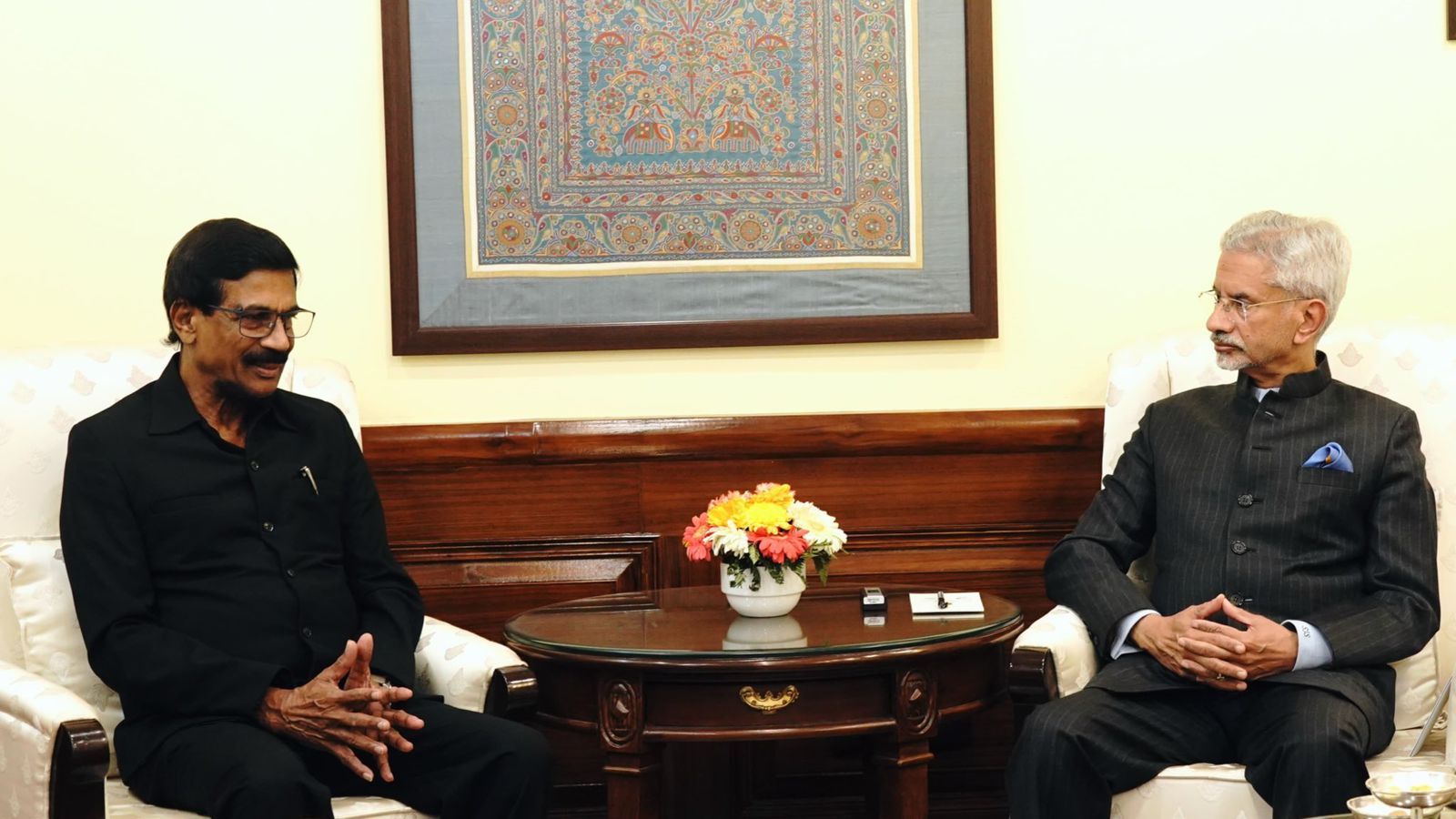
In a diplomatic maneuver previously deemed unimaginable, Tilvin Silva, the General Secretary of the Janatha Vimukthi Peramuna (JVP) and a key figure behind Sri Lanka’s ruling National People’s Power (NPP), recently concluded a significant 8-day official visit to India. This visit, which took place from February 5-12, marks Silva’s first visit to India, signifying a clear departure from the party’s long-standing anti-India stance.
Silva was accompanied by a high-level delegation and hosted under the Indian Council for Cultural Relations’ (ICCR) Distinguished Visitors Programme. Notably, Sri Lanka’s current President, Anura Kumara Dissanayake, was also invited under the same program two years ago, prior to his presidency. Silva’s itinerary, which included stops in New Delhi, Ahmedabad, and Thiruvananthapuram, was meticulously planned to highlight India’s achievements in digital, agricultural, and industrial sectors.
The Beijing Prelude
The timing of this visit is of strategic importance, following Silva’s high-profile tour of China in June 2025, where he examined the “Chinese Model” of development and party discipline. By pairing his Beijing visit with a New Delhi engagement, Silva is executing what regional analysts describe as strategic hedging. This marks a stark shift for a party that historically viewed Indian intervention as a threat to Sri Lankan sovereignty. The JVP led two significant insurrections, with the 1987 uprising specifically targeting the Indo-Lanka Accord. Now, however, Silva is actively engaging with Indian External Affairs Minister S Jaishankar to discuss growth opportunities and mutual benefits.
Local geopolitical analysts suggest Silva’s actions might be influenced by the current geopolitical climate, further complicated by US President Donald Trump’s tariffs. They note that core JVP supporters may still harbor anti-Indian sentiments.
From Protests to Partnerships
In New Delhi, the delegation was briefed on India’s Neighbourhood First policy and the ‘MAHASAGAR’ vision. Beyond rhetoric, Silva’s interest in India’s Unique Digital Identity Authority (Aadhaar) and the Gati Shakti infrastructure plan indicates a desire to modernize Sri Lanka’s bureaucracy using Indian technical frameworks. Despite past criticism of private-public partnerships and foreign monopolies, Silva visited AMUL and the Gujarat International Finance Tec-City (GIFT City). The delegation’s examination of the “Gujarat Model” of inclusive development reflects the JVP’s shift from a revolutionary movement to a pragmatic governing body.
The De Facto Power
While President Dissanayake holds formal power, Silva’s role as General Secretary within the JVP’s politburo effectively positions him as the ideological guide for the state. Analysts interpret his visit to the Vizhinjam Deep-Water Container Transshipment Port in Kerala—developed via a PPP model—as a sign of the NPP’s willingness to move beyond rigid Marxist principles towards developmental realism that embraces regional cooperation.
As Sri Lanka continues to emerge from its economic crisis, Silva’s tour of India sends a clear message that the former “Red” party is evolving into a government that views New Delhi as a valuable partner, adeptly balancing relations between the two Asian giants.