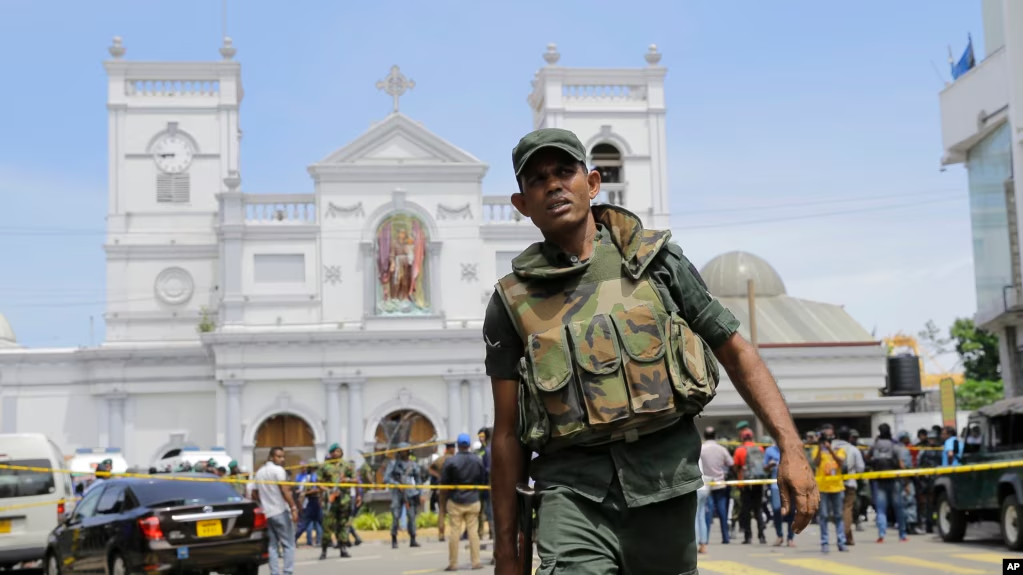
The murder of a lawyer and his wife is not merely another criminal case to be filed, investigated, and eventually prosecuted. It strikes at the architecture of justice itself. A lawyer is not simply a private citizen engaged in commerce. He is an officer of the court, a participant in the constitutional process by which accusation is separated from punishment.
Yet as the news broke, an unsettling undertone accompanied it. Some voices, frustrated with the state of policing and public safety, suggested that the deceased had represented “underworld elements.” The implication was subtle but dangerous: that representation of the unpopular somehow diminishes sympathy for the representative.
This is not a trivial sentiment. It is a constitutional fault line.
Under the Constitution of Sri Lanka, no person may be punished except by order of a competent court. Embedded within that principle is the presumption of innocence. An accused person is not guilty by accusation. Guilt must be proven through lawful procedure, in a courtroom, where evidence is tested and defence is heard. The lawyer stands at the centre of that process. He does not endorse the alleged conduct of his client. He does not absorb moral responsibility for accusations levelled against another. His function is narrower and far more vital: to ensure that the State meets its burden of proof. Remove that function and the system tilts.
When lawyers are intimidated, delegitimised, or treated as morally suspect because of who they represent, the adversarial system begins to erode. Trials become formalities. Evidence goes unchallenged. The immense power of the State faces no meaningful resistance.
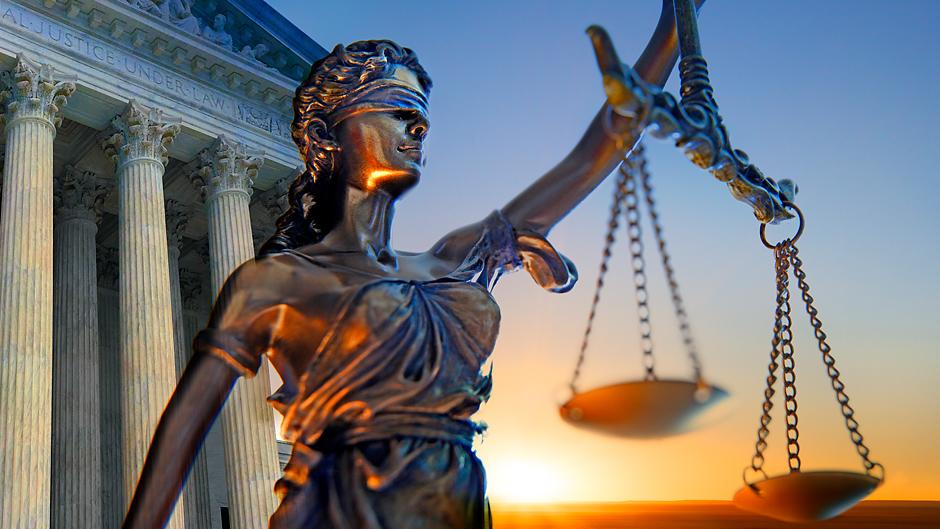
The metaphor of justice is often the scales and the sword. The scales represent balance; the sword represents enforcement. But scales without protection are fragile. If the defenders of due process operate under threat — physical, social, or reputational — then the scales remain, but the system behind them weakens.
Public frustration with crime is understandable. Citizens want safety. They want effective policing. They want swift justice. Those demands are legitimate in any democracy. But frustration cannot become justification for eroding constitutional safeguards.
The argument that “he defended criminals” rests on a dangerous assumption: that some individuals are undeserving of rights. Once that assumption is accepted, rights cease to be universal. They become selective. And selective rights are privileges granted at the discretion of prevailing power.
History offers repeated lessons. Systems that weaken defence in pursuit of order eventually discover that the same weakened protections apply to everyone. Today it may be a lawyer representing an alleged gang figure. Tomorrow it may be counsel representing a political dissident, a journalist, or a businessperson in regulatory dispute.
The rule of law does not protect the admired; it protects the accused. It does not operate on popularity; it operates on principle.
The State therefore has a dual obligation. It must investigate the killings thoroughly and transparently, and it must defend the legitimacy of legal representation without equivocation. Silence in the face of insinuation allows suspicion to harden into cultural acceptance.
If lawyers are unsafe because of their clients, then the justice system is already compromised. When the defender must look over his shoulder, the accused stands alone before the machinery of the State.
A country may possess courts, statutes, and police forces. But without the fearless practice of law, those institutions are shells. The scales remain — but the balance they symbolise becomes performative rather than real.
The question, ultimately, is not about the character of the clients a lawyer chooses to represent. It is about whether constitutional guarantees are applied consistently, even when inconvenient.
If the answer wavers, then the sword of enforcement grows heavier than the scales of justice.And in that imbalance, no one is truly secure.