

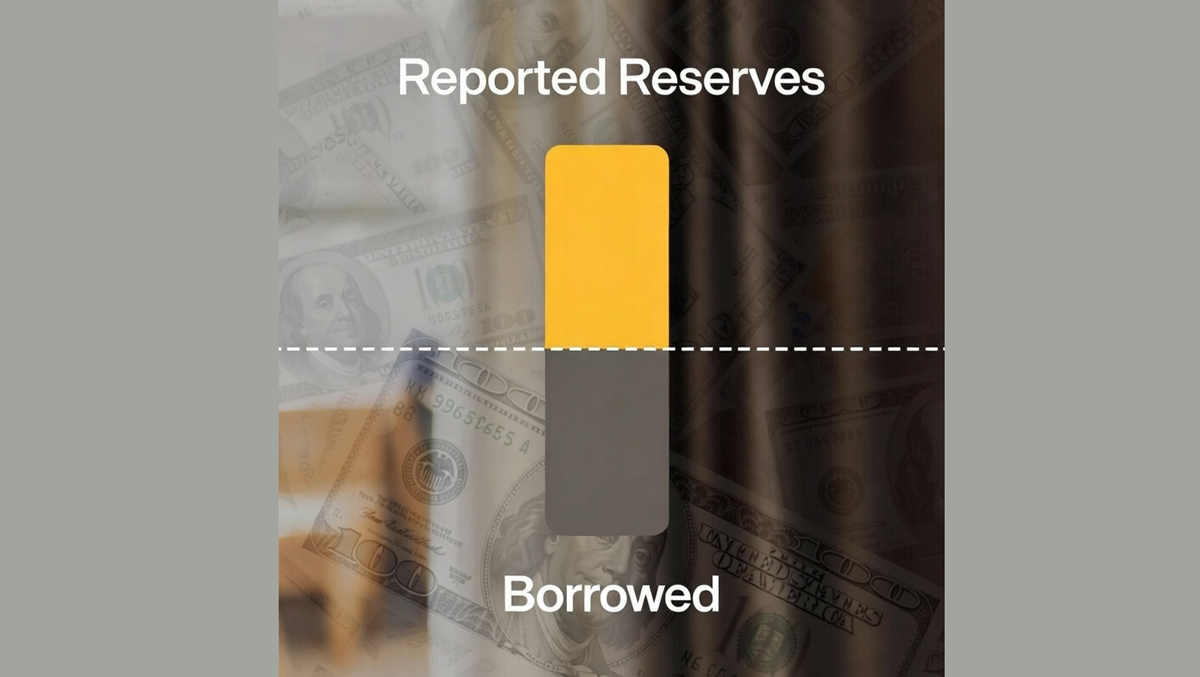
The Central Bank of Sri Lanka will soon reveal the volume of swap contracts with local banks, according to Deputy Governor Chandranath Amarasekera. This announcement comes amid growing concerns about the institution’s foreign exchange liabilities and liquidity injections. Amarasekera confirmed that swap volumes will be disclosed on a continuous basis.
Recently, the Parliament’s Committee on Public Finance (COPF) raised questions about the increasing swap volumes. These swaps are essentially borrowed by the central bank rather than owned outright. Inflationary swaps introduce liquidity, effectively monetizing the foreign assets of banks. This procedure allows banks to issue rupee loans without increasing current rupee deposits, transferring foreign exchange risks to the government, which ultimately bears the central bank’s losses.
Data from the central bank indicates that in 2025, approximately 258 billion rupees (around 800 million dollars) were injected through inflationary swaps. This situation has led to questions about the actual volume of unencumbered foreign reserves held by the central bank.
When banks issue rupee loans using foreign assets monetized through inflationary swaps, imports increase. If the central bank does not return dollars to importers or redeem the newly created rupees, currency depreciation is likely, as seen in 2025. Conversely, if dollars are returned to prevent debasement and liquidity from swaps is redeemed (suppressing rates in the process), the central bank could end up with a negative open position on the derivative.
Interest rates may need to rise significantly to address balance of payments issues that arise when rates are kept low for extended periods through central bank credit. If additional swaps are executed, creating more money, or if open positions (reserve sales) are offset with new money to further suppress interest rates, the rupee may depreciate, resulting in a loss to the central bank on the open position.
In 2022, following extensive use of swaps and other borrowings to enforce rate cuts, the central bank incurred a 788 million dollar forex loss amid a sharp currency collapse. This situation resulted in a net loss of 374 billion rupees for the central bank.
The reporting method itself may incentivize central banks to engage in swaps and devalue currencies. The disclosed ‘net foreign assets’ of the central bank also include swaps, with the liability on the swap discounted as the counterparty is domestic. The dollar liability is adjusted against net domestic assets.
COPF Chief Harsha de Silva has questioned the accounting treatment of net international reserves and the rising swap volumes. De Silva initially campaigned against the central bank’s money printing around 2004 when the central bank monetized new and existing government debt held by banks, insurance companies, and the public.
COPF member Ravi Karunanayake warned that swaps are a form of ‘hot money.’ In subsequent currency crises, the central bank monetized domestic debt held by banks linked to past deficits to cut rates, triggering external controls, public discontent, and political instability, even when fiscal corrections were made.
Liquidity from swaps, including dollars held by the Treasury, played a role in the 2018 currency crisis and political instability. Swaps with foreign central banks are considered harmless if they remain notional, but they can cause external instability if proceeds are used and interventions are offset with new money to maintain a single policy rate.
The monetization of bank foreign assets and offsetting sales of foreign central bank swaps with new money significantly contributed to external troubles leading up to and following the default. There have been calls to ban these practices as part of efforts to overhaul the central bank’s operations to preserve the monetary unit’s value. (Colombo/Feb17/2026)