

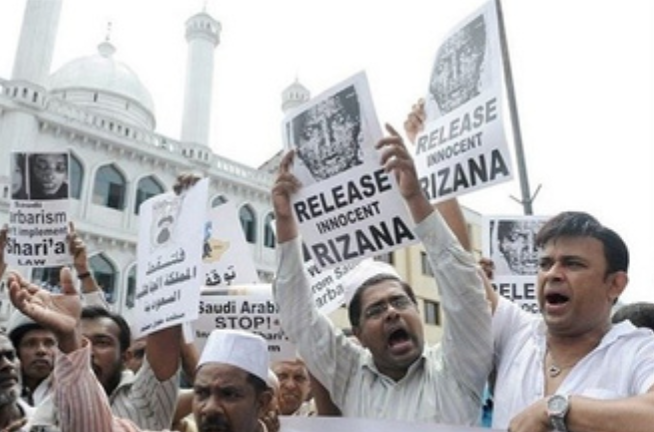
Rizana Nafeek was a Sri Lankan woman from Muttur in the Trincomalee District of Sri Lanka. She left Sri Lanka in 2005 to work as a domestic worker in Saudi Arabia — like hundreds of thousands of other young women seeking employment abroad. However, her life took an extremely tragic turn shortly after she began her job.
The Incident
On 22 May 2005, while working in the Saudi town of Dawadmi (about 400 km from Riyadh), the four-month- old baby of her employer died in her care. Saudi authorities accused Rizana of murdering the infant by smothering him following a dispute with the child’s mother. Rizana maintained that the baby choked on milk while she was bottle-feeding him and that the death was accidental.
Confession and Trial Issues
Key elements of her case were widely criticized by human rights organizations:
She initially signed a written confession, but Rizana later said this was made under duress and without proper linguistic assistance — she was not given access to a qualified translator and did not fully understand the proceedings.
Her lawyers argued that she also lacked proper legal representation during key parts of the investigation and trial.
Additionally, there was a dispute over her age: her passport listed her as being born in 1982 (making her 23 at the time), but Rizana’s family said her actual birth certificate showed she was born in 1988, meaning she was only 17 years old — a minor — when the incident occurred.
If true, executing someone for a crime committed as a minor would violate the UN Convention on the Rights of the Child, to which Saudi Arabia is a signatory.
Despite these concerns, Saudi courts upheld her conviction and sentence.
Death Sentence and Appeals
In June 2007, Rizana was sentenced to death by beheading for the alleged murder. Her case went through various Saudi legal stages — including the Supreme Court — and the sentence was repeatedly upheld.
The Sri Lankan government appealed directly to the Saudi King several times for clemency. International figures, including leaders and human rights groups, protested the sentence. Yet the Saudi authorities maintained that Rizana had been given a proper trial.
Execution and Aftermath
Despite global appeals — including from the United Nations and the European Union — Rizana Nafeek was executed by beheading on 9 January 2013 in Dawadmi. The Sri Lankan Parliament observed a moment of silence in response, and human rights groups condemned the execution as deeply troubling and contrary to international juvenile justice standards if she was indeed under 18 at the time of the incident.
Her execution sparked outrage in Sri Lanka and abroad, highlighting the vulnerabilities of migrant domestic workers in the Middle East and the harshness of criminal justice procedures there.
Wider Impact
In the aftermath, Sri Lanka announced plans to phase out sending domestic workers to Saudi Arabia, aiming to increase the minimum employment age and reduce risks for vulnerable women.
Rizana’s story remains a symbol often cited in discussions about migrant worker protections, fair legal representation, and international law — especially for young women from poorer countries working abroad.
The story of Rizana Nafeek remains one of the most painful chapters in Sri Lanka’s migrant labour history — a case that ignited international debate over justice, child rights, and the vulnerability of foreign domestic workers in the Gulf.
Rights groups condemned the execution. The case intensified scrutiny of migrant labour recruitment practices, age verification failures, and the protections — or lack thereof — afforded to Sri Lankan domestic workers overseas.
A FILM IN THE MAKING
The legacy of Rizana’s case has lingered in public memory for over a decade. Now, that story is returning to national attention. A feature film said to be inspired by her life and ordeal is scheduled for release in Sri Lanka in June 2026. The production is expected to revisit not only the tragedy itself but also the broader themes of poverty, migration, legal vulnerability, and the human cost of overseas employment. Its release will likely reopen difficult conversations — about accountability at home, justice abroad, and whether enough has changed since 2013.
Rizana’s name endures as a symbol — of youth lost, of systemic failure, and of the stark risks faced by migrant workers navigating unfamiliar legal systems far from home.