Stable, Yes. Affordable, No.
Sri Lanka has stabilised. That much is true. The queues are gone. The IMF benchmarks are being ticked. The currency is no longer collapsing daily.
Be that as it may, the supermarket tells a different story.
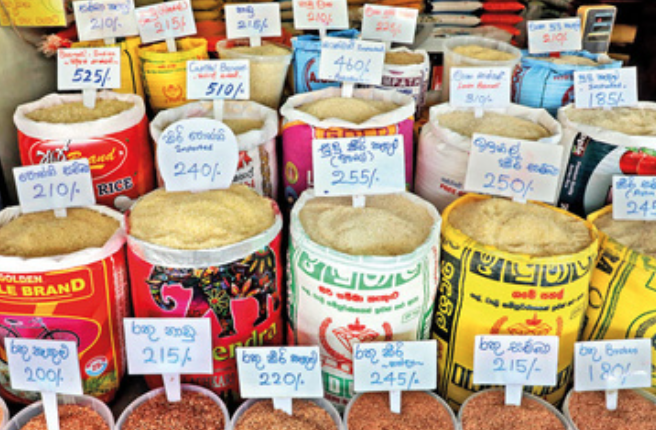
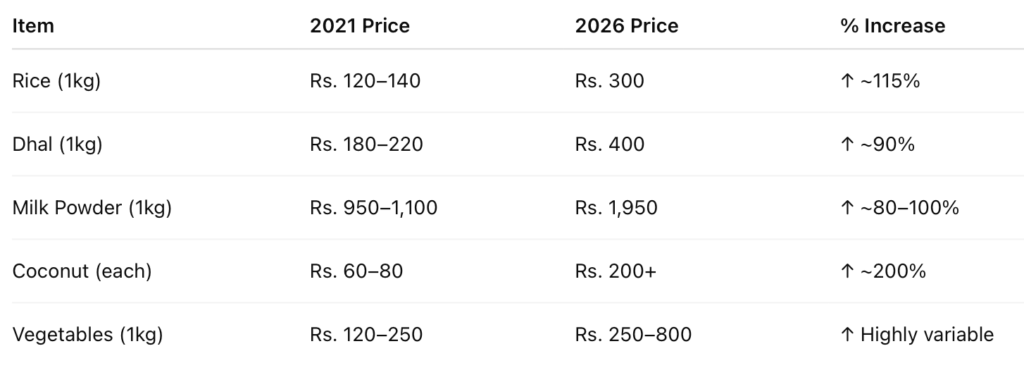
Rice that once cost Rs. 120 now costs Rs. 300. Dhal that was under Rs. 200 is now Rs. 400. A coconut — once the most basic symbol of affordability — has tripled in price. Milk powder, a staple in urban households, sits close to Rs. 2,000 per kilo.
Inflation has slowed. Prices have not fallen. There is a difference.
When an economy crashes, prices jump. When it stabilises, prices stabilise — but at the new, higher level. For families whose incomes did not double between 2021 and 2026, the reset feels permanent.
ESSENTIAL FOOD ITEMS COMPARISON
This is the quiet crisis.
Government officials point to macro recovery. They are not wrong. Reserves are up. Growth has returned modestly. Debt restructuring has progressed.
But recovery measured in bond spreads does not automatically translate into relief measured at the checkout counter.
Affordability is not about headlines. It is about arithmetic.
A household buying 5kg of rice, 2kg of dhal, milk powder, vegetables and a handful of coconuts is spending multiples of what it did just four years ago. Salaries — especially in the lower and middle income brackets — have not multiplied at the same rate.
The result is compression.
Savings shrink. Nutrition adjusts. Consumption becomes cautious. Middle-class confidence erodes quietly.
This is not the crisis of 2022. It is the aftermath. And aftermaths are politically dangerous because they lack drama. There are no fuel queues to photograph. No candlelight vigils. No empty supermarket shelves.
Just families doing sums.
The real test of economic reform is not whether markets stabilise. It is whether ordinary citizens regain purchasing power. Until incomes outpace essential costs, stability will feel theoretical. Sri Lanka is no longer collapsing. But affordability has not recovered.
That is the gap policymakers must confront — not rhetorically, but structurally. Because stability without affordability is not prosperity.
It is survival.