
$5 Billion, Jan 6, and the Battle Over Editing the Truth
London. Miami. Washington. The battlefield is no longer the Capitol steps. It is the edit suite.
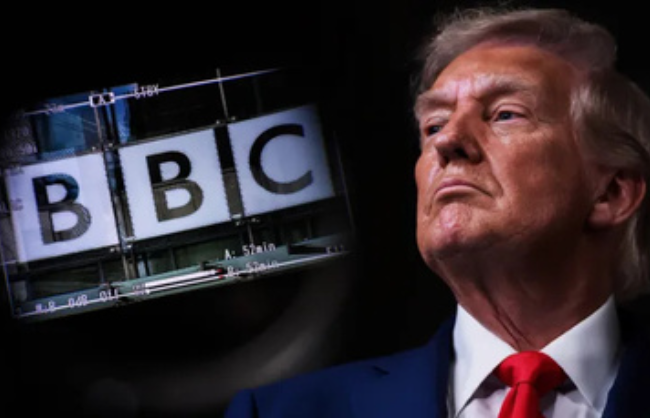
Donald Trump has failed, according to the BBC, to prove that the broadcaster defamed him in its editing of his January 6 speech. The corporation is now moving to have his $5 billion lawsuit thrown out. This is not a minor skirmish.
It is a transatlantic collision between a former U.S. president and one of the world’s most powerful public broadcasters.
The case stems from a Panorama documentary titled “Trump: A Second Chance?”, aired a week before the 2024 U.S. presidential election. The programme allegedly spliced together two separate parts of Mr Trump’s January 6, 2021 speech — creating the impression that he told supporters he would march to the Capitol with them to “fight like hell.”
Trump’s legal team argues that the edit removed context. That he had, in fact, said supporters should “peacefully and patriotically make your voices heard.” That the programme was a “brazen attempt” to influence an election contest between himself and Vice President Kamala Harris.
In December, Trump sued in a Miami federal court, seeking $5 billion in defamation damages — and a further $5 billion under Florida’s Deceptive and Unfair Trade Practices Act.
In filings this week, the broadcaster signalled it will ask the judge to dismiss the case. Its arguments: lack of jurisdiction. Failure to state a viable claim. No actionable defamation.
Translation: even if controversial, editing does not equal illegality.
Yet this case does not sit in isolation. An internal BBC whistleblower memo — 19 pages long — alleged the programme “completely misled” viewers. It accused senior executives of ignoring serious complaints raised by the corporation’s own standards watchdog. It warned of a “very, very dangerous precedent.” When the memo surfaced, reputational tremors followed.
Nigel Huddleston, then Shadow Culture Secretary, said it could “seriously undermine” the BBC’s brand. Shortly thereafter, Director-General Tim Davie and news chief Deborah Turness resigned.
In the House of Commons, Prime Minister Sir Keir Starmer struck a careful balance: mistakes must be corrected; standards upheld; but the BBC must remain strong and independent.
That is the knife-edge. This case is not simply about Trump. It is about editorial power.Where does robust journalism end and reputational harm begin? Does narrative framing cross into manipulation?
Can editing distort meaning without technically fabricating words? A trial is scheduled for February next year. The BBC must formally respond by March 17. For now, the corporation is standing its ground. Trump says he was misrepresented. The BBC says he has not proved defamation.
The courts will decide. But the deeper issue lingers: In an age where seconds of footage can define political memory, the edit has become as powerful as the speech itself.
And that power — like politics — is never neutral.