
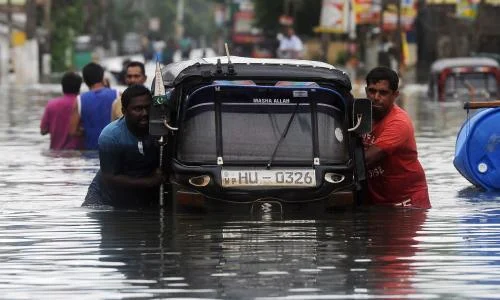
Sri Lanka’s insurance sector is assessing the financial fallout from Cyclone Ditwah, which triggered severe floods, widespread property damage and large-scale displacement across multiple districts this week. While insurers expect a spike in motor and property-related claims, industry leaders say the overall financial hit may be less severe than early fears due to strong reinsurance structures in place.
Early estimates indicate insured losses could run into the hundreds of millions of dollars, though the majority of the burden is likely to fall on international reinsurers rather than local balance sheets. Most general insurers in Sri Lanka maintain layered catastrophe protection, excess-of-loss treaties and proportional cessions that significantly reduce their net exposure during extreme weather events.
Ramal Jasinghe, Chairman of Arpico Insurance and former CEO/Director of Softlogic Insurance PLC, told Financial Chronicle that reinsurance capacity would cushion the impact on domestic insurers.
“Of course there is Reinsurance and the claims mitigation can be handled depending on their reinsurance capacity and structure, Excess of Loss and cession. Few companies write big risks to their nett account. Motor will also have an Excess of Loss after which point the reinsurer will take the loss. Not that bad after all!”
Industry analysts echo this sentiment, noting that while the operational stress is significant—stemming from high claim volumes, logistical challenges and assessment delays—the net financial strain on most insurers should remain manageable.
However, the event is expected to influence next year’s reinsurance negotiations. Global reinsurers typically adjust premiums and terms following a major regional loss event, which could lead to higher reinsurance costs, increased deductibles and stricter underwriting standards across the Sri Lankan market.
Beyond the insurance sector, the broader economic impact of Cyclone Ditwah is substantial. Infrastructure damage, business disruption and agricultural losses are expected to place additional pressure on the government’s already constrained fiscal space, prompting calls for a national disaster-risk financing framework.
For consumers, insurers are deploying rapid-response teams, digital claim channels and emergency hotlines to fast-track payouts in heavily affected districts. Motor claims in particular are expected to dominate in the near term, with hundreds of vehicles submerged or swept away by floodwaters.
As Sri Lanka focuses on recovery, the cyclone has reignited debate on climate resilience, risk pooling and the urgent need to expand insurance penetration—especially among households and SMEs that remain uninsured and financially vulnerable after natural disasters.