
FINANCIAL CHRONICLE – Sri Lanka is poised to enhance its gross domestic product by welcoming ‘digital nomads’ to reside on the island and engage in remote work through its telecommunications infrastructure, according to Hans Wijayasuriya, advisor to President Anura Dissanayake on the digital economy.
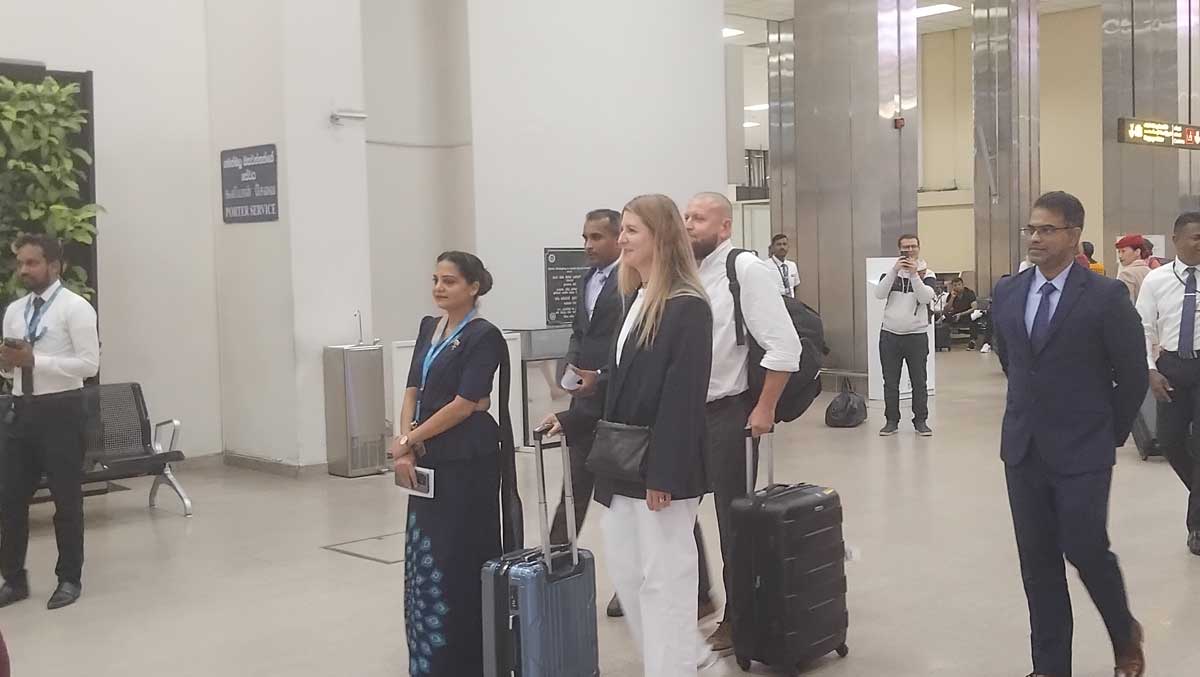
The country has granted its first one-year digital nomad visa to Darya Gordiyenko and her spouse Yaroslav Kovalchuk from Ukraine. Wijayasuriya highlighted the government’s ambition to increase the digital industry’s value from approximately two billion dollars to over five billion dollars by 2030, during a ceremony at the airport marking the symbolic handover of the first visa.
“We envision this growth not only in terms of export revenue but also in terms of the global digital value created within Sri Lanka’s territory,” Wijayasuriya stated.
The digital nomad visa allows holders to reside in Sri Lanka while working remotely, open a bank account, and enroll their children in local schools. Gordiyenko, who has previously visited Sri Lanka and developed a fondness for the island, expressed her appreciation, saying, “I just like Sri Lanka. It was the first Asian country for me. We were spending holidays with my family here earlier. The weather is nice, people are nice.”
Gordiyenko, who works in marketing and business development for an international firm, began working online during the COVID-19 pandemic and now has the approval to work from Sri Lanka. The couple has already secured an international school for their child.
To qualify for the digital nomad visa, the main applicant must demonstrate a minimum income of 2,000 dollars per month, with an additional 500 dollars required for each dependent. Visa holders are not permitted to engage in local employment. The Department of Immigration issues the visa based on recommendations from the Ministry of Digital Economy, which verifies the applicant’s information.
Previously, attempts to implement digital nomad visas in Sri Lanka faced challenges, as local law required a recommending local agency and line ministry for the Department of Immigration to issue a residence permit, explained Nayana Senaratne, Controller of Immigration for Visas. Now, with the Ministry for Digital Economy and the ICT Agency’s involvement, digital nomad visas are being issued.
When the visa comes up for renewal in the second year, applicants must be registered with the Department of Inland Revenue. In the meantime, digital nomads contribute to the local economy through rent, apartment purchases, travel, and value-added tax, thereby boosting economic activity. Parents will also pay for school fees and other expenses.
For healthcare, visa holders must possess international health insurance. The process is being approached cautiously, with applicants required to provide a certificate of good standing from their country’s police, and the defence ministry providing clearance. Sri Lanka aims to issue around 100 digital nomad visas in the first year.
“Digital nomads, along with foreign companies located in Sri Lanka and other sources of digital value creation, will play a significant role,” Wijayasuriya stated. “Today, we are opening the doors to a new dimension of labor mobility, or the mobility of intellectual resources, which adds value to the digital industry. This is indeed a milestone event.”
Sri Lanka is evolving beyond a mere tourist destination to become “a home for the creation of value in the digital space,” Wijayasuriya concluded.
(Colombo/Dec16/2026)