

If We Are Serious About a USD 150 Billion Sri Lanka
If Sri Lanka is serious about transformation, then we must stop tinkering at the edges.
We do not need another slogan.
We do not need another committee.
We do not need another “vision document.”
We need structural reform.
Abolish the Executive Presidency
The concentration of power in one office has repeatedly distorted governance. A return to a Westminster-style parliamentary system, with a ceremonial president and an accountable prime minister, would restore collective responsibility.
Power should be exercised through Cabinet and Parliament — not personality.
Sri Lanka has experimented with executive dominance. It has not delivered stability.
Accountability requires diffusion of authority.
Hold Provincial Council Elections Immediately
If devolution exists constitutionally, it must exist democratically.
Provincial Councils cannot remain suspended in political limbo. Elections restore legitimacy. Legitimacy restores accountability.
Let the people decide who governs locally. Democracy delayed is democracy weakened.
Reform Political Salaries and Pensions
Pay Ministers Properly — Remove Perks Entirely
If Ministers are to be treated as executives of the state, then pay them accordingly. A fixed, high monthly salary — with zero additional benefits — would end the culture of hidden privilege.
No grace-and-favour homes. No excessive vehicle fleets. No unaccounted allowances.
Pay them well. Demand performance. Remove entitlement.
Governance must become lean and professional.
Zero Tolerance for Corruption
This is the cornerstone.
Ministers and senior officials should be bound by a strict, enforceable code with serious consequences for breach. Proven corruption must lead to severe sentencing, confiscation of illicit assets and loss of civic rights.
Not selective enforcement. Not political targeting. Universal application.
Without enforcement, reform is theatre.
Annual Public Audit of Every State Institution
Every ministry. Every authority. Every state enterprise. Subject to an annual financial and performance audit with findings made public. Failure must carry consequence. Success must be measurable.
Transparency is not hostility. It is hygiene. Reform Health with Fairness
Universal baseline healthcare must remain protected. But sustainability demands fairness.
Higher earners can contribute proportionately through structured co-payments, while vulnerable citizens remain fully protected.
Compassion without discipline collapses systems. Discipline without compassion fractures society.
Balance is possible.
Reform Education with Standards
Public education must remain universal. Opportunity must not depend on wealth.
However, tertiary access, specialist streams and funding allocation can incorporate means-based adjustments and performance metrics.
Quality must rise. Accountability must follow funding. Education is not expenditure. It is investment.
Set a Clear $150 Billion Economic Target
Sri Lanka cannot drift economically.
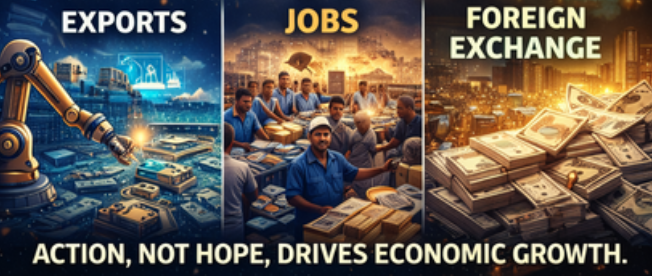
A defined national growth strategy aimed at reaching USD 150 billion GDP within a decade must be backed by measurable sector targets — tourism yield, export expansion, digital services growth, energy reform and logistics efficiency.
Growth does not happen by announcement. It happens by design.
The economy must move from survival to ambition.
Remove the Culture of Grace and Favour
State power must no longer resemble royalty.
Homes, vehicles, security excess and ceremonial indulgences must be replaced with disciplined administration and clear compensation structures.
Leadership should be respectable — not extravagant. The public must see restraint at the top.
What Would This Achieve?
Investor confidence would strengthen. Policy risk would decline.
Corruption premiums would shrink. Capital would return.
Productivity would improve.
The state would become smaller in indulgence — but stronger in function. This is not revolution. It is structural reform. Is Sri Lanka ready? The people are.
The real question is whether those who hold power are willing to surrender comfort in exchange for credibility. A USD 150 billion economy is possible.